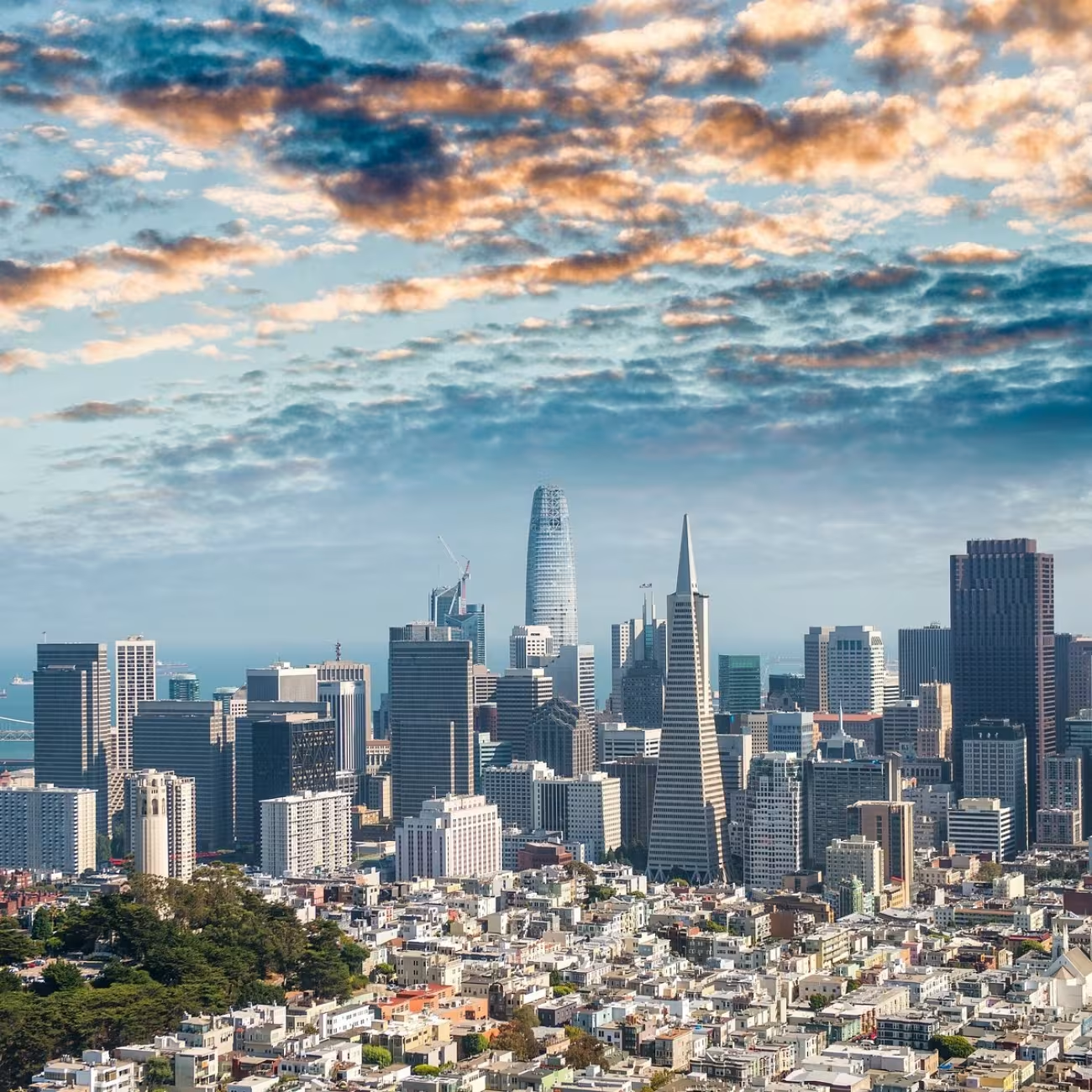
San Francisco is famous for the Golden Gate Bridge, colorful Victorian houses, steep streets, and historic cable cars. But beyond these familiar attractions, the California city has a fascinating collection of hidden stories, unusual landmarks, and surprising historical facts.
From abandoned ships buried beneath downtown streets to an instrument powered by ocean waves, here are 10 interesting facts about San Francisco that even some longtime visitors may not know.
1. San Francisco Was Originally Called Yerba Buena
Before becoming San Francisco, the settlement along the city's northeastern waterfront was known as Yerba Buena.
The name came from a fragrant native plant found in the area. During the Mexican period, Yerba Buena developed as a small trading settlement along the bay.
On January 30, 1847, local official Washington Allon Bartlett signed an ordinance officially changing the town's name to San Francisco.
The change occurred shortly before the California Gold Rush transformed the small settlement into a rapidly expanding international port.
Today, the name Yerba Buena survives in several local landmarks, including Yerba Buena Gardens and Yerba Buena Island.
2. The Golden Gate Bridge Is Not Actually Red
Although the Golden Gate Bridge is often described as red, its official paint color is International Orange.
The distinctive shade was selected by consulting architect Irving Morrow because it complemented the surrounding hills while contrasting with the blue water and sky.
The color also improves the bridge's visibility in fog, an important consideration in San Francisco's coastal environment.
Another surprising fact is that the bridge requires ongoing painting and maintenance. Its steel structure is constantly exposed to salt air, moisture, and changing weather conditions.
Maintenance crews regularly remove deteriorating paint and corrosion before applying protective coatings to preserve the structure.
3. San Francisco Has the World's Last Manually Operated Street Cable Railway
San Francisco's famous cable cars are more than a tourist attraction. They represent the world's last surviving manually operated street cable railway system.
The system began operating in 1873, following the development of cable railway technology by Andrew Smith Hallidie.
Unlike conventional streetcars, cable cars do not move using onboard electric motors. Instead, operators use a gripping mechanism to connect the cars to continuously moving cables beneath the streets.
The system survived the devastating 1906 earthquake and subsequent campaigns to eliminate cable car service.
In 1964, San Francisco's cable cars were designated a National Historic Landmark, recognizing their importance in transportation history.
4. Golden Gate Park Is Larger Than New York's Central Park
Golden Gate Park covers approximately 1,017 acres, making it larger than New York City's Central Park, which occupies around 843 acres.
The park stretches about three miles across western San Francisco, connecting the Haight-Ashbury area with Ocean Beach.
Its development began in 1870 on land dominated by windswept sand dunes.
Landscape designers gradually transformed the sandy terrain into a vast urban park containing lakes, gardens, wooded areas, museums, and recreational facilities.
Today, Golden Gate Park includes the California Academy of Sciences, the de Young Museum, the Japanese Tea Garden, and the Conservatory of Flowers.
Despite its impressive size, many visitors explore only a small portion of the park.
5. A Herd of Bison Lives Inside San Francisco
One of Golden Gate Park's most unexpected attractions is its resident herd of American bison.
These enormous animals have been part of the park since the early 1890s, when efforts were underway to protect the species from extinction.
The bison live in a dedicated enclosure called the Bison Paddock, near the western end of Golden Gate Park.
San Francisco's bison herd became a popular local attraction long before the city established its modern zoo.
Visitors can still observe the animals from designated viewing areas, although they should remain outside the enclosure and avoid disturbing them.
The presence of bison in the middle of a major coastal city is one of San Francisco's most unusual wildlife traditions.
6. Abandoned Gold Rush Ships Are Buried Beneath Downtown Streets
San Francisco's Financial District contains the remains of ships abandoned during the California Gold Rush.
When thousands of fortune seekers arrived in 1849, many ships were left behind because crew members departed for the goldfields.
Some abandoned vessels were converted into warehouses, hotels, and commercial buildings. Others were gradually buried as the city's waterfront expanded through landfill.
One of the best-known examples is the Niantic, a ship that became part of San Francisco's early commercial waterfront.
Its remains were rediscovered during construction work in 1978, approximately 130 years after the ship had arrived.
Today, the National Park Service preserves artifacts from the Niantic and other historic vessels, documenting the remarkable maritime history hidden beneath the modern city.
7. San Francisco Has a Musical Instrument Played by Ocean Waves
Along the waterfront in the Marina District stands an unusual public artwork called the Wave Organ.
Created in 1986 by artists Peter Richards and George Gonzalez, the sculpture uses the movement of water to produce sounds through a series of pipes.
As waves enter the openings, air and water move through the pipes, creating bubbling, gurgling, and occasionally musical tones.
The sounds vary depending on tidal conditions, wave activity, and the weather.
The installation is located at the end of a jetty near the St. Francis Yacht Club, offering views of San Francisco Bay and the Golden Gate Bridge.
Unlike a conventional musical instrument, the Wave Organ has no performer. The movement of the ocean creates its constantly changing soundtrack.
8. Twin Peaks Is Not San Francisco's Highest Point
Twin Peaks is one of San Francisco's most famous viewpoints, but it is not the city's highest natural elevation.
That distinction belongs to Mount Davidson, which reaches approximately 938 feet above sea level.
By comparison, Twin Peaks reaches approximately 922 feet.
Mount Davidson is located in the south-central part of the city and features wooded walking trails, native vegetation, and panoramic views.
It is also known for the large concrete cross near its summit, which stands approximately 103 feet tall.
Although Twin Peaks attracts more tourists, Mount Davidson offers a quieter environment for visitors interested in hiking and scenic landscapes.
9. San Francisco City Hall Has a Dome Taller Than the US Capitol
San Francisco City Hall is one of the city's most impressive architectural landmarks, featuring a monumental dome that rises approximately 307 feet above the surrounding area.
The structure is taller than the United States Capitol building in Washington, DC.
The current City Hall opened in 1915, replacing an earlier building that was destroyed during the devastating earthquake and fire of 1906.
Designed in the Beaux-Arts architectural style, the building features marble interiors, a grand staircase, elaborate decorative details, and a massive central rotunda.
Its impressive scale was intended to represent San Francisco's recovery and civic ambition following the disaster.
Today, City Hall remains an active government building and a popular location for weddings, public events, and architectural tours.
10. Treasure Island Was Built for a World's Fair
Treasure Island, located in San Francisco Bay between San Francisco and Oakland, is not a naturally formed island.
It is an artificial island constructed by the US Army Corps of Engineers during 1936 and 1937.
Covering approximately 400 acres, the island was originally developed to host the Golden Gate International Exposition of 1939 and 1940.
The world's fair celebrated the construction of the Golden Gate Bridge and the San Francisco–Oakland Bay Bridge, showcasing modern architecture, technology, and international culture.
After the exposition, the United States Navy took control of Treasure Island and converted it into a military installation.
Today, the island is undergoing redevelopment into a mixed-use neighborhood with residential buildings, public spaces, and cultural attractions.
It also offers impressive views of the San Francisco skyline and Bay Bridge, making it a distinctive destination for photography.
Final Thoughts
San Francisco's appeal extends far beyond its famous bridge and steep streets. Its history includes an entirely different original name, Gold Rush ships buried beneath modern buildings, and an artificial island created for a world's fair.
The city also preserves unusual attractions such as its historic cable railway, Golden Gate Park's bison herd, and the ocean-powered Wave Organ.
These lesser-known details reveal how San Francisco combines maritime history, engineering achievements, public art, and natural landscapes in ways that continue to surprise visitors.
- Log in to post comments