When Did the Black Lives Matter Movement Start?
The Black Lives Matter (BLM) movement emerged as a pivotal social and political force in the United States, aiming to combat systemic racism, police brutality, and racial inequality. Its origin can be traced to a dual timeline: the initial digital spark in 2013 and the physical mobilization that followed in 2014.
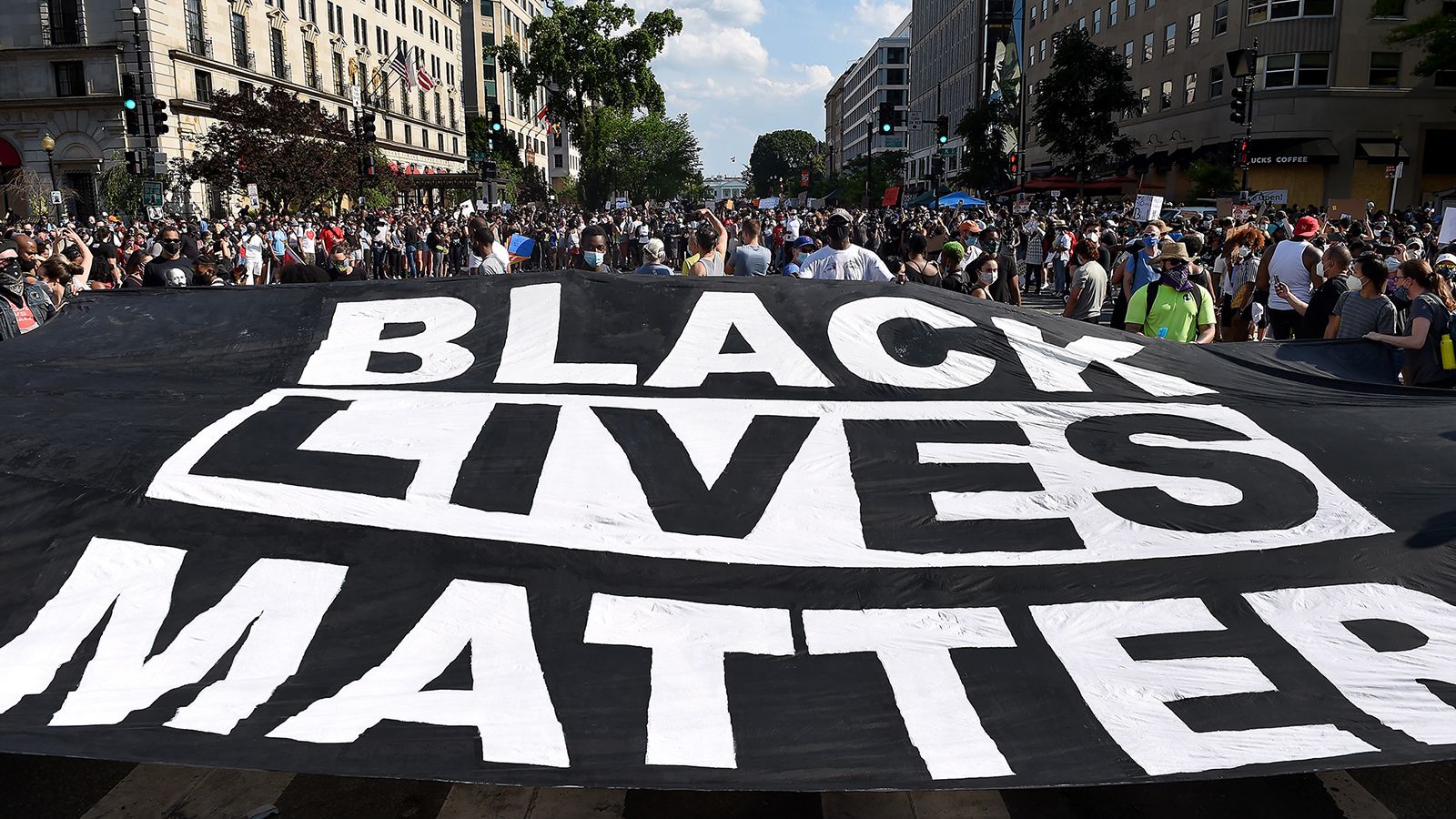
The Dual Inception of Black Lives Matter: Chronological, Structural, and Technological Origins (2013–2015)
The Black Lives Matter (BLM) movement is a decentralized political and social network that originated in the United States to highlight systemic racism, police brutality, and racial inequality.1 To fully understand the inception of the movement, it is necessary to examine a dual-coordinate timeline: the initial digital and ideological origin in July 2013, and the physical, structural transformation in August 2014.3 This report analyzes the socio-legal catalysts, the organizational pre-history, the transition from online discourse to physical mobilization, and the quantitative dimensions of the movement's growth.
Genesis of the Hashtag: The Digital Origin (July 2013)
The immediate catalyst for the movement was the July 13, 2013, acquittal of George Zimmerman in the fatal shooting of Trayvon Martin.3 Martin, an unarmed seventeen-year-old Black youth, was shot and killed by Zimmerman, a volunteer neighborhood watchman, on February 26, 2012, in Sanford, Florida.2 Zimmerman's trial and his subsequent acquittal under Florida's controversial "stand your ground" legal framework sparked intense national outrage, signaling to many Black Americans a profound failure of the judicial system.
Following the announcement of the verdict on July 13, 2013, Alicia Garza, a community organizer based in Oakland, California, expressed her grief and frustration in a Facebook post.3 Garza's post, titled "A Love Note to Black People," criticized the institutionalized devaluation of Black life, urging Black communities to "get active," "get organized," and "fight back" against systemic white supremacy.9 The post concluded with the emotional refrain: "black people. I love you. I love us. Our lives matter, Black Lives Matter".
Garza's close friend and fellow community organizer, Patrisse Cullors of Los Angeles, read the post and shared it widely.3 To maximize its visibility and facilitate cross-platform tracking, Cullors appended a hashtag to the phrase, creating the first public instance of #BlackLivesMatter on social media.3 To build out the necessary digital infrastructure, Garza and Cullors collaborated with Ayo Tometi (then known as Opal Tometi), an immigration rights organizer based in Phoenix, Arizona.9 Tometi recognized the potential of digital platforms to bypass traditional media gatekeepers, establishing the movement’s initial online presence on Tumblr and Twitter to engage directly with the public.
The Organizational Pre-History: From BOLD to Social Media Campaigning
The rapid coordination among Garza, Cullors, and Tometi was facilitated by their pre-existing professional relationships.9 The three founders had become aware of one another through Black Organizing for Leadership & Dignity (BOLD), a national organization that trains community organizers in strategic mobilization.9 Following the Zimmerman verdict, discussions in BOLD’s social forums regarding how to collectively respond to anti-Black violence provided the ideological fertile ground from which the three organizers launched their initiative.
Initially, the organization existed as a lean, three-person project.3 Garza created physical protest signs for display in storefront windows, while Cullors led a localized protest march in Beverly Hills, California, carrying a sign bearing the hashtag.3 Concurrently, the day after the acquittal, on July 14, 2013, writer Vann Newkirk, operating under the Twitter handle @W.E.B.B.I.E. DuBois, published a viral reflection on the justice system's failure to protect Black lives.16 His post garnered over 11,000 retweets and was frequently misattributed to the pop singer Rihanna, illustrating the viral, peer-to-peer nature of the early digital ecosystem.
| Date | Key Event | Direct Socio-Political Impact |
| February 26, 2012 | Fatal shooting of Trayvon Martin in Sanford, Florida.7 | Initiated national debates on racial profiling, vigilante justice, and self-defense laws.2 |
| July 13, 2013 | George Zimmerman is acquitted of second-degree murder and manslaughter.7 | Generated nationwide protests; catalyzed Alicia Garza's Facebook post and the creation of #BlackLivesMatter.3 |
| July 14, 2013 | First viral Twitter engagement with the hashtag and associated themes.16 | Established the digital foundation of the movement, bypassing traditional corporate media.9 |
| August 9, 2014 | Fatal shooting of Michael Brown by police officer Darren Wilson in Ferguson, Missouri.9 | Triggered the Ferguson uprising and shifted the movement's focus from vigilante violence to state-sanctioned police brutality.4 |
| August 28–31, 2014 | Black Life Matters Freedom Ride brings over 600 activists to St. Louis.4 | Transformed the digital hashtag campaign into a physical, multi-chapter street-level organization.4 |
| November 24, 2014 | Grand jury declines to indict officer Darren Wilson in Michael Brown's death.18 | Reignited severe civil unrest in Ferguson and catalyzed solidarity protests across more than 125 US cities.18 |
| December 3, 2014 | Grand jury declines to indict officer Daniel Pantaleo in the chokehold death of Eric Garner.21 | Sparked massive street demonstrations in New York City and solidified the national phrase "I can't breathe".1 |
| July 24–26, 2015 | Inaugural national convening of the Movement for Black Lives (M4BL) in Cleveland, Ohio.1 | Created a broad, unified front representing up to 2,000 activists from local and national coalitions.1 |
The Physical Catalyst: Michael Brown and the Ferguson Freedom Ride (August 2014)
Although the hashtag gained traction throughout late 2013 and early 2014, the transition from a digital advocacy campaign to a highly organized national street movement occurred in August 2014.3 On August 9, 2014, Michael Brown, an unarmed eighteen-year-old Black man, was fatally shot by Darren Wilson, a white police officer, in Ferguson, Missouri. The shooting and the subsequent actions of the Ferguson Police Department—including allowing Brown's body to lie in the street for four hours before transport—ignited severe civil unrest.
The Ferguson unrest served as a visual turning point.9 Local residents began daily demonstrations, which were met with heavily militarized police forces utilizing tear gas, rubber bullets, and armored vehicles.18 This confrontation, widely broadcast on social media, attracted tens of thousands of sympathizers to Ferguson.
Recognizing that Ferguson was not an isolated incident but a microcosm of the systemic issues facing Black communities nationwide, Brooklyn-based activist and Princeton Theological Seminary alumnus Darnell Moore contacted Cullors to organize a coordinated physical intervention.4 Together, they launched the "Black Life Matters Freedom Ride".4 On August 28, 2014, charter buses containing approximately thirty activists from the Northeast (including New York City, Philadelphia, and New Jersey) departed on a 20-hour journey to St. Louis.
This caravan successfully brought more than 600 organizers, artists, attorneys, and healers from eighteen different cities to occupy St. Louis over Labor Day weekend.4 Protesters engaged in direct actions, teach-ins, and a major march to the Ferguson police station.20 During this weekend, the participants made two key strategic commitments: to support the local organizers on the ground in St. Louis and to return to their home cities to establish local chapters.4 This dual-commitment framework led directly to the establishment of the Black Lives Matter Global Network, as organizers from the eighteen participating cities returned home to build structured, autonomous local chapters.
Institutionalization and National Proliferation (2014–2015)
The autumn of 2014 witnessed the rapid institutionalization of the movement as high-profile police-involved deaths continued to occur.3 On July 17, 2014, Eric Garner died in Staten Island, New York, after being placed in a chokehold by NYPD officer Daniel Pantaleo.1 On November 22, 2014, twelve-year-old Tamir Rice was shot and killed by police officer Timothy Loehmann in a Cleveland, Ohio, playground.
The legal outcomes of these cases transformed the localized protests into a national rebellion.9 On November 24, 2014, a Missouri grand jury declined to indict officer Darren Wilson for the death of Michael Brown.18 Nine days later, on December 3, 2014, a New York grand jury also declined to indict officer Daniel Pantaleo for the death of Eric Garner.21 These consecutive non-indictments catalyzed massive street demonstrations in over 125 cities across the United States.22 Black Lives Matter organizers utilized disruptive tactics, including blocking major highways, bridges, and staging "die-in" demonstrations in shopping malls during Black Friday.9
To consolidate this nationwide momentum, the movement convened at Cleveland State University from July 24 to 26, 2015.1 The conference attracted between 1,500 and 2,000 activists to participate in open discussions and coordinate national strategies.1 Rather than limiting the focus to law enforcement accountability, the conference resulted in a significant structural expansion, culminating in the creation of a united front known as the "Movement for Black Lives" (M4BL).1 This coalition united the Black Lives Matter Global Network with hundreds of other local and national advocacy organizations under a shared political framework.
Quantitative and Computational Analysis of the Social Media Ecosystem
The rise of the Black Lives Matter movement is intrinsically linked to the evolution of social media networks, making it a prime subject for computational and sociological analysis.27 Computational linguistics and network studies of Twitter data from July 2013 through the subsequent decade reveal the scale of this digital ecosystem.
By 2016, the hashtag #BlackLivesMatter had become the third most frequently used social cause hashtag on Twitter.29 Longitudinal analysis indicates that between July 2013 and March 2023, more than 44 million tweets containing the hashtag were posted by nearly 10 million distinct users.
| Metric Category | Statistical Value | Analytical Significance |
| Total Decade Volume (2013–2023) | Over 44 million tweets.27 | Establishes the movement as one of the largest digitally recorded social justice campaigns in internet history.27 |
| Daily Average Usage (2013–2018) | 17,002 tweets per day.1 | Demonstrates a consistent baseline of public engagement and discourse during the movement's first five years.1 |
| Peak Concentration (Summer 2020) | 24.5 million tweets (May–Sept 2020).28 | Illustrates the unprecedented spike in global engagement following the killing of George Floyd.5 |
| Post-2020 Baseline Engagement | ~250,000 tweets per month.27 | Indicates a sustained institutional presence in public discourse long after the initial street protests subsided.27 |
| Unique Broadcasters | Nearly 10 million distinct accounts.27 | Highlights the broad, decentralized distribution of the movement's message across diverse networks.27 |
This quantitative data shows that while the movement experienced periodic spikes corresponding to high-profile deaths, it maintained a highly active baseline of daily communication, helping to continuously shape the broader public narrative around policing and race.
Strategic Critiques, Controversies, and Socio-Political Dynamics
As the Black Lives Matter network transitioned into the most prominent social justice organization in the United States, it faced intense scrutiny and political pushback.11 Opponents and conservative commentators focused heavily on the founders' political ideologies and the network's structural platform.
A major point of contention emerged from a 2015 interview with Patrisse Cullors, which resurfaced widely in 2020, in which she stated that she and Alicia Garza were "trained Marxists".31 Critics pointed to this statement, as well as the Black Lives Matter Global Network Foundation’s inclusion of classic Marxist themes on its website, such as a commitment to "disrupt the Western-prescribed nuclear family structure requirement," as evidence of a radical ideological agenda.31 Under significant public pressure, this language was removed from the foundation's official platform in 2020.
Similarly, Ayo Tometi faced criticism for her international engagements, including an invitation by the Venezuelan government to serve as an electoral observer during the December 2015 parliamentary elections, where she publicly praised the country's democratic system.31
Furthermore, criminologists and political scientists debated the systemic consequences of the movement's protest actions.22 Proponents of the "Ferguson Effect" argued that the intense public scrutiny and hostility directed toward law enforcement in the wake of the 2014 protests led to police disengagement in major metropolitan areas.22 Some studies linked this disengagement to a 15.2% increase in homicides in cities with populations over 250,000 between 2014 and 2015, suggesting that the movement's rhetoric had unintended consequences on public safety in vulnerable urban communities.2
Socio-Political Synthesis and Structural Outcomes
The evolution of Black Lives Matter from a localized reaction to a legal verdict in 2013 to a highly organized global network by late 2015 represents a major shift in the methodology of modern social movements.3 By combining the rapid reach of social media with the physical coordination of traditional civil rights organizers, the movement successfully forced issues of racial justice and police accountability to the forefront of national policy.
The physical mobilization in Ferguson and the subsequent national expansion forced immediate federal legislative action.4 On December 18, 2014, the United States Congress enacted the Death in Custody Reporting Act, which mandated that local jurisdictions document and report all deaths occurring in police custody.
Furthermore, the strategic decision to adopt a decentralized, non-hierarchical network structure allowed the movement to maintain resilience and adaptability across different municipal contexts.1 This decentralization ensured that while the national leadership faced ideological critiques and controversy, autonomous local chapters could continue to independently pursue criminal justice reform, policy changes, and community empowerment at the grassroots level.