Iran Says It Won’t Negotiate With Trump as Hormuz Talks Stall, U.S. Naval Blockade Continues
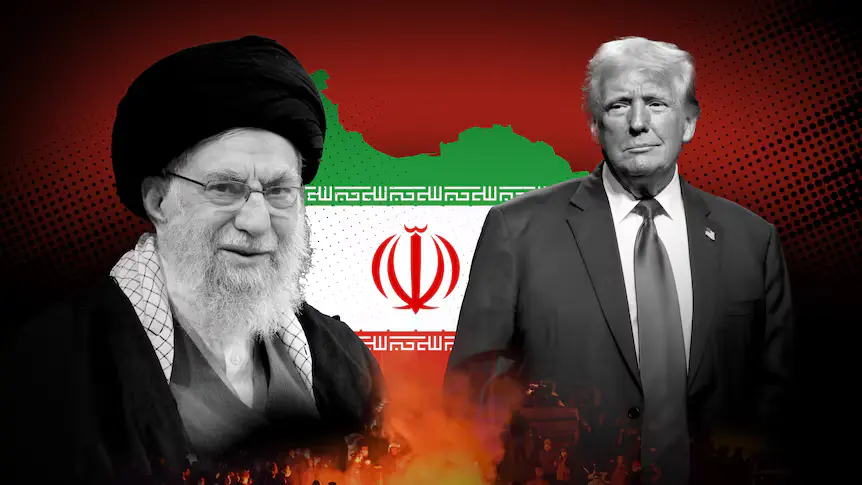
Iran has again pushed back against suggestions that it is negotiating directly with President Donald Trump’s administration, deepening uncertainty over efforts to reopen the Strait of Hormuz and bring the months-long U.S.-Iran confrontation closer to an end.
Iranian Foreign Minister Abbas Araghchi said talks with the United States would not take place while what Tehran considers violations of an earlier interim agreement continue. Iranian officials have separately insisted that the diplomatic discussions currently under way concern Iran and Oman, rather than direct U.S.-Iran negotiations.
The distinction has become increasingly important after Trump repeatedly suggested that negotiations with Tehran were progressing. Earlier in August, Trump said talks were underway and later described discussions as moving positively, while Iranian officials publicly denied that direct negotiations with Washington were taking place.
Iran Rules Out U.S. Negotiations for Now
The latest Iranian position is not necessarily a permanent rejection of diplomacy. Instead, Tehran is saying that broader negotiations cannot proceed under the present conditions.
Araghchi has linked future talks to implementation of previous commitments, while Iranian officials continue to demand concessions including sanctions relief and changes to the U.S. military posture surrounding Iran. The dispute has become increasingly complicated by competing demands for compensation connected to the war.
Trump has responded to Iranian demands for war reparations with demands of his own. The U.S. president has argued that Iran should compensate Americans killed in attacks Washington attributes to Iran or Iranian-backed groups, introducing another major obstacle into negotiations.
That exchange has sharply reduced optimism that a wider U.S.-Iran settlement is imminent.
What Is the Latest on U.S. Forces Blocking Ships Near Iran?
The description of the current confrontation as a naval blockade of the Strait of Hormuz can be misleading.
The U.S. military blockade primarily targets maritime traffic entering or leaving Iranian ports and coastal areas. It is not formally intended to prevent ships trading with other Gulf countries from simply passing through the Strait of Hormuz.
Iran, meanwhile, has imposed its own restrictions on the waterway and has tied a full reopening to U.S. concessions.
The result is effectively two overlapping maritime pressure campaigns: Washington attempting to restrict Iranian maritime trade, and Tehran using its geographical position around Hormuz to restrict one of the world's most important energy corridors.
Shipping data show just how severe the disruption has become.
Only six vessels passed through the Strait of Hormuz on Monday, according to shipping data cited by Reuters. That compares with an average of roughly 11 vessels during the previous 10 days and approximately 130 to 140 vessels per day before the war.
The collapse in traffic indicates that even without a conventional military confrontation involving every commercial vessel, the perceived risk surrounding Hormuz remains extraordinarily high.
Iran Naval Blockade and Oman Mediation: Where Do Talks Stand?
Oman has emerged as the most important diplomatic intermediary in efforts to resolve the maritime crisis.
Iran and Oman have been discussing arrangements for a commercial shipping corridor through the Strait of Hormuz. Negotiators have made substantial progress, including discussions surrounding the coordinates and management of a potential shipping route.
A proposed arrangement reported by Reuters could give Iran a role in controlling inbound traffic while Oman oversees another portion of maritime passage. However, significant disputes remain over exactly how the system would operate.
Iran's Revolutionary Guard has also made clear that an agreement with Oman does not automatically mean the Strait of Hormuz will reopen.
Tehran says reopening depends on Washington meeting broader Iranian conditions.
That position has become the central obstacle to a breakthrough.
A U.S. official had previously expressed optimism that an Iran-Oman agreement was close and suggested Washington could lift its blockade of Iranian ports if Tehran fulfilled commitments under a maritime agreement.
Those hopes have since weakened.
Hormuz Deal Hopes Fade After New Trump-Iran Demands
The diplomatic mood changed significantly after Trump demanded Iranian compensation for American casualties.
Iran had already insisted that Washington address sanctions, frozen Iranian assets and compensation for damage suffered during the conflict before the Strait could fully reopen. Trump's counter-demand added another politically difficult issue to the negotiations.
The deterioration in expectations is already affecting energy markets.
Brent crude climbed to about $89.64 per barrel on August 11, while West Texas Intermediate reached approximately $84.04, as traders reduced expectations for a rapid U.S.-Iran peace agreement.
Iran-related tensions have therefore moved beyond a regional security problem. They are again becoming a significant global inflation and economic-growth risk.
What Is Hegseth’s Senate Defense Plan?
Another frequently searched term surrounding the Iran conflict is the “Hegseth Senate defense plan.”
More precisely, Defense Secretary Pete Hegseth appeared before the Senate Appropriations Committee on July 21 to defend the Trump administration's supplemental funding request.
The Senate hearing examined an administration request that included roughly $88 billion in additional funding, much of it related to military readiness and the continuing Iran conflict.
Hegseth told senators that the Iran war had already cost the United States about $37.5 billion at that stage, while lawmakers questioned the administration over the strategy, military readiness and the scale of additional funding being requested.
The hearing illustrates why the Hormuz negotiations matter domestically as well as internationally.
A prolonged conflict means not only higher oil prices but continuing U.S. military expenditure, pressure on weapons inventories and increasingly difficult political debates ahead of the U.S. midterm elections.
Iran Won’t Negotiate With Trump — But Indirect Diplomacy Continues
The phrase “Iran won't negotiate with Trump” therefore needs some qualification.
Iran has ruled out direct negotiations under the present circumstances, but communication has not completely stopped.
Iranian officials have acknowledged that messages are being exchanged through intermediaries, and Oman continues to serve as a major diplomatic channel.
This creates an unusual diplomatic situation in which Washington and Tehran can both publicly deny or minimize formal talks while still transmitting proposals through third parties.
For now, however, there is no evidence of a comprehensive agreement capable of simultaneously ending the U.S. blockade, reopening normal Hormuz shipping and settling the wider political conflict.
What Happens to the Strait of Hormuz Next?
Three separate issues now have to align for a durable solution.
First, Iran and Oman need to finalize an acceptable mechanism governing commercial navigation.
Second, Washington and Tehran must resolve the reciprocal blockade problem.
Third, the two governments have to bridge a much broader political dispute involving sanctions, military actions, compensation and security guarantees.
Progress on only the first issue will probably not be enough.
That is why Iran's announcement that its Oman negotiations were approaching their final stages initially lifted expectations, yet failed to produce the reopening Trump had suggested could happen quickly.
Could the Iran Crisis Revive the K-Shaped Economy Debate?
The Iran crisis is also intersecting with another economic debate in the United States: whether the so-called K-shaped economy is finally disappearing.
Treasury Secretary Scott Bessent recently declared that the K-shaped economy was effectively over. The term describes an economy in which higher-income households and asset owners continue gaining while lower-income households face weaker wage growth, greater debt burdens and higher sensitivity to everyday prices.
But the evidence remains disputed.
Recent economic research continues to identify substantial differences in household resilience, wealth accumulation, labor-market outcomes and spending power. Wage data cited in reporting on Bessent's comments have also challenged the claim that the divide has disappeared completely.
The Hormuz crisis could complicate that trend.
Higher oil prices can eventually feed into gasoline, transportation and goods prices. Because energy and essential expenses account for a larger proportion of lower-income household budgets, a prolonged oil shock could disproportionately affect those consumers.
That does not prove that the K-shaped economy will return or worsen. But it does mean that a sustained Hormuz disruption could work against the broad-based improvement the Trump administration says is taking place. This is an economic inference based on the current rise in oil prices and the existing evidence of uneven household financial resilience.
Iran, Trump and Hormuz: What to Watch Next
As of August 11, 2026, the most important development is therefore not the announcement of a peace agreement, but the widening gap between the optimism Washington expressed only days ago and the much harder conditions now being publicly set by both governments.
Iran is not holding direct negotiations with Trump under current conditions. Oman-mediated discussions over the Strait of Hormuz remain alive, but Tehran says a maritime agreement alone will not reopen the waterway. Meanwhile, the U.S. blockade of Iranian ports remains a crucial bargaining point and commercial traffic through Hormuz has fallen to a fraction of normal levels.
The immediate question is whether Oman can turn its technical maritime negotiations into a broader political compromise.
If it cannot, the consequences will extend well beyond Iran and the United States: energy prices, inflation expectations, U.S. defense spending and the economic pressure facing ordinary households could all remain exposed to the world's most important geopolitical shipping chokepoint.