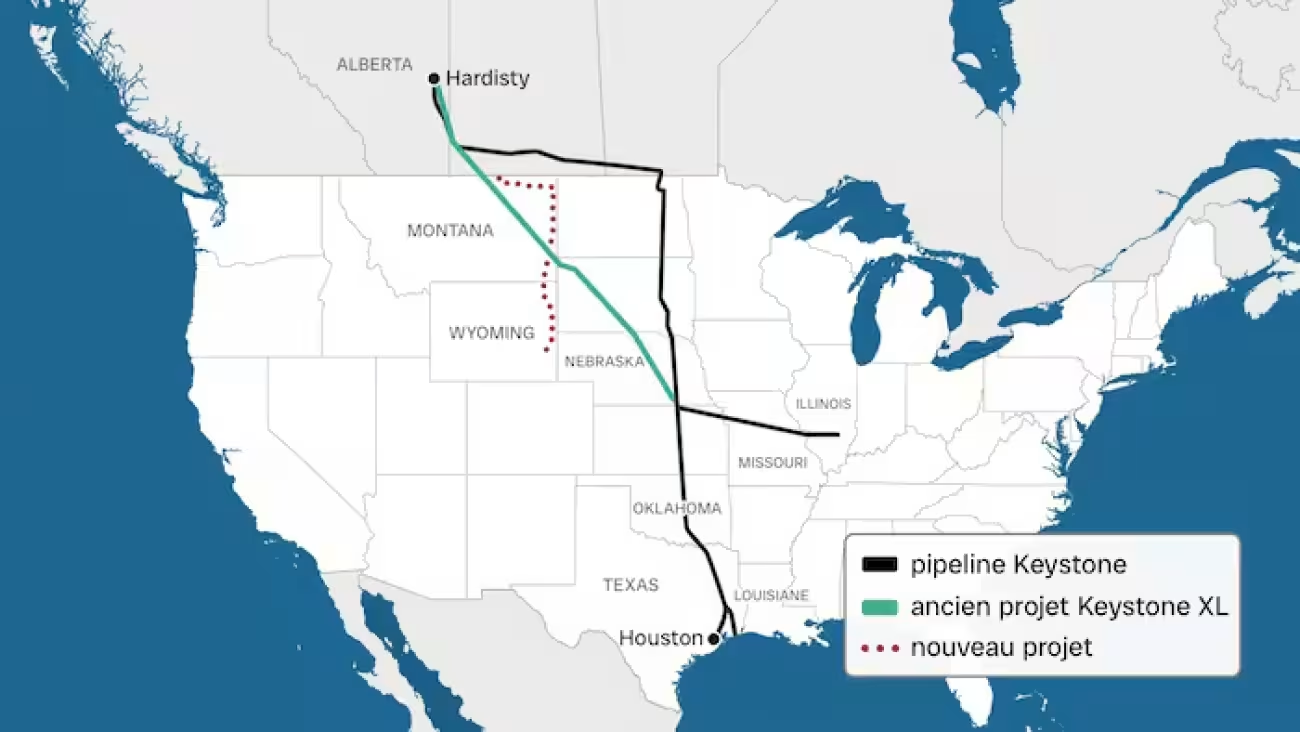
The Keystone Pipeline is owned and operated by South Bow Corporation, a publicly traded Canadian energy infrastructure company formed through the separation of TC Energy's liquids pipeline business on October 1, 2024. The 2,689-mile crude oil system transports oil from Alberta, Canada, to major US markets in Illinois, Oklahoma and Texas. Plains All American Pipeline is a separate energy company and does not own Keystone. The similarly named Keystone Truck & Tractor Museum in Virginia was founded by businessman Keith Jones and has no corporate connection to either pipeline operator.
Who Owns the Keystone Pipeline in 2026?
As of November 2026, South Bow Corporation owns the Keystone Pipeline System through its operating subsidiaries.
The Canada Energy Regulator identifies South Bow GP (Canada) Ltd. as the regulated entity responsible for owning and managing the Canadian portion of Keystone.
South Bow is headquartered in Calgary, Alberta, and its common shares trade on the Toronto Stock Exchange and New York Stock Exchange under the ticker symbol SOBO.
As a publicly traded company, South Bow is owned by its shareholders rather than a single individual or private owner.
How South Bow Acquired Keystone From TC Energy
The Keystone Pipeline was previously owned by TC Energy Corporation, formerly known as TransCanada Corporation.
In July 2023, TC Energy announced plans to separate its liquids pipeline operations into an independent company. The restructuring allowed the two businesses to pursue different operational and investment priorities.
The transaction was completed on October 1, 2024, when South Bow officially became independent.
Eligible TC Energy shareholders received 0.2 South Bow common shares for every TC Energy share held on the September 25, 2024, distribution record date.
Following the separation, TC Energy retained its focus on natural gas pipelines, storage, power generation and related energy infrastructure. South Bow assumed responsibility for the former liquids pipeline portfolio, including Keystone.
What Is the Keystone Pipeline System?
The Keystone Pipeline System is a major North American crude oil transportation network that began operations in 2010.
According to South Bow, the system extends approximately 4,327 kilometers, or 2,689 miles, across three Canadian provinces and eight US states.
It transports crude oil from Hardisty, Alberta, to refining and storage markets in the United States, including Wood River and Patoka in Illinois, Cushing in Oklahoma, and the Gulf Coast region of Texas.
South Bow reports that Keystone has transported more than 3.9 billion barrels of crude oil since beginning operations.
The system forms an important transportation connection between Western Canada's oil-producing regions and American refining markets.
Who Owns Keystone XL?
Keystone XL was a proposed expansion of the existing Keystone network, originally developed by TC Energy.
The project was intended to provide additional capacity for transporting Canadian crude oil into the United States through a more direct route.
However, it faced opposition over environmental concerns, climate impacts, land rights and potential pipeline spills.
President Joe Biden revoked the project's US cross-border permit in January 2021, and TC Energy formally terminated Keystone XL in June of that year.
The cancellation affected the proposed expansion, not the existing Keystone Pipeline System, which remained operational.
South Bow subsequently inherited relevant assets and interests associated with TC Energy's former liquids pipeline business.
Latest Update: Could Keystone XL Be Revived?
In March 2026, South Bow said changing energy policies in Canada and the United States had improved the prospects of developing a new crude oil transportation project using portions of previously constructed Keystone XL infrastructure.
The proposal, known as Prairie Connector, would use existing pipeline assets and permitted corridors in Canada while requiring additional infrastructure in the United States.
South Bow initiated a commercial open season to evaluate demand from oil producers and shippers interested in additional transportation capacity.
The proposal has been associated with a potential capacity of up to 550,000 barrels per day, although South Bow's initial open season offered approximately 450,000 barrels per day of firm service.
According to Reuters, the development would require further connections to major US refining markets and a new presidential permit for a cross-border pipeline.
The final route, construction costs and completion schedule had not been established in the March 2026 reporting.
As of November 2026, Prairie Connector should be regarded as a proposed development rather than an operating replacement for the canceled Keystone XL project.
Does Plains All American Pipeline Own Keystone?
No. Plains All American Pipeline, L.P. is an independent energy infrastructure company headquartered in Houston, Texas.
Plains operates crude oil and natural gas liquids transportation, gathering, storage and logistics facilities across the United States and Canada.
The company was established as a publicly traded partnership in 1998, and its common units trade on Nasdaq under the ticker symbol PAA.
Plains GP Holdings, L.P., which trades under PAGP, participates in the partnership's management and governance structure.
Although Plains and South Bow operate in the same North American energy infrastructure industry, they have distinct corporate structures and separate asset portfolios.
South Bow owns Keystone, while Plains owns or holds interests in other pipeline and logistics infrastructure.
Who Founded Keystone Truck & Tractor Museum?
Keystone Truck & Tractor Museum in Colonial Heights, Virginia, was founded by American businessman and antique vehicle collector Keith Jones.
Jones developed an interest in agricultural machinery after acquiring a 1950 John Deere M tractor from his late uncle's estate in 1987.
The purchase inspired him to restore and collect vintage tractors, commercial trucks and other historic equipment.
Jones and his brother Kolen also founded Abilene Motor Express in 1986, building a transportation business that later became part of Knight-Swift.
His growing collection eventually formed the foundation of Keystone Truck & Tractor Museum, which opened in 2010.
The museum occupies more than 130,000 square feet at 880 West Roslyn Road in Colonial Heights, approximately 30 minutes from Richmond.
Its exhibits include antique farm tractors, vintage commercial trucks, classic automobiles, historic fuel pumps, signs and other transportation memorabilia.
Who Legally Owns Keystone Truck & Tractor Museum?
Although Keith Jones founded the institution, the museum is organized as a tax-exempt private operating foundation rather than being operated solely as his personal commercial property.
Documents submitted to the City of Colonial Heights in December 2022 identify Keystone Truck & Tractor Museum, Inc. as a private operating foundation.
The museum also describes itself as a nonprofit organization supporting the preservation and public exhibition of historic vehicles and machinery.
Jones is therefore appropriately identified as its founder, while the museum's legal organization is distinct from individual personal ownership.
There is no verified corporate ownership connection between the museum, South Bow Corporation, TC Energy or Plains All American Pipeline.
Keystone Pipeline, Plains All American and Keystone Museum Compared
| Organization | Owner or Structure | Main Activity |
|---|---|---|
| Keystone Pipeline | South Bow Corporation | Crude oil transportation |
| South Bow Corporation | Publicly traded company (SOBO) | Liquid energy infrastructure |
| TC Energy | Publicly traded company (TRP) | Natural gas and energy infrastructure |
| Plains All American Pipeline | Publicly traded partnership (PAA) | Oil and natural gas liquids logistics |
| Keystone Truck & Tractor Museum | Nonprofit foundation founded by Keith Jones | Historical vehicle preservation |
Why Keystone Pipeline Ownership Matters
Identifying the correct pipeline owner is important for understanding operational responsibility, environmental compliance, regulatory oversight and infrastructure investment decisions.
South Bow's separation from TC Energy created a company focused on crude oil transportation and related liquids pipeline assets.
The ownership change also affected investors by allowing South Bow shares to trade independently from TC Energy.
Future developments, including Prairie Connector, will depend on commercial demand, regulatory approvals, financing arrangements and cooperation between Canadian and American authorities.
Conclusion
South Bow Corporation owns and operates the Keystone Pipeline System following its separation from TC Energy on October 1, 2024. The existing network continues transporting Canadian crude oil to major US refining markets, while the proposed Prairie Connector project could eventually use portions of the former Keystone XL infrastructure.
Plains All American Pipeline is a separate publicly traded energy company and does not own Keystone. The Keystone Truck & Tractor Museum is likewise unrelated to the pipeline industry and operates as a nonprofit foundation founded by Keith Jones.
Despite their similar names, these organizations have different ownership structures, purposes and business operations.
- Log in to post comments