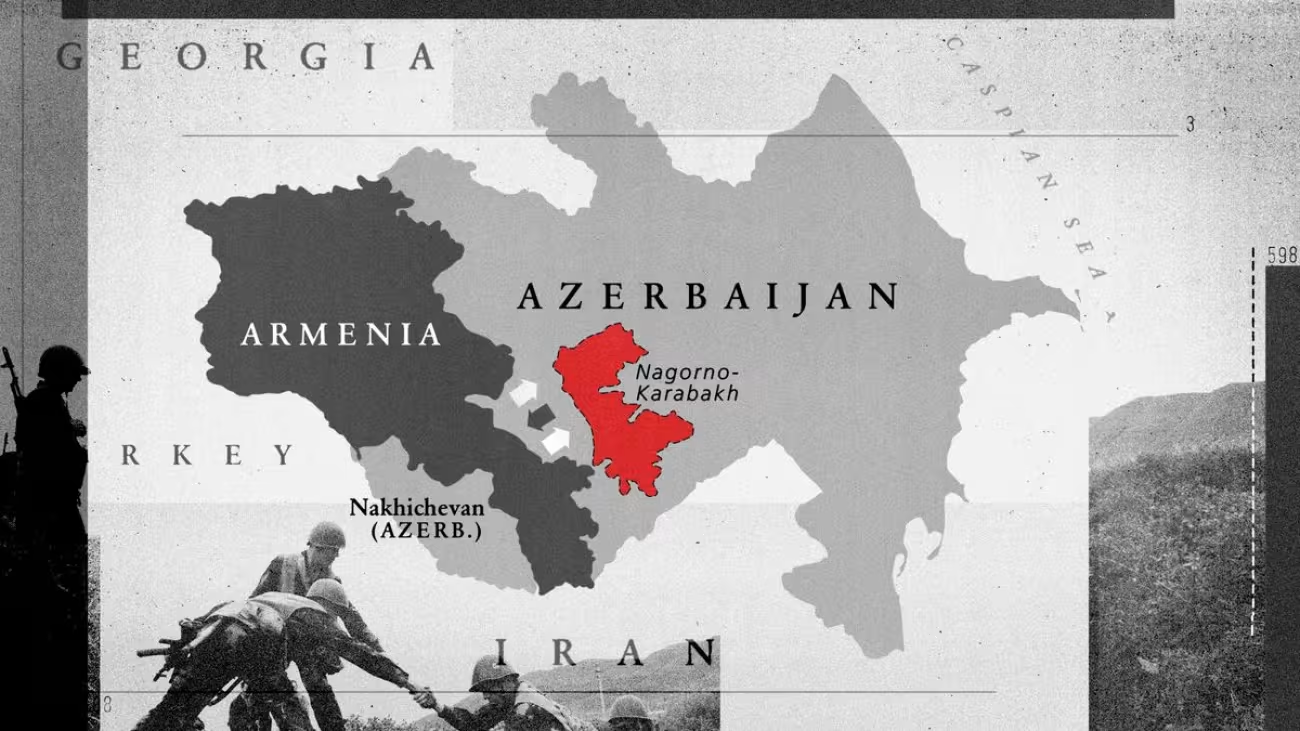
Turkey played a significant role in supporting Azerbaijan during its military conflict with Armenia over Nagorno-Karabakh, particularly during the 2020 Second Nagorno-Karabakh War. Under President Recep Tayyip Erdogan, Ankara provided Azerbaijan with diplomatic backing, military equipment, advanced drone technology, training, and defence cooperation that strengthened its military capabilities.
The relationship between Turkey and Azerbaijan extends beyond conventional political alliances. The two countries share linguistic, cultural, historical, economic, and strategic interests, frequently describing their partnership through the expression "One Nation, Two States."
Turkey's support became particularly important during the 44-day war in September and November 2020, when Azerbaijani forces regained substantial territory previously controlled by Armenian forces. Turkish Bayraktar TB2 drones, military training, and operational expertise contributed to Azerbaijan's battlefield advantages.
However, Turkey's involvement was not limited to the 2020 conflict. Its relationship with Azerbaijan developed into a formal military and strategic alliance, influencing the balance of power throughout the South Caucasus.
By November 2026, the conflict had entered a different phase. Azerbaijan regained full control of Nagorno-Karabakh in September 2023, while Armenia and Azerbaijan continued working towards a formal peace agreement supported by international mediators.
What Is the Nagorno-Karabakh Conflict?
Nagorno-Karabakh is a mountainous region in the South Caucasus, internationally recognised as part of Azerbaijan but historically inhabited predominantly by ethnic Armenians.
The conflict developed during the final years of the Soviet Union, when tensions increased between the Armenian and Azerbaijani populations over the region's political status.
In 1988, Nagorno-Karabakh's regional legislature expressed its intention to join Armenia. The disagreement escalated into a major armed conflict as the Soviet Union collapsed and Armenia and Azerbaijan became independent states in 1991.
The first Nagorno-Karabakh War lasted until a Russian-brokered ceasefire in 1994. Armenian forces gained control of Nagorno-Karabakh and several surrounding Azerbaijani districts, creating a prolonged territorial dispute that remained unresolved for decades.
Why Is Nagorno-Karabakh Important to Armenia and Azerbaijan?
For Armenia, Nagorno-Karabakh has deep historical, cultural, and national significance because of its ethnic Armenian population and long-standing connections with Armenian society.
For Azerbaijan, the region is part of its internationally recognised territory. Recovering control over Nagorno-Karabakh became a central objective of Azerbaijani foreign and security policy.
The dispute therefore involved two competing principles: Azerbaijan's territorial integrity and the right of the region's ethnic Armenian population to security and self-determination.
These competing positions, combined with decades of displacement, military confrontation, and political mistrust, made a peaceful settlement extremely difficult.
Why Does Turkey Support Azerbaijan Against Armenia?
Turkey's support for Azerbaijan is rooted in several interconnected interests. Shared cultural identity, regional security, economic opportunities, and geopolitical influence all help explain Ankara's position.
1. Shared Turkish and Azerbaijani Cultural Identity
One of the strongest foundations of the relationship is the close cultural and linguistic connection between the two countries.
Azerbaijani and Turkish are closely related Turkic languages, allowing many people from both countries to communicate relatively easily.
Turkey and Azerbaijan also maintain strong historical and cultural connections, reinforced through education, media, political cooperation, and military exchanges.
The phrase "One Nation, Two States" reflects how both governments publicly describe their relationship. It represents a political and cultural partnership that has developed into cooperation across defence, trade, energy, and international affairs.
2. Strategic Military and Security Interests
Azerbaijan provides Turkey with an important strategic partner in the South Caucasus, a region connecting Europe, the Middle East, Russia, and Central Asia.
By strengthening its relationship with Baku, Ankara increases its political and military influence in a region historically influenced by Russia and other neighbouring powers.
The partnership also allows Turkey to expand its defence industry, develop military cooperation, and strengthen its position among Turkic-speaking countries.
Turkey's support for Azerbaijan is therefore not simply an expression of cultural solidarity. It is also part of a broader regional strategy.
3. Energy and Economic Cooperation
Azerbaijan is an important energy supplier and transportation partner for Turkey.
Oil and natural gas infrastructure connects the Caspian region with Turkey and international markets, strengthening the economic relationship between the two countries.
Important infrastructure projects include:
- Baku-Tbilisi-Ceyhan pipeline: Transports crude oil from Azerbaijan through Georgia to Turkey's Mediterranean coast.
- South Caucasus Pipeline: Transports natural gas from Azerbaijan through Georgia towards Turkey.
- Trans-Anatolian Natural Gas Pipeline (TANAP): Carries Azerbaijani natural gas across Turkey towards Europe.
- Baku-Tbilisi-Kars railway: Provides a major freight transportation connection between Azerbaijan, Georgia, and Turkey.
These projects demonstrate why stability and political influence in Azerbaijan are strategically important to Ankara.
4. Expanding Influence in the South Caucasus
Turkey has historically competed with Russia and Iran for influence across parts of the South Caucasus.
Supporting Azerbaijan strengthens Ankara's position in regional diplomacy, military cooperation, and transportation infrastructure.
The 2020 war also demonstrated that Turkey could become a major security actor in a region where Russia had traditionally exercised considerable influence.
For Azerbaijan, the relationship offered access to Turkish military expertise and political support from an important regional power.
How Turkey Helped Azerbaijan Win the 2020 Nagorno-Karabakh War
The Second Nagorno-Karabakh War began on September 27, 2020, and continued for approximately 44 days before a Russian-brokered ceasefire ended the major fighting on November 9.
During the conflict, Turkey provided Azerbaijan with substantial political and military support. Its contribution included advanced weapons, military training, defence cooperation, and operational expertise.
1. Supplying Bayraktar TB2 Armed Drones
One of Turkey's most important contributions was the Bayraktar TB2, an unmanned combat aerial vehicle developed by Turkish defence company Baykar.
The drone became one of the most recognisable weapons of the 2020 conflict because of its ability to conduct surveillance, identify military targets, and launch precision strikes.
Azerbaijani forces used unmanned aerial systems alongside Israeli-made loitering munitions to attack Armenian military positions, artillery, armoured vehicles, and air-defence equipment.
According to research published by the Foreign Policy Research Institute, Bayraktar TB2 drones provided Azerbaijan with important intelligence, surveillance, reconnaissance, and long-range strike capabilities.
The technology helped Azerbaijan exploit weaknesses in Armenian and Nagorno-Karabakh air-defence systems, changing the battlefield environment and reducing the effectiveness of traditional defensive positions.
2. Military Training and Modernisation
Turkey had been training Azerbaijani military personnel long before the 2020 war began.
Joint exercises, officer exchanges, military education, and defence cooperation helped Azerbaijan develop armed forces with greater interoperability with Turkish military systems.
Turkey also supported the modernisation of Azerbaijan's military structure, including improvements in training, equipment, and operational capabilities.
This cooperation was important because Azerbaijan's military had historically relied heavily on Soviet-era equipment and organisational structures.
By 2020, the country had developed a more modern military force capable of combining drones, artillery, electronic warfare, intelligence, and conventional ground operations.
3. Tactical and Operational Expertise
Turkey's contribution extended beyond supplying weapons. Military analysts have identified Turkish advice, training, and operational cooperation as important factors in Azerbaijan's battlefield performance.
Modern warfare increasingly requires coordination between surveillance drones, ground forces, artillery, electronic warfare, and command systems.
Azerbaijan demonstrated an effective ability to integrate these capabilities during the 2020 conflict.
A 2026 academic study published in Turkish Studies argues that Turkey's involvement went beyond public diplomatic support and military equipment, examining its influence over operational planning and Azerbaijan's military structures.
However, the precise extent of Turkish personnel's direct participation in battlefield command remains contested and is not fully established through publicly available evidence.
4. Diplomatic and Political Support
President Erdogan strongly supported Azerbaijan throughout the conflict.
Turkey repeatedly criticised Armenia's position and called for the restoration of Azerbaijani territorial control over Nagorno-Karabakh and surrounding territories.
On September 28, 2020, Erdogan publicly declared that Turkey would continue supporting Azerbaijan with its resources and political commitment.
This diplomatic backing strengthened Azerbaijan's international position and demonstrated that it had the support of an influential regional ally.
Did Turkey Send Syrian Fighters to Support Azerbaijan?
One of the most controversial aspects of Turkey's involvement in the 2020 war concerned allegations that Syrian fighters were recruited and transported to Azerbaijan.
Armenian officials accused Turkey of helping recruit Syrian fighters from armed groups operating in northern Syria and deploying them to support Azerbaijani military operations.
Reuters reported in September 2020 that Syrian fighters said they had been recruited to support Azerbaijan. Azerbaijan denied the allegations.
On November 11, 2020, United Nations human rights experts expressed concern over widespread reports that Azerbaijan, with Turkish assistance, had relied on Syrian fighters during the conflict.
The UN experts called for foreign mercenaries and related actors to be withdrawn from the conflict zone and warned about the humanitarian consequences of their involvement.
Turkey rejected allegations of improper involvement, while the precise number of fighters and the full extent of their participation remain disputed.
The issue illustrates how the conflict involved not only conventional military forces but also broader regional networks and external actors.
Did Turkish Soldiers Fight Directly Against Armenia?
Turkey's military support for Azerbaijan is well documented, but the question of direct Turkish combat participation requires a distinction between military assistance and the deployment of regular Turkish forces.
During the 2020 war, Armenia accused Turkey of deploying military personnel and fighter aircraft to assist Azerbaijan. Turkey denied allegations that its F-16 aircraft had shot down an Armenian Su-25 fighter.
Research and reporting have identified Turkish military advisers, operational cooperation, and extensive military assistance. However, the complete extent of direct Turkish military involvement remains debated.
In September 2023, when Azerbaijan launched another military operation in Nagorno-Karabakh, a Turkish defence ministry official stated that Turkey had not directly participated in the operation.
The official emphasised that Turkey's long-standing military training and modernisation cooperation had helped strengthen Azerbaijan's armed forces.
It is therefore more accurate to describe Turkey as a major military and strategic supporter of Azerbaijan rather than automatically assuming that regular Turkish combat units fought openly throughout the conflict.
The Shusha Declaration: Turkey and Azerbaijan Become Strategic Allies
Turkey and Azerbaijan formalised their close relationship through the Shusha Declaration, signed by Presidents Recep Tayyip Erdogan and Ilham Aliyev on June 15, 2021.
The agreement elevated bilateral relations to an allied level and established a framework for closer cooperation in defence, security, economic development, and foreign policy.
One of its most important provisions concerns mutual consultations and assistance if either country faces a threat to its independence, sovereignty, territorial integrity, or security.
Key Areas of Cooperation Under the Declaration
- Modernisation and restructuring of both countries' armed forces.
- Joint military exercises and personnel training.
- Defence technology development and weapons cooperation.
- Coordination on regional and international security issues.
- Cooperation in transportation, trade, and energy infrastructure.
- Mutual consultations and assistance in response to external threats.
The declaration demonstrated that Turkey's support for Azerbaijan was becoming a long-term strategic commitment rather than a temporary response to the Nagorno-Karabakh conflict.
What Happened After Azerbaijan Won the 2020 War?
The November 2020 ceasefire significantly changed the territorial balance in the South Caucasus.
Azerbaijan regained substantial areas lost during the first Nagorno-Karabakh War, while Armenian forces withdrew from several surrounding districts.
Russia deployed approximately 2,000 peacekeepers to monitor the ceasefire and maintain the Lachin corridor, which connected Armenia with the remaining Armenian-controlled part of Nagorno-Karabakh.
Turkey also increased its regional influence through its military relationship with Azerbaijan and participation in the Turkish-Russian Joint Monitoring Centre established to observe the ceasefire.
However, the agreement did not permanently resolve the political status of Nagorno-Karabakh or the security concerns of its ethnic Armenian population.
Azerbaijan Regains Full Control of Nagorno-Karabakh in 2023
The conflict entered another decisive phase on September 19, 2023, when Azerbaijani forces launched a military operation in Nagorno-Karabakh.
Azerbaijan described the offensive as an anti-terrorist operation targeting Armenian military installations and armed formations in the region.
Within approximately 24 hours, Nagorno-Karabakh's Armenian authorities agreed to a ceasefire and the disarmament of their forces.
The operation ended decades of de facto self-government in the region and established full Azerbaijani control.
More Than 100,000 Ethnic Armenians Fled the Region
One of the most significant consequences was the mass departure of ethnic Armenians from Nagorno-Karabakh.
Following the September 2023 offensive, more than 100,000 people fled to Armenia, representing almost the entire Armenian population of the region.
The Armenian government described the mass displacement as ethnic cleansing, while Azerbaijan maintained that residents could remain in the region and accept Azerbaijani citizenship.
The humanitarian consequences included displacement, loss of homes, family separation, and difficulties accessing housing, healthcare, education, and employment in Armenia.
The events also generated international criticism and renewed discussions about minority rights, civilian protection, and the responsibility of governments to protect displaced populations.
Why Did Russia Fail to Protect Nagorno-Karabakh?
Russia had traditionally been one of the most influential external powers in the Armenia-Azerbaijan conflict.
Armenia was a member of the Collective Security Treaty Organization (CSTO), a Russian-led security alliance, while Russia maintained military and economic relationships with both Armenia and Azerbaijan.
Following the 2020 ceasefire, Russian peacekeepers were stationed in Nagorno-Karabakh to monitor the situation.
However, they did not prevent Azerbaijan's September 2023 military offensive.
Several factors contributed to Russia's limited response:
- Ukraine war: Russia's full-scale invasion of Ukraine in 2022 placed significant pressure on its military and diplomatic resources.
- Relations with Azerbaijan: Moscow maintained important political, economic, and strategic ties with Baku.
- Armenia's changing foreign policy: Relations between Moscow and Yerevan deteriorated as Armenia increasingly questioned Russia's reliability as a security partner.
- Limited peacekeeping mandate: The Russian peacekeeping arrangement did not provide an automatic collective defence guarantee for Nagorno-Karabakh.
The result was a major shift in regional influence. Azerbaijan strengthened its position, Turkey became an increasingly important strategic partner, and Armenia began reassessing its dependence on Russia.
Turkey's Position Toward Armenia and Azerbaijan in 2025–2026
Although Turkey has consistently supported Azerbaijan, its diplomatic position has gradually evolved as Armenia and Azerbaijan pursue a negotiated settlement.
Turkey has maintained close relations with Baku while also exploring the possibility of normalising relations with Yerevan.
Erdogan Meets Armenia's Prime Minister in 2025
On June 20, 2025, President Erdogan met Armenian Prime Minister Nikol Pashinyan in Istanbul.
According to Reuters, Erdogan told Pashinyan that Turkey would support Armenia's efforts to achieve peace with Azerbaijan.
The meeting also addressed the normalisation of relations between Turkey and Armenia, demonstrating that Ankara was willing to engage diplomatically with its long-standing regional rival.
Nevertheless, Turkey's progress towards normalisation has remained closely connected to developments in the Armenia-Azerbaijan peace process.
The August 2025 Washington Peace Declaration
On August 8, 2025, Armenian Prime Minister Nikol Pashinyan and Azerbaijani President Ilham Aliyev met in Washington, where they signed a joint declaration witnessed by US President Donald Trump.
The meeting also witnessed the initialling of the proposed Agreement on Establishment of Peace and Inter-State Relations between Armenia and Azerbaijan.
The agreement covered several important issues, including:
- Recognition of sovereignty and territorial integrity.
- Respect for internationally recognised borders.
- Establishment of diplomatic relations.
- Development of regional transportation connections.
- Cooperation to establish long-term peace and stability.
However, initialling the agreement was not equivalent to signing and ratifying it. Further domestic political and constitutional procedures remained necessary.
Armenia's New Constitution Proposal in November 2026
On November 23, 2026, Armenia published a draft proposal for a new constitution intended to help resolve a major obstacle to a formal peace agreement with Azerbaijan.
The proposed document removes references in the constitutional preamble that Azerbaijan interprets as territorial claims connected to Nagorno-Karabakh.
Azerbaijan welcomed the proposal, with Foreign Minister Jeyhun Bayramov indicating that resolving the constitutional issue could remove the remaining obstacle to signing the peace agreement.
However, the proposal faces political resistance within Armenia and requires sufficient parliamentary support to proceed to a constitutional referendum.
Consequently, despite the progress made since 2025, the formal peace process remains unfinished as of November 25, 2026.
What Does Turkey Gain From Supporting Azerbaijan?
Turkey's relationship with Azerbaijan has produced several strategic advantages that extend beyond the original Nagorno-Karabakh dispute.
Greater Influence in the South Caucasus
Azerbaijan provides Turkey with a strong political and military partner in a strategically important region. This strengthens Ankara's influence in regional negotiations and reduces the extent to which Russia can dominate South Caucasus security arrangements.
Stronger Energy and Transportation Connections
Turkey benefits from its position as a major transportation and energy corridor connecting Azerbaijan and the Caspian region with European markets.
Improved regional connectivity could create additional opportunities for trade, infrastructure investment, and energy cooperation.
Expansion of Turkey's Defence Industry
The 2020 conflict also increased international attention on Turkish military technology, particularly Bayraktar drones.
Azerbaijan's battlefield performance demonstrated the importance of unmanned aerial systems in modern warfare and helped reinforce Turkey's position as a growing defence equipment supplier.
Closer Relations With Turkic Countries
Azerbaijan is an important member of the broader Turkic political and cultural community. Stronger relations with Baku help Turkey expand cooperation with other Turkic-speaking countries, including those in Central Asia.
This supports Ankara's long-term ambitions in trade, transportation, diplomacy, and regional security.
Conclusion
Turkey supported Azerbaijan during the Nagorno-Karabakh conflict because of a combination of shared cultural identity, strategic interests, economic cooperation, and regional geopolitical ambitions.
During the 2020 war, Turkey provided Azerbaijan with important military assistance, including Bayraktar TB2 drones, training, modernisation, operational expertise, and diplomatic backing. These contributions strengthened Azerbaijan's military capabilities and helped change the balance of power in the South Caucasus.
The relationship subsequently developed into a formal strategic alliance through the 2021 Shusha Declaration, establishing long-term cooperation in defence, security, and economic development.
However, the conflict's consequences extended far beyond military victory. Azerbaijan regained full control of Nagorno-Karabakh in 2023, while more than 100,000 ethnic Armenians fled the region, creating a major humanitarian and political crisis.
By November 2026, Turkey continued to maintain close ties with Azerbaijan while expressing support for diplomatic efforts between Armenia and Azerbaijan. The two countries had made significant progress towards a peace agreement, although final signing and ratification remained outstanding.
Ultimately, Turkey's involvement in Nagorno-Karabakh demonstrated how military technology, strategic alliances, and regional diplomacy can reshape the balance of power in a contested region.
- Log in to post comments