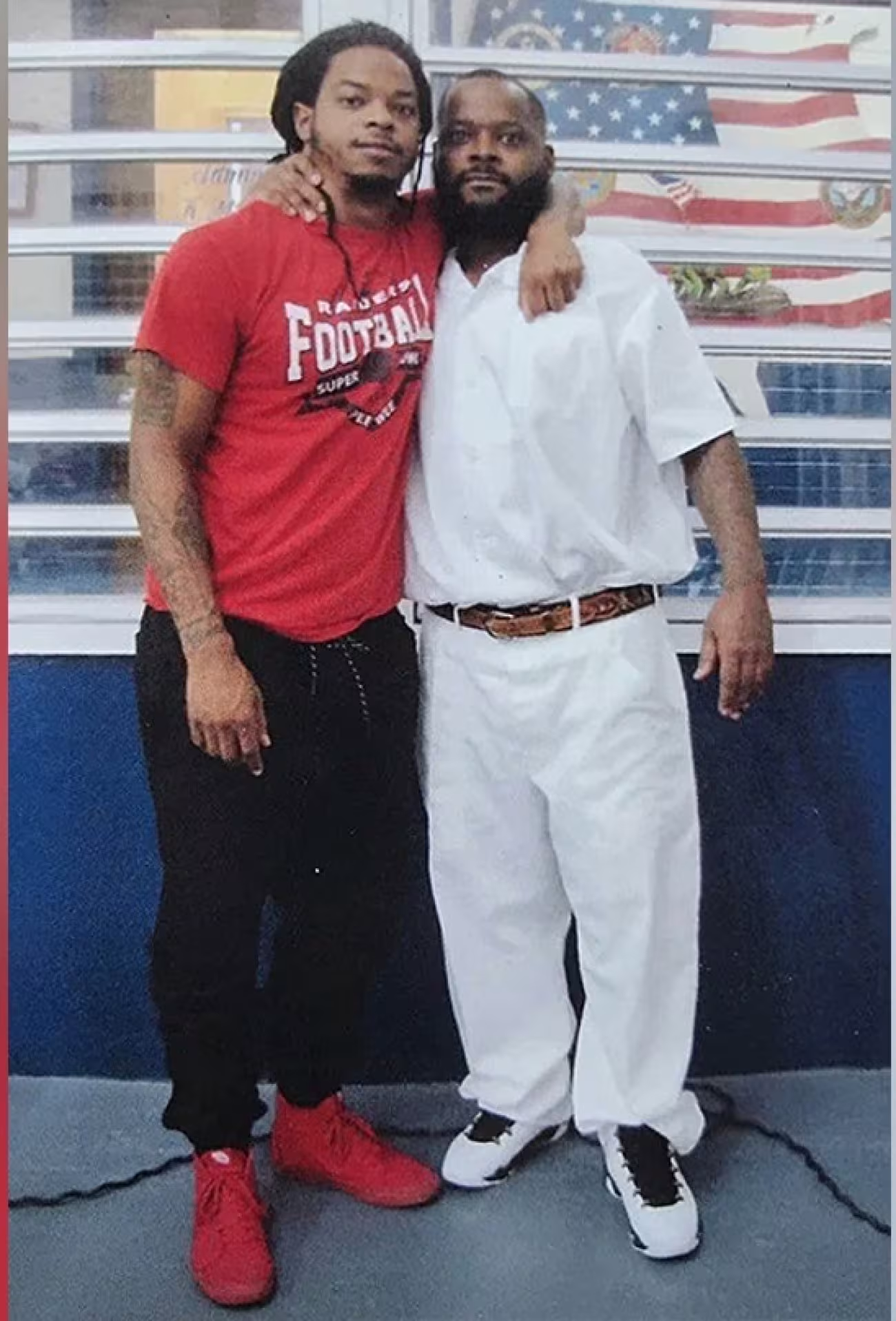
Toforest Johnson, an Alabama prisoner who spent nearly three decades on death row for the 1995 murder of Jefferson County Deputy Sheriff William Hardy, had his death sentence commuted by Republican Governor Kay Ivey on October 20, 2026. Johnson, who has consistently maintained his innocence, will now serve life in prison without the possibility of parole. The decision followed years of concerns about the evidence supporting his conviction, including questions raised by the current Jefferson County district attorney, former prosecutors, and judges.
Who Is Toforest Johnson?
Toforest Onesha Johnson is an Alabama man who was convicted in 1998 of capital murder in the shooting death of Jefferson County Deputy Sheriff William G. Hardy.
Johnson was 23 when Hardy was killed in July 1995. He has maintained that he was elsewhere in Birmingham when the shooting occurred.
His case attracted national attention because of disputed witness testimony, questions about the original investigation, and the involvement of former legal officials who expressed concerns about the conviction.
Before Governor Ivey's intervention, Johnson had spent approximately 28 years on Alabama's death row. He remains incarcerated at William C. Holman Correctional Facility in Atmore.
Why Did Kay Ivey Commute Toforest Johnson's Death Sentence?
On October 20, 2026, Alabama Governor Kay Ivey announced that she was commuting Johnson's death sentence to life imprisonment without parole.
Ivey explained that her review raised serious concerns about whether the evidence was sufficient to justify an execution. She emphasized that the decision did not establish Johnson's innocence or overturn the jury's verdict.
The governor described capital punishment as a responsibility requiring especially careful consideration, given its irreversible consequences.
Her decision followed requests from Johnson's attorneys and multiple legal figures who had questioned the reliability of the evidence presented at his trial.
Although the commutation prevents Johnson's execution under the existing sentence, it does not entitle him to release or a new trial.
The 1995 Murder of Deputy Sheriff William Hardy
The criminal case began on July 19, 1995, when William Hardy, a Jefferson County sheriff's deputy, was fatally shot in the parking lot of a Birmingham hotel.
Hardy was working an off-duty security assignment when he was shot twice in the head. His death prompted a homicide investigation that eventually led prosecutors to charge Johnson with capital murder.
Johnson denied involvement and maintained that he had been on the opposite side of Birmingham at the time of the shooting.
His first trial ended with a deadlocked jury. In August 1998, a second jury convicted him of capital murder and recommended a death sentence by a 10–2 vote. The trial judge accepted that recommendation.
Johnson subsequently pursued appeals and post-conviction challenges, arguing that important weaknesses in the prosecution's case had not been properly addressed.
Why Was Toforest Johnson's Conviction Questioned?
Concerns about Johnson's conviction centered on the absence of physical evidence connecting him to Hardy's killing and the reliability of testimony used to establish his involvement.
The Key Witness and the $5,000 Reward
One of the prosecution's most important witnesses, Violet Ellison, testified that she overheard a man identified as Toforest confessing to the murder during a three-way telephone call involving a jail.
Ellison later received a $5,000 reward connected to the case. Johnson's attorneys argued that information concerning the possibility of a reward should have been disclosed to the defense because it could have affected how jurors evaluated her credibility.
The issue became central to prolonged litigation over whether prosecutors had improperly withheld potentially favorable evidence.
However, a 2022 Alabama appellate decision upheld a lower court's rejection of Johnson's disclosure claim. The court concluded that he had not established that Ellison testified in anticipation of receiving a reward.
Defense attorneys and other critics continued to question the witness's credibility despite that ruling.
Alibi Evidence and Lack of Physical Proof
Johnson's defense also identified witnesses who placed him elsewhere in Birmingham when Hardy was killed.
Reporting on the case indicated that no physical evidence directly connected Johnson to the crime scene.
These circumstances contributed to doubts expressed by several legal officials, including individuals who had previously worked as prosecutors or judges.
The disagreement was not simply about whether the case contained some evidence, but whether that evidence was sufficiently reliable to sustain a capital murder conviction.
Jefferson County District Attorney Danny Carr Supports a New Trial
One of the most significant developments came when Jefferson County District Attorney Danny Carr publicly questioned the strength of the prosecution's case.
In 2020, Carr's office issued a report identifying serious concerns about the investigation and conviction. He later supported efforts to secure a new trial for Johnson.
Other prominent Alabama legal figures also expressed concerns, including former Attorney General Bill Baxley and former Alabama Chief Justice Drayton Nabers.
Their involvement drew particular attention because doubts about a criminal conviction are sometimes raised not only by defense advocates but also by individuals with substantial experience in prosecution and judicial proceedings.
Those concerns helped sustain public and legal interest in Johnson's case long before Governor Ivey announced her decision.
Alabama Attorney General Steve Marshall Opposed Clemency
Despite the growing support for Johnson, Alabama Attorney General Steve Marshall opposed the request for clemency.
Marshall urged Governor Ivey to respect the jury's verdict and the decisions of courts that had previously reviewed the case.
His position reflected the state's continuing defense of the conviction and the argument that the judicial process had already provided opportunities to challenge the evidence.
Ivey ultimately reached a different conclusion about the appropriateness of carrying out the death sentence.
Before announcing the commutation, she notified Marshall and a designated representative of Deputy Hardy's family.
How Did Toforest Johnson and His Family React?
Johnson's legal team welcomed the governor's decision while making clear that the case was not over.
Defense attorney Ty Alper thanked Ivey for reviewing the matter and preventing Johnson's execution. He reaffirmed the defense's position that Johnson is innocent and said attorneys would continue seeking to overturn the conviction.
Johnson's family also expressed relief at the commutation, which removed the immediate possibility of an execution under his previous sentence.
For his relatives and supporters, however, life imprisonment without parole remains far short of the outcome they are seeking.
The defense's continuing objective is to obtain judicial relief that could result in a new trial and potentially Johnson's release.
Can Toforest Johnson Still Be Released From Prison?
The commutation does not automatically make Johnson eligible for release.
Under the new sentence, he must remain imprisoned for life without the possibility of parole unless a separate legal process changes his circumstances.
His attorneys may continue pursuing post-conviction relief through the courts. If a court eventually overturns his conviction, further proceedings would determine whether he receives a new trial, faces another prosecution, or becomes eligible for release.
These outcomes are not guaranteed. As of October 21, 2026, Johnson's conviction remains in effect.
Kay Ivey's Record on Alabama Executions and Clemency
Governor Ivey's decision was notable in the context of her administration's use of capital punishment.
Since taking office in 2017, she has overseen 27 executions and commuted the death sentences of three prisoners, including Johnson.
Her term is scheduled to conclude in January 2027 because Alabama's term limits prevent her from seeking another consecutive term.
The Johnson decision illustrates the distinction between the governor's executive authority to reduce a criminal sentence and the judiciary's authority to determine whether a conviction should stand.
Ivey did not declare Johnson innocent. Instead, she concluded that the evidence and circumstances did not justify carrying out the death penalty.
Frequently Asked Questions
Who is Toforest Johnson?
Toforest Johnson is an Alabama prisoner convicted in 1998 of the 1995 murder of Jefferson County Deputy Sheriff William Hardy. He has maintained his innocence throughout the case.
Why was Toforest Johnson on death row?
Johnson was sentenced to death after a jury convicted him of capital murder in Hardy's shooting death. He remained on death row until Governor Kay Ivey commuted his sentence in October 2026.
Did Kay Ivey pardon Toforest Johnson?
No. Ivey commuted his death sentence to life imprisonment without parole. She did not pardon him, overturn his conviction, or order his release.
What happened to Toforest Johnson on October 20, 2026?
Governor Ivey announced that Johnson would no longer face execution under his existing sentence because of concerns about the evidence used to support the death penalty.
Why is the $5,000 witness reward controversial?
A key prosecution witness received a $5,000 reward after Johnson's conviction. Defense attorneys argued that information about a possible reward was relevant to evaluating her testimony, although a 2022 appellate ruling rejected Johnson's claim that prosecutors had unlawfully withheld that evidence.
Where is Toforest Johnson now?
As of October 2026, Johnson remains incarcerated at Holman Correctional Facility in Atmore, Alabama.
Will Toforest Johnson get a new trial?
His attorneys continue seeking to overturn the conviction, but no new trial was granted as part of the October 20 commutation.
How many executions has Kay Ivey overseen?
Governor Ivey stated that she had overseen 27 executions during her administration as of October 2026.
Conclusion
The commutation of Toforest Johnson's death sentence marks a major development in a criminal case that has generated decades of legal controversy. Governor Kay Ivey's decision followed concerns about the strength of the evidence, disputed witness testimony, and calls for reconsideration from current and former legal officials.
Johnson will no longer face execution under his original sentence, but he remains convicted of Deputy William Hardy's murder and must serve life imprisonment without parole unless the courts grant further relief.
For Johnson and his supporters, the next challenge is overturning the conviction. For Alabama's justice system, the case continues to raise questions about evidentiary reliability, capital punishment, and the standards required when a person's life is at stake.
- Log in to post comments