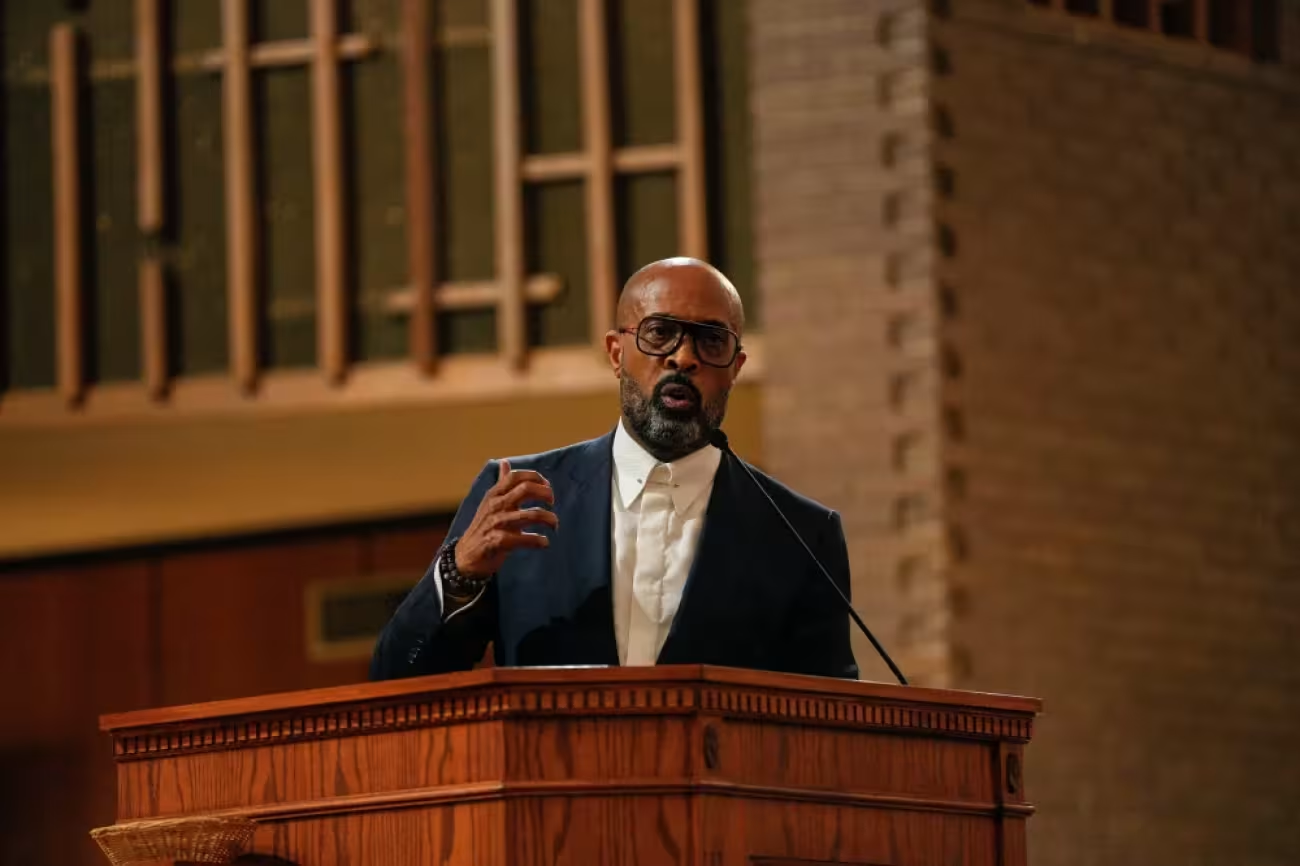
The Christian Left is gaining renewed attention in Texas as Democratic candidates James Talarico, Frederick D. Haynes III and Gina Hinojosa connect their Christian beliefs with public service and progressive policy priorities ahead of the November 3, 2026, elections. Their campaigns challenge the assumption that politically active Christians in Texas primarily identify with the Republican Party.
Although the three candidates represent different Christian traditions, they share concerns about public education, economic inequality, health care and government accountability. Their approaches also reveal important differences in how religious identity influences political messaging.
What Is the Christian Left?
The Christian Left is a broad political and religious tradition associated with Christians who support liberal or progressive approaches to social and economic issues. Its priorities commonly include poverty reduction, civil rights, access to health care, economic opportunity and protections for vulnerable communities.
The movement has historical connections to the Social Gospel, progressive Protestant activism, Catholic social teaching and the Black church's involvement in the American civil rights movement.
Unlike a formal political organization, the Christian Left does not have one governing body, unified theological doctrine or common legislative platform.
Its participants also differ on contested issues such as abortion, immigration and the relationship between religious institutions and government.
Why the Christian Left Matters in Texas Politics
Religion has long influenced political life in Texas, where conservative evangelical Christians have played a major role in Republican organizing and public policy debates.
However, the state's Christian population is politically diverse. Black Protestant communities have longstanding connections with Democratic politics, while Hispanic Catholics, mainline Protestants and other religious groups hold a range of political preferences.
In 2026, Democratic candidates who publicly discuss their faith have received growing national attention. Their campaigns demonstrate how Christian religious language can be used to support positions that differ significantly from those associated with the religious right.
For these candidates, faith is not necessarily an argument for government enforcement of religious doctrine. It can instead provide a personal framework for discussing public responsibility, economic fairness and human dignity.
Three Christian Democrats Running for Office in Texas
James Talarico, Frederick D. Haynes III and Gina Hinojosa are running for different offices in the 2026 general election.
| Candidate | 2026 Election | Religious Background | Political Focus |
|---|---|---|---|
| James Talarico | U.S. Senate | Christian; Presbyterian seminary student | Education, health care, affordability and religious liberty |
| Frederick D. Haynes III | U.S. House, Texas District 30 | Baptist pastor | Economic justice, civil rights and community development |
| Gina Hinojosa | Governor of Texas | Roman Catholic | Public schools, household affordability and government accountability |
Gina Hinojosa is running for governor against Republican incumbent Greg Abbott. The Democratic nominee for lieutenant governor is Vikki Goodwin, who is challenging Republican incumbent Dan Patrick.
James Talarico: Christianity, Religious Freedom and Progressive Policies
James Talarico is a Democratic Texas state representative, former public school teacher and student at Austin Presbyterian Theological Seminary. He is running for the U.S. Senate against Republican Ken Paxton and Libertarian Ted Brown.
Talarico frequently discusses Christianity in public speeches and interviews, emphasizing the ethical obligations of loving one's neighbor, caring for vulnerable people and protecting religious freedom.
He has also criticized Christian nationalism, arguing that government should not impose one religious tradition on Americans.
James Talarico's Policy Positions
Education: Talarico supports increasing public school funding, raising teacher compensation, expanding teacher training and establishing universal prekindergarten for three- and four-year-olds. He opposes private-school voucher programs funded by public money.
Health care: He advocates making medical care and prescription drugs more affordable, strengthening rural hospitals and expanding access to health insurance, including a public coverage option.
Economy and taxes: His proposals include expanding tax credits for families, lowering household expenses, supporting workers' collective bargaining rights and addressing tax advantages benefiting wealthy individuals and corporations.
Reproductive rights: He supports federal legislation restoring abortion protections associated with Roe v. Wade, along with protections for contraception and in vitro fertilization.
Religious liberty: Talarico supports separation of church and state, opposes religious discrimination and rejects government-mandated religious instruction or observances in public schools.
Civil liberties: His platform includes protections for free speech, same-sex marriage and LGBTQ rights, along with regulated adult-use marijuana legalization.
Immigration: He supports border security alongside changes to legal immigration procedures and pathways to legal status for certain undocumented immigrants.
His campaign combines progressive economic proposals with religious arguments about public service. However, some of his positions, including those concerning gender-transition medical care for minors, have prompted disagreement within progressive political circles.
Frederick D. Haynes III: The Black Church and Social Justice
Frederick Douglass Haynes III is a longtime Baptist minister and Democratic candidate for the U.S. House of Representatives in Texas' 30th Congressional District.
For more than four decades, he has served as senior pastor of Friendship-West Baptist Church in Dallas, where his ministry has included civic engagement, voter education, economic development and community assistance.
Haynes represents a tradition of Black Christian leadership that connects religious ministry with civil rights advocacy and political organizing.
Frederick Haynes' Policy Positions
Health care: Haynes has expressed support for Medicare for All, arguing for broader public access to medical services.
Economic justice: His campaign emphasizes stronger economic opportunities for working families, protections against predatory lending and investments in underserved communities.
Immigration: Haynes has advocated dismantling U.S. Immigration and Customs Enforcement, a position that distinguishes his platform from more moderate proposals focused on reforming the agency.
Education: He supports equitable school funding, better educational opportunities and programs that help young people enter the workforce.
Civil rights: His public work includes advocacy for voting rights, criminal justice reform and protections against racial discrimination.
Environmental justice: His campaign addresses pollution and infrastructure inequalities affecting historically underserved neighborhoods.
Haynes' political outlook is strongly influenced by the relationship between religious faith and community conditions. His ministry treats issues such as poverty, housing, economic security and racial inequality as matters deserving public attention.
Gina Hinojosa: Catholic Faith, Education and Government Accountability
Gina Hinojosa is a Democratic state representative, former Austin Independent School District board president and civil rights attorney running for governor of Texas in 2026.
A Roman Catholic, Hinojosa has described her faith as her moral compass, explaining that it guides her sense of responsibility and public service.
Unlike Talarico and Haynes, whose religious identities are especially visible in their public political messaging, Hinojosa places greater emphasis on her experience in education, law and state government.
Gina Hinojosa's Policy Positions
Public education: Hinojosa supports strengthening neighborhood public schools, increasing teacher pay and opposing taxpayer-funded private-school voucher programs.
Cost of living: She emphasizes reducing financial pressure on working families and improving economic opportunity for Texans.
Health care: Her proposals include expanding coverage, improving access to affordable treatment, protecting children's health care and increasing accountability for insurers.
Government accountability: Hinojosa criticizes what she describes as excessive corporate influence in state government and supports stronger oversight of public spending and contracts.
Immigration: She supports border security while advocating humane enforcement, due process protections and a pathway to legal status for qualifying long-term residents.
Voting rights: She supports measures to expand voter access, including online voter registration and an independent redistricting commission.
Hinojosa's campaign illustrates how a Democratic candidate can acknowledge the importance of personal religious faith while emphasizing policy proposals directed toward the broader public, regardless of religious affiliation.
What Do Talarico, Haynes and Hinojosa Have in Common?
Although the three candidates differ in background and policy emphasis, their campaigns reveal several areas of overlap.
- Faith and public service: Each has publicly associated Christian belief with ethical responsibility in public life.
- Economic opportunity: All three emphasize improving conditions for working families and communities facing economic hardship.
- Education: They support stronger public education and greater opportunities for students.
- Health care: Their platforms favor expanded access to affordable medical services, although their preferred policies differ.
- Social justice: They address issues involving inequality, civil rights or government accountability.
These shared priorities do not mean the candidates belong to a formal political alliance or agree on every issue. Their campaigns reflect different religious traditions, constituencies and governing responsibilities.
Christian Left vs. Christian Right: Key Differences
Both the Christian Left and Christian Right draw on religious beliefs when discussing public policy. Their differences generally concern the issues they prioritize and how they interpret the relationship between faith, individual rights and government.
| Issue | Common Christian Left Positions | Common Christian Right Positions |
|---|---|---|
| Economic policy | Government action to reduce poverty and inequality | Market-oriented policies, charity and limited government intervention |
| Health care | Expanded public access and affordability programs | Greater emphasis on private provision and market-based reforms |
| Education | Public school investment and opposition to religious mandates | Parental school choice and protections for religious expression |
| Abortion | Many support legal abortion access | Many support abortion restrictions |
| Church and state | Emphasis on institutional separation and religious pluralism | Emphasis on religious liberty and public religious expression |
These comparisons describe broad political tendencies, not universal positions. Conservative and progressive Christians disagree within their own movements, and many religious voters hold views that cross traditional partisan boundaries.
Is the Christian Left a New Movement?
Progressive Christianity is not new to American politics. Religious involvement in labor organizing, poverty reduction and civil rights predates the modern Republican and Democratic coalitions.
Martin Luther King Jr. and other Black religious leaders demonstrated how Christian teaching could inform campaigns for civil rights and democratic participation. Earlier Social Gospel advocates similarly connected religious ethics with economic conditions and social reform.
What distinguishes the current discussion in Texas is the visibility of Democratic candidates who openly use Christian language in a political environment where religious conservatism has received greater attention.
The campaigns of Talarico, Haynes and Hinojosa therefore represent a contemporary expression of older religious and political traditions rather than the creation of an entirely new Christian movement.
What Could the Christian Left Mean for Texas Elections?
The 2026 campaigns provide an opportunity to examine how religious identity intersects with political participation, economic concerns and party affiliation in Texas.
Recent national reporting has highlighted Democratic candidates who use faith-centered messages while addressing issues such as health care, affordability and public education.
However, the extent to which such messages influence voting behavior remains uncertain. Christian voters are not a uniform political constituency, and religious affiliation does not establish support for any particular candidate.
Public opinion surveys, election results and subsequent research will be needed to determine whether the increased visibility of progressive Christian candidates corresponds with broader changes in political behavior.
As of November 3, 2026, the statewide and congressional contests discussed here should be evaluated without assuming an electoral outcome.
Conclusion
The rise of the Christian Left in Texas reflects renewed public attention to Democratic candidates who connect Christian beliefs with political participation and social policy.
James Talarico emphasizes religious freedom, public education and economic affordability. Frederick D. Haynes III brings the Black church's traditions of community leadership and civil rights advocacy into electoral politics. Gina Hinojosa draws on Catholic faith while prioritizing public schools, household finances and government accountability.
Together, their campaigns illustrate the diversity of Christian political thought in Texas. They also show that religious identity can inform different policy priorities and political affiliations without determining a single approach to government.
- Log in to post comments