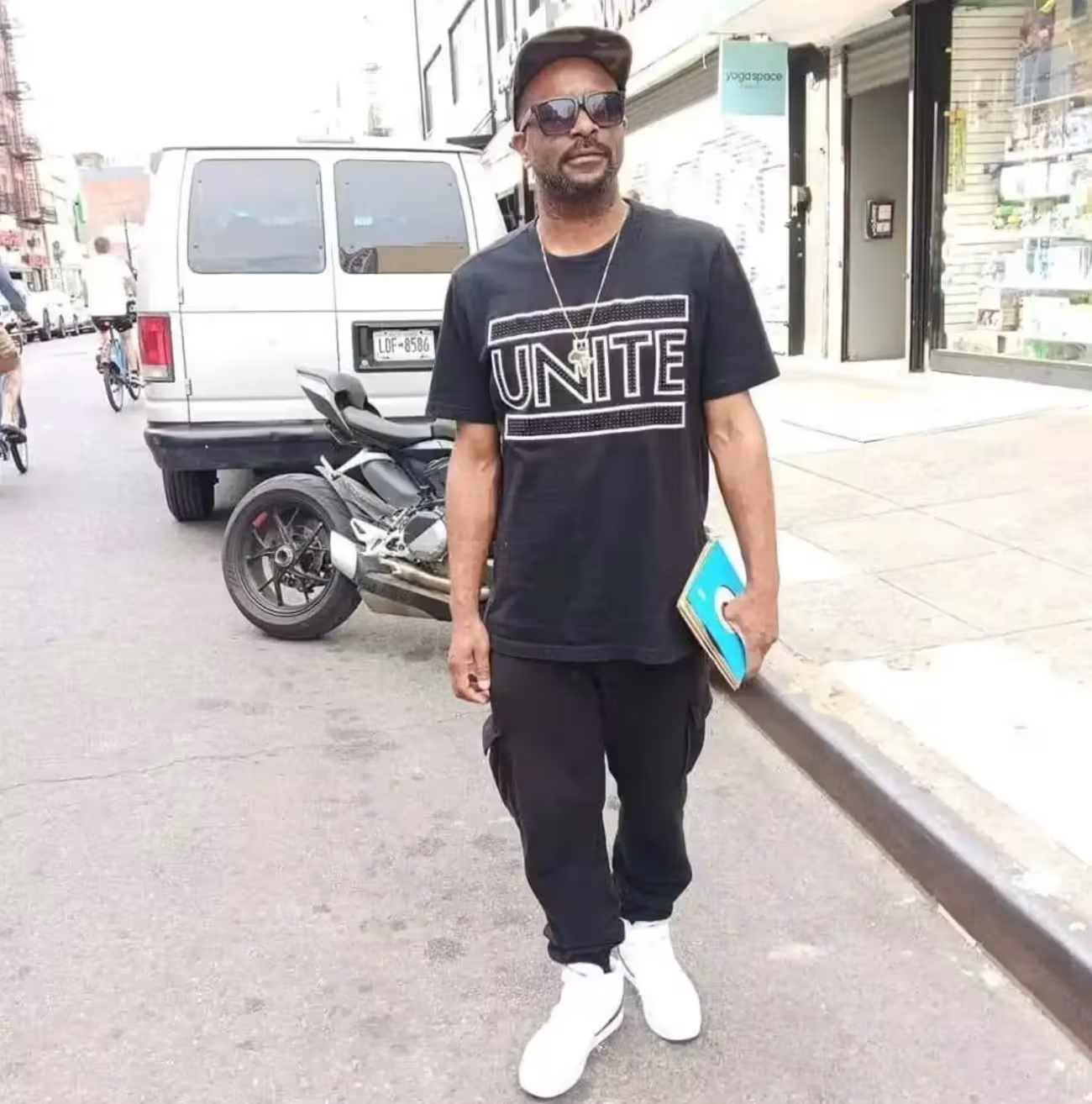
Dengane Omari Jack, a 48-year-old Brooklyn DJ known as Roots Outernational, survived the deadly building collapse at 1321 Flatbush Avenue on November 11, 2026. However, the disaster destroyed his home and an extraordinary collection of thousands of reggae vinyl records that he had spent more than 30 years assembling.
Jack estimated that his music collection was worth more than $100,000. It included rare recordings, vintage albums, concert recordings, CDs, cassette tapes, and music memorabilia accumulated throughout his life.
The tragedy has since become part of a growing legal dispute. Jack filed a lawsuit against his landlord and several construction companies, alleging that he had reported visible cracks in the building weeks before it collapsed but that his concerns were ignored.
Who Is Dengane Omari Jack?
Dengane Omari Jack is a musician, reggae record collector, and vinyl DJ originally from Saint Vincent and the Grenadines.
He performs under the name Roots Outernational and has spent approximately three decades collecting reggae music and building a reputation within the vinyl DJ community.
Jack has performed at venues such as E-K's Hideaway in East Flatbush and participated in music events across New York, Canada, Barbados, and his home country of Saint Vincent.
His collection included recordings from influential reggae artists such as Garnet Silk, Johnny Clarke, Jacob Miller, Prince Lincoln Thompson, and Barry Brown.
For Jack, the records were more than valuable possessions. They represented decades of musical discovery, personal memories, and professional work.
He had lived on the top floor of 1321 Flatbush Avenue for approximately five years, where he maintained a dedicated music room that he considered his personal headquarters.
What Happened at 1321 Flatbush Avenue?
The collapse occurred shortly after 4 p.m. on Wednesday, November 11, 2026, in the Flatbush neighborhood of Brooklyn, New York.
The three-story, mixed-use building at 1321 Flatbush Avenue collapsed into an adjacent construction site where excavation work was underway.
The disaster killed eight people, including two children, and left numerous others injured.
Emergency responders from the New York City Fire Department conducted extensive rescue and recovery operations. The search for survivors ended on November 12.
Jack was not inside the building when it collapsed. He was working at a school when he received a telephone call about the disaster.
He immediately rushed back to the neighborhood, hoping that the building was not his home.
When he arrived, he discovered that the structure had been reduced to rubble and that almost everything he owned had been lost.
How Did Omari Jack Lose His $100,000 Record Collection?
Jack's apartment contained thousands of vinyl records accumulated over approximately 30 years.
He estimated that the collection was worth more than $100,000, although its exact market value has not been independently established.
The records occupied several areas of his apartment, including his bedroom closet, kitchen, and dedicated music room.
Among the lost possessions were:
- Thousands of reggae vinyl records, including rare and difficult-to-replace editions.
- Recordings of live concerts dating back to the 1970s.
- Albums by legendary Jamaican reggae musicians.
- CDs and cassette tapes accumulated over decades.
- Books about musicians such as Bob Marley and Dennis Brown.
- A favorite poster featuring reggae artist Garnet Silk.
- DJ equipment and other personal belongings.
Jack later saw videos showing rescue workers carrying some of his record boxes from the rubble. However, he said nobody had informed him whether any of the recovered belongings had been preserved or could still be used.
Because he had no renters insurance, recovering the financial value of the collection could be particularly difficult.
One Thing Saved Him: A Backup of Six Terabytes of Music
Despite losing most of his physical collection, Jack managed to preserve an important part of his musical archive.
On the day of the collapse, he had taken his laptop and a hard drive containing approximately six terabytes of music with him to work.
He had also spent much of the previous week backing up digital versions of his collection.
That decision proved extremely fortunate.
Although the physical records were largely lost, the digital backup could preserve at least part of the music he had spent decades collecting.
Some additional records were also stored with a friend on Long Island and were not inside the collapsed building.
Nevertheless, the digital files cannot fully replace rare original pressings, physical memorabilia, and recordings that may never be available again.
Omari Jack Says He Warned His Landlord About Cracks Before the Collapse
A major development emerged on November 17, 2026, when details of Jack's lawsuit became public.
According to the complaint filed in Brooklyn Supreme Court, Jack noticed cracks near the building's entrance during October 2026.
He allegedly photographed the damage and sent the images to the landlord or property management company.
The lawsuit claims that the landlord, identified as Olufemi Falade, dismissed his concerns and indicated that the condition was not the landlord's fault or could not be repaired.
Jack's legal team argues that the reported structural damage should have triggered a timely inspection and appropriate protective measures.
The complaint alleges that the landlord and construction-related defendants failed to arrange an adequate structural investigation, provide necessary protection, or address the risks associated with excavation next door.
These allegations have not yet been established through a court judgment.
Who Is Being Sued Over the Brooklyn Building Collapse?
Jack's lawsuit targets the landlord, property management interests, and several companies involved in the adjacent construction project.
The defendants identified in reporting include:
- Olufemi Falade: The landlord associated with the collapsed property through Isolag Realty Corporation.
- Townhouse Builders: The general contractor involved in the neighboring development.
- Elite Concrete: A subcontractor associated with the construction project.
- LMW Engineering Group: The engineering company involved in structural planning.
- Jieming Wang: An engineer associated with LMW Engineering.
- RI Consulting Services: The special inspection agency identified in the lawsuit.
- Related property entities: Companies associated with ownership of the neighboring construction site.
Jack is seeking financial compensation, reimbursement for rent, a replacement apartment, and additional damages.
The defendants' legal responsibility will depend on the evidence and the outcome of the proceedings.
Construction Plans and Structural Warnings Under Investigation
The lawsuit raises questions about the structural condition of the building and the excavation work taking place next door.
According to the complaint, a pre-construction survey had already described the side facade of 1321 Flatbush Avenue as being in poor condition.
The filing also alleges that the excavation plans did not provide the necessary structural support at the precise section of the neighboring building that eventually collapsed.
One issue concerns steel support structures known as rakers, which can help stabilize excavation sites and protect adjacent buildings.
The lawsuit claims that the approved excavation plan did not include the recommended support along the vulnerable side of the residential building.
Investigators are examining whether the neighboring construction activity, the condition of the existing building, or a combination of factors contributed to the collapse.
The New York City Department of Buildings has not established a final cause as of November 19, 2026.
1321 Flatbush Avenue Had 98 Housing Violations
Another concerning detail emerged from New York City housing records.
The collapsed building reportedly had 98 recorded housing violations dating back to 1972.
Eleven violations were issued during the year before the collapse, including issues involving unsafe electrical wiring and the water supply for the building's sprinkler or standpipe system.
Records also show that the adjacent construction project had previously received stop-work orders and violations related to demolition safety.
In March 2026, inspectors reportedly found demolition work proceeding without required protections for neighboring properties.
When inspectors returned in April, they found that work had continued despite the earlier stop-work order. A $10,000 fine was subsequently issued.
The city later lifted the stop-work order after the identified safety issues were addressed.
These historical records are relevant to the investigation, but they do not independently establish the cause of the November collapse.
Omari Jack Is Staying in a Hotel After Losing His Home
Following the disaster, the city arranged temporary hotel accommodation for Jack.
He lost almost all of his household possessions, music equipment, and personal belongings in addition to his record collection.
His immediate priority is rebuilding his life rather than attempting to replace thousands of records accumulated over three decades.
Jack has acknowledged that reproducing the collection would be extremely difficult because many of the recordings were rare and no longer readily available.
He has also expressed uncertainty about when he will return to performing DJ sets.
For now, he is concentrating on securing stable accommodation and recovering from the loss of his home.
Fundraising Campaign Launched to Help Omari Jack
Friends and members of the music community have organized a fundraising campaign to help Jack recover from the disaster.
His friend Kelly Uman, a fellow record collector and DJ based in Montreal, organized a GoFundMe campaign titled "Help Omari Rebuild His Life After the Flatbush Collapse."
The campaign aims to raise $24,000 to help with housing, essential belongings, and financial stability.
A benefit event is also scheduled for November 28, 2026, at E-K's Hideaway in East Flatbush.
The event is intended to bring together members of the reggae and vinyl DJ communities to support Jack during an exceptionally difficult period.
What Happens Next in the Brooklyn Collapse Investigation?
The collapse has triggered investigations by several New York City agencies and law enforcement authorities.
The Brooklyn District Attorney's Office has opened a criminal inquiry into the disaster, while the Department of Buildings is examining the structural condition of the collapsed property and the neighboring construction project.
Authorities are also reviewing the work of contractors, engineers, inspectors, and property owners involved in the development.
The investigation must establish whether any violations of construction regulations, negligent decisions, or failures to address known structural risks contributed to the collapse.
For Jack, the legal process is also important because his lawsuit seeks accountability and compensation for the destruction of his home and personal property.
However, no final determination of liability or criminal responsibility had been announced as of November 19, 2026.
Final Thoughts
Dengane Omari Jack survived the November 11 Brooklyn building collapse, but the disaster destroyed a significant part of his life: his home and a $100,000 reggae vinyl collection assembled over 30 years.
His experience has also brought attention to allegations that visible cracks were reported before the building collapsed and that concerns about the structure were dismissed.
His lawsuit against the landlord and construction companies now forms part of the wider search for accountability following a tragedy that killed eight people.
Although his physical record collection may never be fully replaced, the digital backup he preserved offers a small measure of hope that part of his musical archive can survive.
For Jack, the immediate challenge is rebuilding his life. For the wider Brooklyn community, the priority is understanding why the building collapsed and ensuring that preventable structural failures do not lead to another disaster.
- Log in to post comments