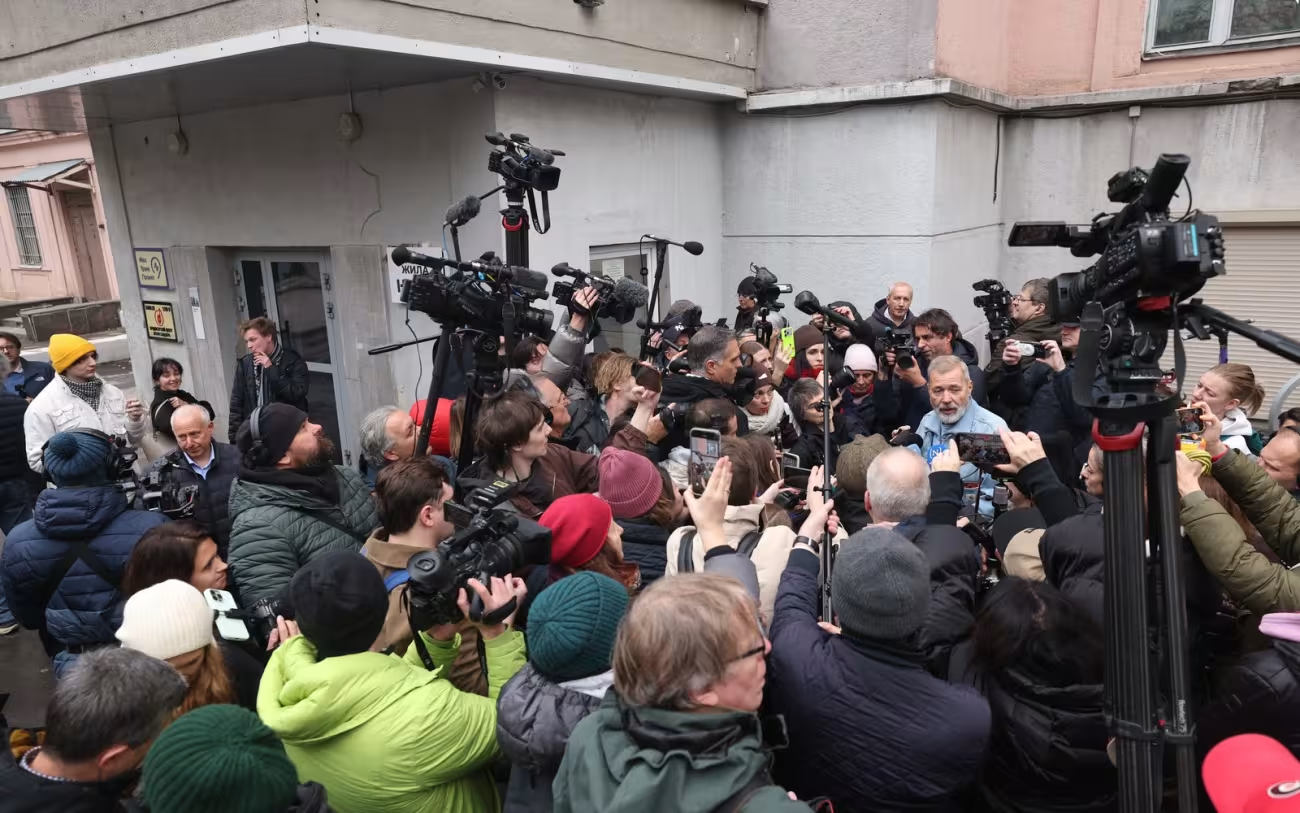
Novaya Gazeta, one of Russia's best-known independent newspapers, closed its Moscow newsroom on November 9, 2026, after 33 years of investigative reporting. The publication blamed mounting government pressure, including revoked media licenses, criminal investigations, the loss of reader donations and eviction from its longtime office. Its closure drew international attention from press freedom organizations and foreign governments. However, Novaya Gazeta Europe, a legally separate news organization founded by exiled Russian journalists in Latvia in 2022, remains active. The developments highlight the increasing difficulties facing independent reporting inside Russia and the continued role of Russian-language journalism operating from abroad.
Why Did Novaya Gazeta Close in November 2026?
The original Novaya Gazeta announced its closure on October 30, 2026, after Russian authorities ordered the publication to vacate its office on Potapovsky Lane in central Moscow.
The newspaper had already faced years of restrictions, including the revocation of its publishing licenses, blocked online platforms and investigations targeting its staff.
Its financial difficulties intensified when banks stopped processing reader donations, depriving the publication of an important source of operating revenue.
The newspaper's management also feared further legal consequences for its journalists.
According to reporting by Novaya Gazeta Europe, senior staff discussed the possibility that the original publication could be designated an extremist organization, a development they feared could expose employees to prosecution.
The newspaper ultimately announced that it could no longer continue operating under the existing conditions.
Novaya Gazeta's Final Day in Moscow
On November 9, 2026, journalists gathered for their final editorial meeting at the Moscow office.
Editor-in-chief Sergey Sokolov addressed employees and expressed hope that the publication would eventually return.
Former editor-in-chief and Nobel Peace Prize laureate Dmitry Muratov also attended the farewell gathering.
Staff removed portraits commemorating journalists and contributors associated with the newspaper who had been killed.
Supporters gathered outside the building as employees collected their belongings and left the newsroom.
The closure ended the newspaper's remaining operations inside Russia, although its staff did not rule out the possibility of returning in a different form.
What Is Novaya Gazeta?
Novaya Gazeta was founded in April 1993, during the period of political and economic transformation following the collapse of the Soviet Union.
Former Soviet leader Mikhail Gorbachev provided financial support from his Nobel Peace Prize funds to help establish the publication.
Over the following three decades, the newspaper became internationally recognized for investigations into corruption, organized crime, political repression and human rights violations.
Its reporting also covered the wars in Chechnya and, later, Russia's invasion of Ukraine.
Dmitry Muratov, who helped establish the publication and served as its longtime editor, received the Nobel Peace Prize in 2021 for his work defending freedom of expression.
Novaya Gazeta's History of Threats and Violence
The newspaper's investigative work frequently brought its journalists into conflict with powerful political and criminal interests.
Several journalists and contributors associated with the publication were killed during its history.
Among the most prominent was Anna Politkovskaya, who investigated human rights abuses during the Chechen wars.
She was shot dead in the elevator of her Moscow apartment building on October 7, 2006.
Other journalists and contributors whose deaths became part of Novaya Gazeta's history include Igor Domnikov, Yury Shchekochikhin, Anastasia Baburova and Natalya Estemirova.
Human rights lawyer Stanislav Markelov, who worked with the newspaper, was killed alongside Baburova in 2009.
The Committee to Protect Journalists has documented decades of violence and intimidation affecting Russian reporters, including numerous killings for which full accountability has not been achieved.
How Russia's Media Restrictions Intensified After 2022
Following Russia's full-scale invasion of Ukraine in February 2022, the government introduced legislation restricting reporting about the armed forces.
The new laws imposed severe penalties for publishing information that authorities considered false or for publicly discrediting the military.
Novaya Gazeta suspended publication in March 2022 after receiving warnings from the media regulator Roskomnadzor.
Its publishing licenses were subsequently revoked, while the newsroom experienced additional legal and administrative pressure.
The publication continued limited operations despite these restrictions until its final closure in November 2026.
Russian authorities have defended their media policies as lawful measures addressing national security and violations of domestic legislation.
Press freedom organizations argue that the restrictions have substantially reduced independent coverage of government decisions and the war in Ukraine.
Russian Journalists Face Increasing Criminal Pressure
Novaya Gazeta's closure came amid broader legal actions affecting independent journalists.
In November 2026, the Committee to Protect Journalists reported that 31 journalists were detained or imprisoned in Russia, the highest number recorded in its monitoring of the country.
The organization also reported that hundreds of journalists and media organizations had been designated foreign agents.
Novaya Gazeta investigative journalist Oleg Roldugin was detained in April 2026 in connection with allegations involving personal data.
In October, police searched the home of editor-in-chief Sergey Sokolov as part of the investigation and questioned him.
These developments were cited among the pressures affecting the newspaper's ability to continue operating.
Is Novaya Gazeta Europe Also Closing?
No. Novaya Gazeta Europe remains active as of November 11, 2026.
The organization was established on April 7, 2022, in Riga, Latvia, by Russian journalists who left the country following the invasion of Ukraine.
Its editor-in-chief is Kirill Martynov, a former deputy editor of the original Novaya Gazeta.
Although the European publication shares journalistic roots and historical connections with the Moscow newspaper, the organizations are legally and operationally separate.
Novaya Gazeta Europe maintains Russian- and English-language editions covering politics, society, the war in Ukraine, human rights and international affairs.
Its continued publication demonstrates that the closure of the Moscow newsroom has not ended all reporting associated with Novaya Gazeta's journalistic tradition.
Novaya Gazeta vs. Novaya Gazeta Europe
| Feature | Novaya Gazeta | Novaya Gazeta Europe |
|---|---|---|
| Founded | 1993 | 2022 |
| Headquarters | Moscow, Russia | Riga, Latvia |
| Prominent Editor | Dmitry Muratov | Kirill Martynov |
| Organization | Original Russian newspaper | Independent exile-based publication |
| Status in November 2026 | Domestic operations closed | Continues publishing |
Why Was Novaya Gazeta Europe Banned in Russia?
Russian authorities blocked access to Novaya Gazeta Europe's website shortly after its establishment.
On June 28, 2023, the Russian Prosecutor General's Office designated the organization's Latvia-based legal entity an undesirable organization.
Authorities accused the publication of distributing material that they considered harmful to Russian national interests.
The designation created legal risks for certain forms of cooperation with the organization inside Russia.
In April 2025, a Moscow court sentenced editor Kirill Martynov in absentia to six years in prison for organizing activities associated with an undesirable organization.
Martynov, who remained outside Russia, disputed the prosecution and announced plans to challenge the ruling.
Novaya Gazeta Europe's Latest Reporting in November 2026
Despite restrictions targeting the publication, Novaya Gazeta Europe continued producing news during the week of the Moscow newspaper's closure.
Its November 9 coverage documented the final departure of journalists from the Moscow newsroom.
The same day, it published reports concerning the war in Ukraine and disputed casualty information attributed to hacked Russian government data.
On November 10, the publication reported that Russian security forces had searched the family home of wanted student journalist Leonid Spirin.
It also covered legislative proposals involving penalties for allegedly discrediting traditional values.
These reports demonstrate that the exile-based newsroom continues covering developments inside Russia and issues affecting Russian society.
International Reaction to Novaya Gazeta's Closure
The newspaper's shutdown prompted responses from international media and press freedom organizations.
Committee to Protect Journalists
On November 6, 2026, CPJ condemned the sustained pressure that had forced Novaya Gazeta to close.
The organization said the closure reflected the increasing use of criminal laws, administrative measures and financial restrictions against independent reporting.
CPJ also emphasized the importance of supporting journalists continuing their work from exile.
United Kingdom and Finland
On November 9, the United Kingdom and Finland, serving as co-chairs of the Media Freedom Coalition, issued a joint statement concerning the closure.
The governments called on Russia to protect freedom of expression and allow journalists to carry out their work without intimidation or detention.
The statement also expressed support for independent Russian journalists operating both inside and outside the country.
The Kremlin's Response
Kremlin spokesperson Dmitry Peskov disputed claims that the closure represented the end of independent journalism in Russia.
He described the Russian media sector as diverse and competitive, arguing that publications can cease operating while new outlets emerge.
That interpretation contrasts with the assessment of CPJ and other press freedom organizations, which attribute the newspaper's closure to sustained state pressure.
Can Independent Russian Journalism Survive Abroad?
Independent Russian-language reporting continues through several organizations operating outside Russia, including Novaya Gazeta Europe, Meduza and Mediazona.
Exile-based newsrooms can publish reporting beyond the immediate reach of some domestic restrictions.
However, journalists may still face legal threats, digital surveillance, financial difficulties and concerns about the safety of relatives remaining in Russia.
Russian authorities can also restrict the accessibility of foreign-hosted publications through website blocking and laws governing their distribution.
Consequently, operating from abroad provides additional editorial freedom but does not eliminate the challenges of reaching readers inside Russia.
Novaya Gazeta Closure Timeline
| Date | Development |
|---|---|
| April 1993 | Novaya Gazeta is founded in Russia. |
| October 2006 | Investigative journalist Anna Politkovskaya is murdered in Moscow. |
| October 2021 | Dmitry Muratov receives the Nobel Peace Prize. |
| March 2022 | Novaya Gazeta suspends publication amid new wartime restrictions. |
| April 7, 2022 | Novaya Gazeta Europe launches in Latvia. |
| June 28, 2023 | Russia designates Novaya Gazeta Europe an undesirable organization. |
| April 22, 2025 | Kirill Martynov is sentenced in absentia to six years in prison. |
| October 30, 2026 | The original Novaya Gazeta announces its closure. |
| November 9, 2026 | Employees leave the Moscow newsroom after its final editorial meeting. |
| November 10, 2026 | Novaya Gazeta Europe continues publishing new reporting. |
What Happens to Novaya Gazeta After the Closure?
The original Novaya Gazeta has ended its Moscow newsroom operations, but its future organizational form remains uncertain.
Editor-in-chief Sergey Sokolov expressed hope that the newspaper could eventually resume its work.
Columbia Journalism Review has also reported on efforts to preserve the newspaper's reporting and historical archive, ensuring that previous investigations remain accessible.
Meanwhile, Novaya Gazeta Europe continues operating as an independent publication in exile.
There is no confirmed announcement that the original Moscow organization has formally merged with its European counterpart or resumed publication under a new structure.
Conclusion
The closure of Novaya Gazeta on November 9, 2026, ended more than three decades of independent investigative journalism from its Moscow newsroom.
The decision followed years of government restrictions, criminal investigations, revoked licenses, financial pressure and the loss of its office.
International press freedom organizations condemned the closure, while the Kremlin disputed the suggestion that independent journalism was disappearing from Russia.
Novaya Gazeta Europe, established in Latvia in 2022, remains active and continues publishing Russian- and English-language news.
Although the future of the original newspaper is uncertain, journalists working from exile continue reporting on Russian politics, the war in Ukraine and developments affecting civil society.
- Log in to post comments