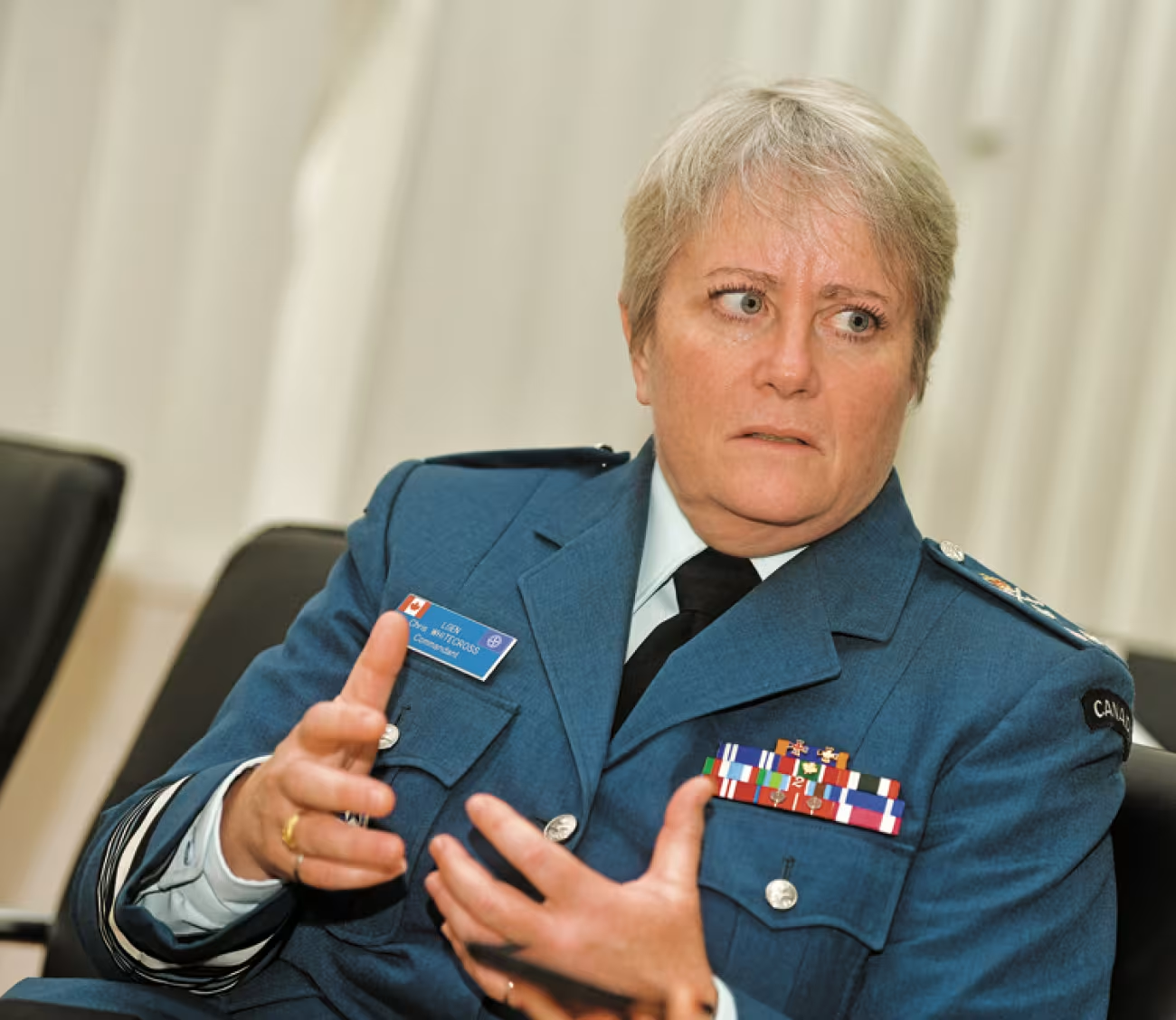
Retired Canadian Lieutenant-General Christine Whitecross publicly expressed anger and disappointment in 2021 after allegations of sexual misconduct emerged against senior Canadian Armed Forces leaders. Whitecross, who previously led the military's response to sexual harassment and assault, said the revelations were especially troubling because the institution had already spent years attempting to change its culture. During parliamentary testimony on April 22, 2021, she described being deeply disturbed by accounts from current and former service members. She later acknowledged that she wished she had done more to confront resistance within the military. Her criticism highlighted longstanding problems involving leadership accountability, sexual misconduct reporting, and the treatment of survivors.
Who Is Lieutenant-General Christine Whitecross?
Christine Whitecross is a retired Canadian Armed Forces lieutenant-general who served for more than 38 years before retiring in December 2020.
She joined the military in 1982 and developed a career in military engineering, personnel management, operational support, and senior command.
Whitecross earned a bachelor's degree in chemical engineering from Queen's University and a master's degree in defence studies from the Royal Military College of Canada.
In February 2015, she was appointed commander of the Canadian Armed Forces Strategic Response Team on Sexual Misconduct.
Later that year, she became Commander of Military Personnel Command, overseeing important aspects of military personnel administration, training, and education.
In November 2016, she became the first woman to command the NATO Defense College in Rome, Italy, a position she held until 2020.
Why Was Christine Whitecross Angry About Sexual Misconduct?
Whitecross' public criticism followed allegations involving some of Canada's highest-ranking military officers in early 2021.
Former Chief of the Defence Staff General Jonathan Vance and his successor, Admiral Art McDonald, became subjects of separate misconduct controversies that triggered renewed scrutiny of military leadership.
Whitecross had previously been responsible for helping the Canadian Armed Forces address sexual harassment and inappropriate sexual behavior.
She therefore considered the allegations against senior leaders particularly disappointing because those in command were expected to uphold and enforce the institution's professional standards.
During a March 2021 CBC interview, Whitecross discussed her anger and disappointment while expressing hope that more service members were becoming willing to report their experiences.
Her concern was not that sexual misconduct had suddenly appeared within the military. Rather, she questioned why serious allegations continued to emerge despite years of institutional reform.
Christine Whitecross' Parliamentary Testimony in April 2021
On April 22, 2021, Whitecross appeared before the House of Commons Standing Committee on the Status of Women.
She told parliamentarians that she had been following testimony from current and former military personnel describing their experiences of harassment and misconduct.
Whitecross said the testimony had left her profoundly disturbed, particularly allegations involving senior military leaders.
She explained that while those specific allegations surprised her, the existence of sexual misconduct within the Canadian Armed Forces did not.
During her earlier military assignments, she had personally heard numerous disclosures from service members who described harassment, abuse, and difficulties obtaining support.
These experiences had convinced her that the problem extended beyond isolated incidents and required sustained institutional attention.
She also emphasized that military personnel needed to feel confident that reporting misconduct would result in a timely, respectful, and meaningful response.
Whitecross' Role in Operation HONOUR
Whitecross played a significant role in establishing the Canadian military's response to sexual misconduct following an independent investigation led by former Supreme Court Justice Marie Deschamps.
The Deschamps report, released in April 2015, identified a sexualized institutional culture and serious shortcomings in the handling of harassment and assault complaints.
As commander of the Strategic Response Team on Sexual Misconduct, Whitecross helped develop the military's response to those findings.
She traveled across Canada, meeting service members at military bases and listening to accounts of inappropriate sexual behavior.
The work contributed to Operation HONOUR, launched in August 2015 to address harmful sexual conduct within the armed forces.
The initiative emphasized prevention, professional conduct, education, reporting mechanisms, and leadership accountability.
However, subsequent investigations and allegations demonstrated that the program had not resolved the institution's underlying problems.
Why Did Earlier Military Reforms Fall Short?
One of the central challenges identified by Whitecross was the difference between introducing new policies and changing deeply established institutional attitudes.
She encountered military personnel who underestimated the seriousness of sexual misconduct or did not believe it was as widespread as independent investigators had reported.
Her conversations with survivors revealed that some people feared retaliation, doubted whether complaints would be taken seriously, or lacked confidence in the military reporting system.
Whitecross argued that meaningful reform required more than written policies and training programs.
Military leaders also needed to recognize the experiences of affected personnel, respond appropriately to complaints, and establish a professional culture in which misconduct would not be tolerated.
The continued emergence of serious allegations against senior officers in 2021 exposed the limitations of the military's earlier approach.
Christine Whitecross Admits She Wishes She Had Done More
Whitecross offered a particularly significant reflection during testimony before the House of Commons Standing Committee on National Defence on April 25, 2022.
Looking back on her military career, she acknowledged that she wished she had been more outspoken and assertive in addressing sexual misconduct.
She explained that some personnel had resisted or minimized the problem when she took responsibility for the military's misconduct response team in 2015.
In retrospect, she believed she could have challenged those attitudes more forcefully and communicated more clearly how misconduct affected members of the armed forces.
Her comments reflected an acknowledgment that even senior leaders committed to reform could have underestimated the determination required to change military culture.
How Canada Changed Its Military Sexual Misconduct Policies
Following the controversies of 2021, the Canadian government commissioned another independent review led by former Supreme Court Justice Louise Arbour.
Her May 2022 report issued 48 recommendations concerning sexual misconduct, leadership accountability, reporting procedures, and institutional culture.
One of the most important recommendations called for Criminal Code sexual offenses committed in Canada to be investigated and prosecuted through the civilian justice system rather than military authorities.
That change became law when Canada's Military Justice System Modernization Act, Bill C-11, received Royal Assent on June 18, 2026.
Effective August 17, 2026, the Canadian Armed Forces lost authority to investigate new Criminal Code sexual offenses allegedly committed in Canada for criminal charging purposes, and courts martial lost jurisdiction over new cases of that type, subject to transitional provisions.
Civilian police and courts assumed responsibility for those matters, while military leaders retained separate administrative and disciplinary responsibilities.
The legislation represented a major institutional change following years of criticism, independent investigations, and testimony from survivors and former military leaders, including Whitecross.
- Log in to post comments