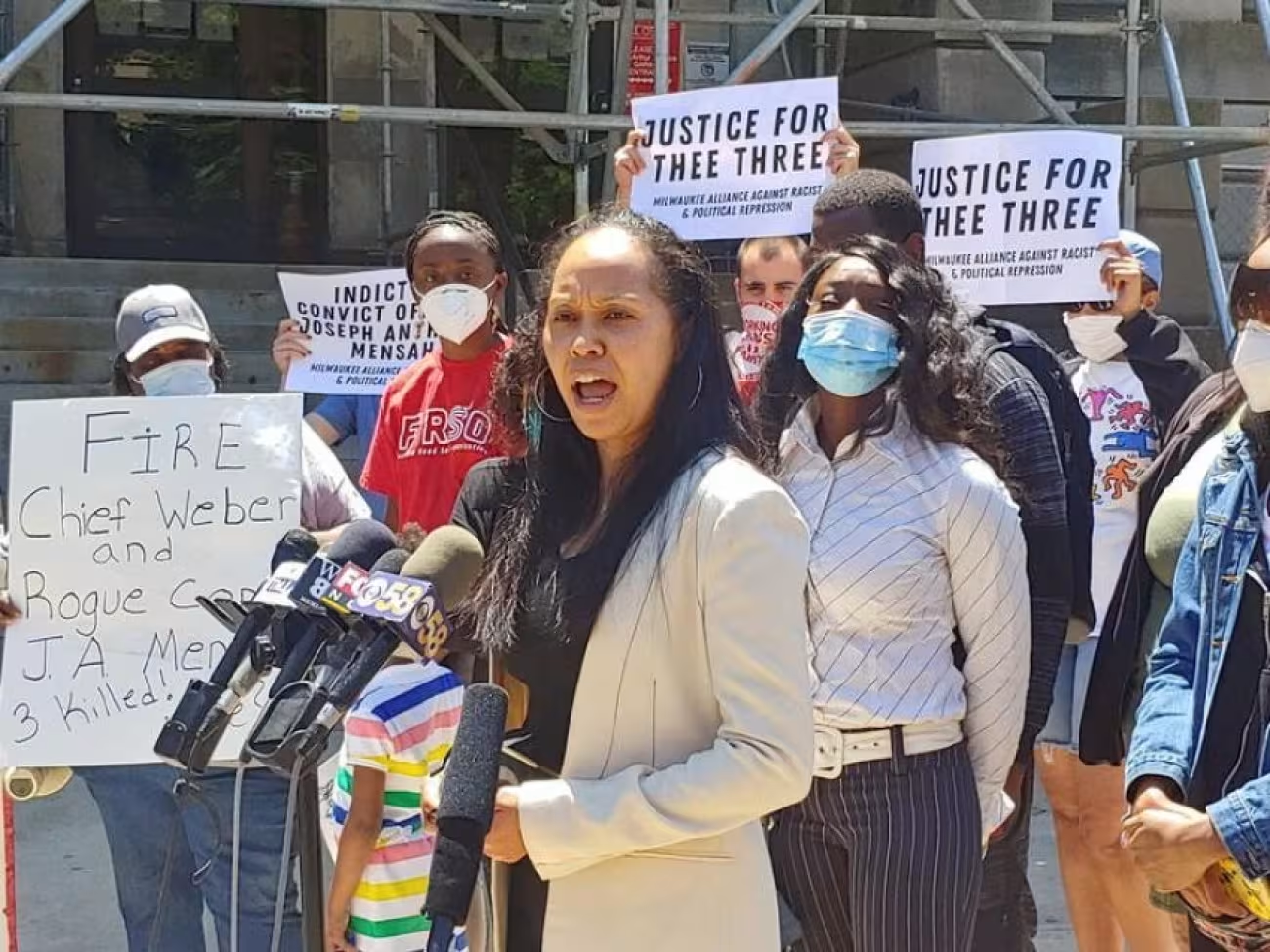
Civil rights attorney Kimberley Motley has spent years challenging former Wauwatosa police officer Joseph Mensah over three fatal shootings in Wisconsin between 2015 and 2020. Mensah killed Antonio Gonzales, Jay Anderson Jr., and 17-year-old Alvin Cole during separate encounters while serving with the Wauwatosa Police Department. Although prosecutors declined to charge him criminally, Motley pursued federal civil rights litigation on behalf of the victims' families, questioning whether deadly force was justified and whether police oversight had failed. The legal battle reached a major turning point in 2026, when Alvin Cole's family moved toward a confidential settlement after two federal trials ended with hung juries. The litigation involving Jay Anderson Jr. followed a separate appellate path, while Mensah left law enforcement in July 2025.
Who Is Kimberley Motley?
Kimberley Chongyon Motley is an American attorney known for her international human rights work and civil rights litigation. She gained recognition for representing clients in Afghanistan, where she became one of the first foreign lawyers permitted to practice in the country's courts.
Her legal work has included cases involving unlawful detention, discrimination, criminal justice, and alleged abuses of government authority.
In Wisconsin, Motley became an advocate for families seeking accountability following fatal police shootings. She represented the families of Antonio Gonzales, Jay Anderson Jr., and Alvin Cole in litigation involving Joseph Mensah and the City of Wauwatosa.
Her legal arguments questioned the use of deadly force and whether the police department had adequately supervised officers involved in serious incidents.
Who Is Former Police Officer Joseph Mensah?
Joseph Anthony Mensah served with the Wauwatosa Police Department in Wisconsin from 2015 until November 2020.
During that period, he was involved in three fatal shootings:
- Antonio Gonzales, July 16, 2015: Police said Gonzales approached officers with a sword and refused commands to drop it.
- Jay Anderson Jr., June 23, 2016: Anderson was shot inside a parked vehicle in Madison Park after Mensah said he reached toward a firearm.
- Alvin Cole, February 2, 2020: Cole was fatally shot during a police pursuit outside Mayfair Mall.
Milwaukee County District Attorney John Chisholm declined to file criminal charges against Mensah in all three shootings.
Those decisions did not prevent the victims' families from seeking financial damages through civil litigation, where the legal standards differ from those governing criminal prosecutions.
Mensah resigned from Wauwatosa in November 2020 and later joined the Waukesha County Sheriff's Department. He left that agency in July 2025, ending his law enforcement career.
The Fatal Shooting of Alvin Cole in February 2020
The case involving Alvin Cole became the central focus of Motley's litigation.
On February 2, 2020, Wauwatosa police responded to a disturbance involving teenagers near Mayfair Mall.
Cole and several other young people fled after officers arrived. During the pursuit, Cole was carrying a handgun that discharged, injuring his own arm and causing him to fall.
Mensah subsequently fired five shots at Cole, killing the 17-year-old.
Mensah maintained that he believed Cole was raising or pointing the handgun toward him and that he fired to protect himself and other officers.
However, testimony collected during the civil proceedings revealed conflicting accounts of the teenager's movements immediately before the fatal shots.
Officer David Shamsi, who was closer to Cole, said neither Cole nor the firearm moved after the teenager fell. Another officer, Evan Olson, described the weapon as pointing in a different direction from the one Mensah reported.
These inconsistencies became central to the family's argument that Mensah had used excessive force.
Kimberley Motley Files Federal Civil Rights Lawsuits
Motley and other attorneys pursued lawsuits against Mensah and defendants associated with the Wauwatosa Police Department.
The claims alleged that the shootings violated constitutional protections against unreasonable use of force and raised broader concerns about police supervision and accountability.
The Alvin Cole lawsuit, filed in July 2022, included claims brought on behalf of his estate and parents, Tracy and Albert Cole.
The defendants disputed the allegations, arguing that Mensah's use of force was justified by the circumstances of the encounter.
In March 2024, U.S. District Judge Lynn Adelman ruled that the excessive-force claim involving Cole could proceed to trial because material facts remained disputed.
The decision did not establish that Mensah had violated Cole's rights. Instead, it determined that a jury should resolve the conflicting evidence.
Mensah requested reconsideration, but the court denied that motion in October 2024.
First Alvin Cole Trial Ends With a Hung Jury
The first federal civil trial began in Milwaukee in March 2025.
Attorneys representing Cole's family argued that the teenager had already fallen to the ground when Mensah fired and that he did not pose an immediate threat justifying deadly force.
Mensah testified that he believed his life and the lives of others were in danger.
The jury heard conflicting testimony about the position of Cole's firearm, the commands given by officers, and the events immediately preceding the shooting.
On March 20, 2025, jurors reported that they could not reach a unanimous verdict.
Judge Adelman declared a mistrial, leaving the excessive-force allegation unresolved.
Second Trial Also Fails to Produce a Verdict
A second trial began in September 2025.
The central question remained whether Mensah reasonably perceived an immediate threat when he fired at Cole.
The family's legal team highlighted differences between Mensah's account and statements made by other officers and witnesses.
The defense again argued that Mensah had acted in response to a dangerous and rapidly developing situation.
After approximately ten hours of deliberation, the jury failed to reach a unanimous decision.
A second mistrial was declared on September 11, 2025.
The family had sought approximately $22 million in damages during the first trial and $9 million during the second, according to the Wisconsin Examiner. These were requested amounts, not court-awarded damages.
A third trial was subsequently scheduled for May 2026.
Alvin Cole's Family Moves Toward a Confidential Settlement in 2026
Before the planned third trial, attorneys for the parties confirmed that they were close to completing a confidential settlement.
On April 28, 2026, the Wisconsin Examiner reported that an agreement was nearing completion.
In a May 19 interview, Tracy Cole discussed the family's decision to resolve the litigation and the emotional toll of the previous six years.
She said the settlement was bringing some closure to her family after two trials, extensive legal proceedings, and years of public attention.
The financial terms were not disclosed.
According to the family's attorneys, the settlement payment would not come directly from Mensah's personal funds.
The agreement should not be confused with a judicial verdict finding Mensah liable for excessive force. Neither jury reached a verdict, and the reported settlement did not establish criminal guilt or constitute a publicly documented admission of wrongdoing.
What Happened to the Jay Anderson Jr. and Antonio Gonzales Lawsuits?
The families of Jay Anderson Jr. and Antonio Gonzales pursued separate claims involving their relatives' deaths.
In March 2024, Judge Adelman dismissed the excessive-force claims in those two cases while allowing Cole's claim to continue.
For Gonzales, the court considered evidence that Mensah had ordered him to drop a sword before firing.
In Anderson's case, the court examined squad-car video showing Anderson reaching toward the passenger seat, where police found a gun. The family argued that he could have been reaching for a cellphone.
The judge concluded that Mensah could not reasonably have known which object Anderson was reaching toward.
Anderson's family challenged the dismissal through an appeal filed in November 2024 with the U.S. Court of Appeals for the Seventh Circuit, under case number 24-3054.
Kimberley Motley was listed among the attorneys representing the Anderson estate in the appellate proceedings.
A final appellate outcome had not been independently established in the publicly accessible records reviewed for this article.
Joseph Mensah Receives a Separate $95,000 Settlement
Another development emerged on September 29, 2026, when the Wauwatosa Common Council approved a $95,000 workers' compensation settlement involving Mensah.
The payment concerned a work-related post-traumatic stress disorder claim and was funded through the city's workers' compensation system.
It was separate from the Alvin Cole family's civil rights lawsuit.
Wauwatosa Mayor Dennis McBride defended the settlement as a resolution of an employment-related claim under Wisconsin law.
Motley criticized the decision, contrasting Mensah's compensation with the lengthy legal battles pursued by the families of the people he fatally shot.
The workers' compensation settlement did not determine the lawfulness of any of the three shootings.
Where Does the Kimberley Motley and Joseph Mensah Legal Battle Stand?
By November 2026, the main Alvin Cole federal civil lawsuit had moved toward a confidential settlement after two mistrials.
The excessive-force claims concerning Gonzales and Anderson had been dismissed at the district court level, with Anderson's family pursuing appellate review.
Mensah had left law enforcement, and prosecutors had not brought criminal charges against him in connection with the three fatal shootings.
The cases remain significant because they illustrate the difference between decisions not to prosecute an officer, civil claims alleging excessive force, jury verdicts, and negotiated settlements.
For Motley and the families she represented, the litigation sought accountability through the civil court system even after criminal prosecutors declined to bring charges.
- Log in to post comments