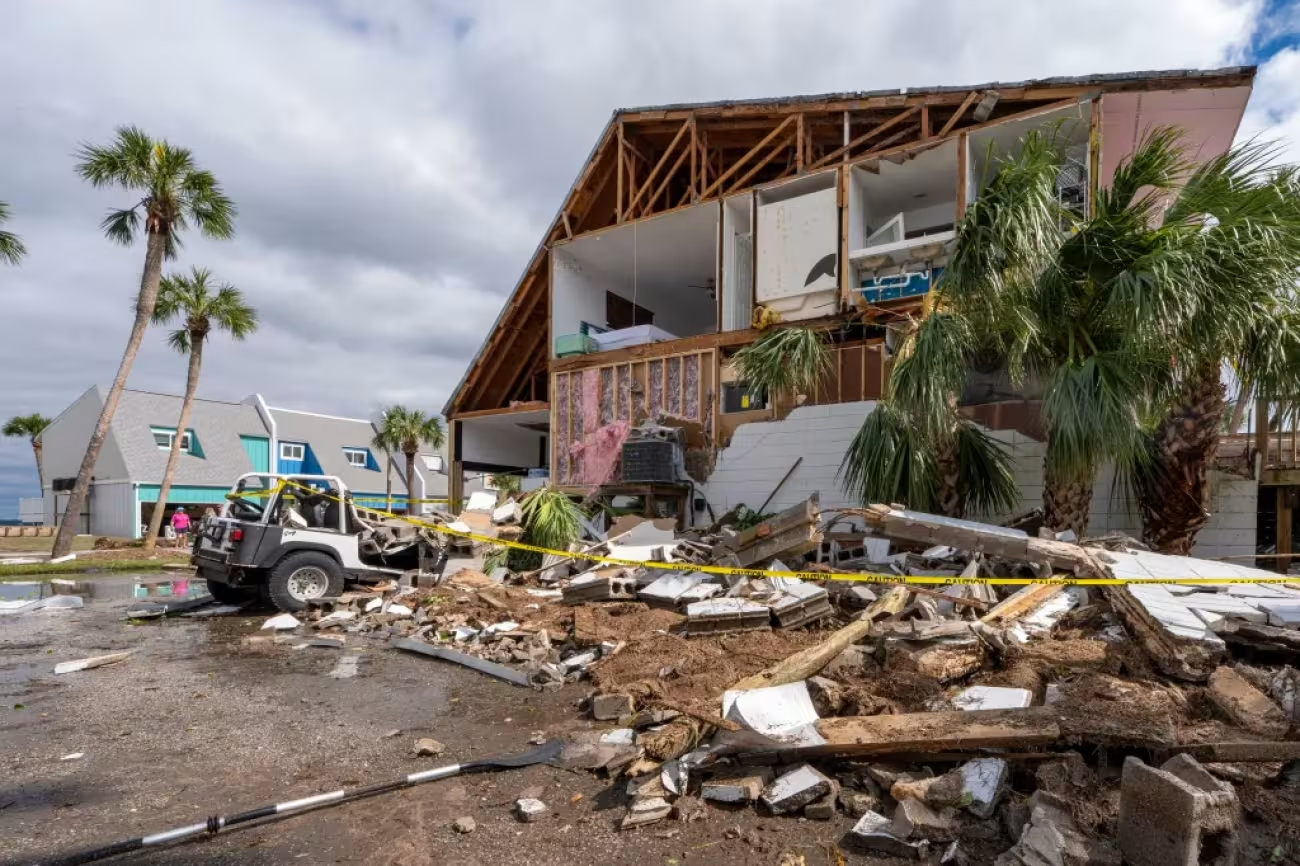
Updated October 11, 2026. Hurricane Isaias has left at least four people dead and hundreds of thousands without electricity after striking Florida's Gulf Coast as a Category 2 hurricane late Friday, October 9. The storm made landfall near Destin with maximum sustained winds of 105 mph before rapidly weakening as it moved north into Alabama. Although several coastal communities escaped the most catastrophic damage initially feared, fallen trees, damaged buildings, flooded roads and prolonged utility disruptions have created difficult conditions across the southeastern United States.
By early Saturday, October 10, Isaias had weakened into a post-tropical cyclone. The National Hurricane Center nevertheless warned that heavy rain could produce dangerous flash flooding and river flooding well beyond the original landfall area.
Emergency crews continued clearing roads, assessing structural damage and restoring power while state and federal officials coordinated disaster assistance. Residents in parts of Florida, Alabama and Georgia were urged to avoid unnecessary travel and remain cautious around damaged infrastructure.
Hurricane Isaias 2026: Key Facts
| Category | Confirmed Information |
|---|---|
| Storm Name | Hurricane Isaias |
| Landfall Date | October 9, 2026 |
| Landfall Location | Near Destin, Florida |
| Landfall Intensity | Category 2 hurricane |
| Maximum Sustained Winds at Landfall | 105 mph |
| Estimated Pressure at Landfall | 971 millibars |
| Reported Deaths | At least four |
| Major Affected States | Florida, Alabama, Georgia and Mississippi |
| Peak Reported Power Disruptions | Approximately 900,000 customers |
| Status on October 10 | Weakened to a post-tropical cyclone |
| Primary Continuing Hazards | Flooding, dangerous roads and damaged infrastructure |
Fatality counts, outage totals and damage assessments remained preliminary as recovery operations continued.
Where Did Hurricane Isaias Make Landfall?
The National Hurricane Center confirmed that Isaias came ashore near Destin, Florida, at approximately 8:30 p.m. Central Daylight Time on Friday, October 9.
At landfall, the hurricane carried sustained winds of 105 mph, placing it within Category 2 on the Saffir-Simpson Hurricane Wind Scale.
The storm was moving north at approximately 19 mph, directing its strongest conditions toward the Florida Panhandle and southern Alabama.
Weather observations recorded particularly powerful gusts along the coast. A station near Santa Rosa Sound measured a gust of 116 mph, while another station near Pensacola reported a gust of 100 mph.
Coastal flooding was also significant. A NOAA water-level gauge at Panama City Beach recorded water approximately 5.6 feet above mean higher high water around landfall, providing an indication of the unusually elevated sea level.
These observations demonstrate that Isaias remained a dangerous hurricane at landfall even though its strength decreased quickly after the center crossed the coastline.
Four Deaths Reported in Florida and Alabama
At least four deaths were linked to Hurricane Isaias by Saturday, October 10.
Reports identified two fatalities in Florida and two in Alabama. Falling trees were responsible for some of the deaths, while another fatality involved carbon monoxide poisoning associated with generator use.
In Florida's Escambia County, authorities reported deaths connected to storm conditions as emergency crews responded to fallen trees and damaged buildings.
Other fatal incidents occurred in Alabama as strong winds brought down trees and disrupted electrical service.
The incidents illustrate the dangers that persist during and after a hurricane. People may remain vulnerable even when wind speeds decline, particularly when damaged trees, power failures and unsafe generator use create additional hazards.
The death toll was considered preliminary, with officials continuing to assess incidents across the affected region.
Nearly 900,000 Customers Lost Power
Widespread electricity outages were among the storm's most disruptive consequences.
Associated Press reported that nearly 900,000 utility customers were without power during the early stages of the disaster, particularly in Florida and Alabama.
Subsequent reports showed different outage totals as restoration efforts progressed.
Reuters reported approximately 670,000 customers without electricity across Florida, Alabama, Georgia and Mississippi during a later reporting period.
The figures describe changing conditions rather than contradictory estimates of a fixed total.
How Many Customers Were Still Without Electricity?
Outage figures changed rapidly throughout October 10 as utility workers repaired damaged distribution lines and restored service where conditions permitted.
Some Saturday afternoon reports placed the number of customers without power at approximately 550,000, while other updates cited figures closer to 600,000 or 670,000.
The differences reflect reporting times, geographical coverage and restoration progress.
Utility companies warned that service restoration could take longer in neighborhoods with extensive tree damage, flooded roads or damaged electrical equipment.
Thousands of Workers Deployed
Florida officials reported that more than 16,000 utility personnel were involved in restoration operations.
Crews focused on removing hazards, repairing transmission and distribution systems, and reconnecting customers once electrical infrastructure could be safely energized.
Some locations remained difficult to reach because fallen trees, debris and floodwater obstructed access.
Residents were advised to avoid downed electrical lines, even when those lines appeared inactive.
Florida Panhandle Damage: Pensacola, Destin and Panama City Beach
The Florida Panhandle experienced some of the most visible structural damage from Isaias.
However, impacts varied considerably across communities, and some areas near the landfall site reported less extensive destruction than anticipated.
Destin: Strong Winds and Coastal Damage
Destin, a Gulf Coast destination known for its beaches and tourism industry, was near the hurricane's landfall point.
Strong winds damaged waterfront structures, including a boathouse, while debris and fallen trees affected nearby roads.
Emergency workers inspected buildings and public infrastructure as residents began assessing losses.
Despite the intensity of the landfall winds, some major coastal routes were open by Saturday morning, and several neighborhoods avoided the widespread structural destruction seen in more severe hurricanes.
Pensacola: Airport Damage and Disrupted Services
Pensacola experienced strong winds, fallen trees, damaged roofs and utility outages.
One hotel sustained significant roof damage, and local officials reported that Pensacola International Airport had also been affected.
Airport operations and other transportation services faced disruption while crews assessed infrastructure and removed storm debris.
Power outages also contributed to water-service and fuel-supply difficulties in some areas.
Local authorities urged residents to minimize travel while crews cleared roads and secured hazardous locations.
Panama City Beach: Building Facades Torn Away
At Panama City Beach, hurricane-force winds damaged portions of waterfront buildings, including exterior facades.
Workers and residents began clearing insulation, broken materials and scattered outdoor furniture after the storm moved inland.
Elevated coastal water levels added to concerns about flooding in low-lying areas.
Although damage was serious at individual properties, initial observations suggested that the destruction was uneven rather than uniform across the entire coastline.
Milton and Santa Rosa County
Milton and surrounding communities in Santa Rosa County experienced extensive wind damage and blocked roads.
Photographs from Saturday showed an apartment complex with portions of its roof missing.
Officials warned that fallen trees and power lines had made numerous roads unsafe.
Emergency personnel continued evaluating damaged buildings and searching for hazardous conditions in residential neighborhoods.
Alabama Faces Dangerous Flooding and Road Closures
After crossing the Florida coastline, Isaias moved north into Alabama and rapidly lost its tropical characteristics.
At 4 a.m. Central Time on Saturday, the National Hurricane Center placed the post-tropical cyclone approximately 25 miles south-southwest of Montgomery.
Maximum sustained winds had decreased to approximately 35 mph, substantially below hurricane strength.
Despite that weakening, the circulation continued carrying heavy rainfall into Alabama.
Flooding and fallen trees made transportation difficult in several counties.
In Houston County, authorities closed roads because of hazardous debris and storm damage.
Residents were warned that flooded roads could conceal washouts, debris or damaged pavement.
The National Hurricane Center emphasized that the loss of tropical-cyclone status did not eliminate the threat from heavy rainfall.
Where Was Hurricane Isaias Moving Next?
After making landfall near Destin, Isaias tracked north into Alabama before its remnants continued toward the Tennessee Valley.
The storm's remaining moisture and associated weather systems were expected to affect portions of the Southeast, southern Appalachians and potentially areas farther northeast.
Forecast concerns included heavy rainfall, localized flooding and isolated severe thunderstorms.
As the system weakened, the greatest hazard shifted from coastal hurricane winds toward inland rainfall and existing damage.
Residents downstream from areas receiving heavy rainfall remained vulnerable to rising rivers and streams even after precipitation ended.
Flash Flooding Remains a Threat After Isaias Weakens
One of the most important distinctions in hurricane forecasting is that a weakening tropical cyclone can still produce dangerous flooding.
Wind speeds may decrease rapidly over land, but the storm's moisture can continue producing heavy rainfall over a large region.
For Isaias, forecasters warned that some areas could receive substantial rainfall totals, with localized accumulations potentially reaching or exceeding 8 inches.
Higher local amounts were possible in areas where heavy rain persisted.
Flooding risks depended on how much rain fell, the ability of drainage systems to handle runoff and existing water levels in rivers and streams.
Urban neighborhoods, low-lying roads and areas with saturated soil faced particular concerns.
Authorities reminded motorists that even relatively shallow moving water can create dangerous driving conditions.
Federal Disaster Assistance and Emergency Declarations
State and federal officials activated emergency procedures in response to the hurricane.
Emergency declarations were approved for Florida, Alabama and Georgia, allowing resources to be coordinated for immediate response operations.
Federal assistance supported state and local efforts involving emergency services, transportation, infrastructure and disaster management.
Florida Governor Ron DeSantis said assessments were continuing and identified electricity restoration and public safety as immediate priorities.
President Donald Trump approved emergency assistance for affected states as local authorities worked to determine the extent of the damage.
Emergency declarations are distinct from comprehensive post-disaster damage assessments. Additional assistance determinations may depend on documented losses and formal requests from state officials.
Isaias Disrupts Gulf of Mexico Oil and Gas Production
The storm also affected energy operations in the Gulf of Mexico.
Offshore producers evacuated some personnel and temporarily shut down production before the hurricane arrived.
According to Reuters, approximately 69% of Gulf oil production and 57% of natural gas production remained shut during a Saturday reporting period.
Companies including Shell and Chevron began evaluating platforms and redeploying personnel as conditions improved.
The interruptions raised concerns about short-term energy supply and refinery operations.
Strategic Petroleum Reserve Measures
The U.S. Department of Energy authorized emergency exchanges involving up to 4 million barrels of crude oil from the Strategic Petroleum Reserve.
The measure was intended to help address supply disruptions associated with the storm.
An authorized exchange does not necessarily mean that the full amount was immediately delivered.
The effect on fuel prices would depend on the duration of production interruptions, refinery operations, transportation capacity and broader energy market conditions.
Why Was Hurricane Isaias Unusual in October 2026?
Isaias developed during a relatively quiet Atlantic hurricane season and became the first Atlantic hurricane of 2026.
Its formation was notable because the season had produced fewer hurricanes than many observers expected by early October.
Forecasters had attributed some of the season's reduced Atlantic activity to atmospheric conditions associated with El Niño.
However, quieter seasonal conditions do not prevent individual hurricanes from developing rapidly when local oceanic and atmospheric conditions become favorable.
Isaias intensified over the warm waters of the Gulf of Mexico before approaching the northern Gulf Coast.
Its development illustrates why coastal communities remain vulnerable throughout the official Atlantic hurricane season, which runs from June 1 through November 30.
Was There Another Hurricane Isaias in 2020?
Yes. An earlier Hurricane Isaias affected the Caribbean and the eastern United States in 2020.
According to National Hurricane Center records, the 2020 hurricane made landfall near Ocean Isle Beach, North Carolina, on August 3 with maximum sustained winds of approximately 85 mph.
That storm caused flooding, tornadoes and extensive damage along parts of the East Coast.
The October 2026 Isaias described here was a separate storm that struck the Florida Panhandle near Destin with sustained winds of 105 mph.
The two events should not be confused when reviewing historical reports or searching for local damage information.
What Residents Should Know During Hurricane Recovery
Although Isaias had weakened by Saturday, recovery activities continued to expose residents to hazards.
Emergency management agencies emphasized practical precautions:
- Avoid damaged power lines. Treat all downed electrical cables as energized and maintain a safe distance.
- Use generators outdoors. Generators should never operate inside homes, garages or enclosed spaces because of carbon monoxide risks.
- Stay away from flooded roads. Water may conceal damaged surfaces, debris or dangerous currents.
- Follow local water advisories. Utility interruptions may affect the safety of drinking water.
- Document property damage. Photograph affected buildings and belongings before making major repairs when it is safe to do so.
- Check official local updates. Road access, shelter services and restoration schedules can change as assessments continue.
Residents returning to damaged properties should avoid entering buildings with suspected structural instability or exposed electrical systems.
Frequently Asked Questions About Hurricane Isaias 2026
How many people died in Hurricane Isaias?
At least four deaths were reported across Florida and Alabama by October 10, 2026. Reported causes included falling trees and carbon monoxide poisoning related to generator use.
Where did Hurricane Isaias hit Florida?
Isaias made landfall near Destin in the Florida Panhandle at approximately 8:30 p.m. Central Time on October 9, 2026.
What category was Hurricane Isaias at landfall?
It was a Category 2 hurricane with maximum sustained winds of approximately 105 mph.
How many people lost power because of Isaias?
Nearly 900,000 utility customers were without power during the initial storm impact. Subsequent reports cited lower totals as restoration crews made progress.
Is Hurricane Isaias still a hurricane?
No. By early October 10, Isaias had weakened to a post-tropical cyclone over Alabama. Heavy rain and flooding remained concerns even after its hurricane-force winds ended.
Which states were most affected?
The most severe initial impacts occurred in Florida and Alabama, with additional outages and rainfall affecting Georgia and Mississippi. The storm's remnants threatened other southeastern areas.
Did Hurricane Isaias cause storm surge?
Yes. Elevated water levels affected the Florida Gulf Coast, including a NOAA observation of approximately 5.6 feet above mean higher high water at Panama City Beach around landfall.
How much economic damage did Isaias cause?
A comprehensive, independently verified total economic loss estimate had not been established in the reports available through October 10. Structural damage, prolonged power outages and offshore energy interruptions were among the documented impacts.
Latest Hurricane Isaias Update: October 11, 2026
By October 11, Hurricane Isaias had weakened substantially after striking the Florida Panhandle and moving inland across Alabama.
The most recent verified reports established at least four fatalities, significant structural damage and widespread electricity outages affecting several southeastern states.
Emergency crews were working to clear debris, repair infrastructure and restore electricity, while residents in flood-prone areas remained vulnerable to heavy rainfall and runoff.
Authorities continued assessing property losses and broader economic effects, including disruptions to Gulf of Mexico energy operations.
Conclusion
Hurricane Isaias struck Florida's Gulf Coast on October 9, 2026, with destructive Category 2 winds before quickly weakening over land. Although some coastal communities avoided the extensive destruction initially feared, the storm caused at least four deaths, damaged buildings and infrastructure, and interrupted electricity service for hundreds of thousands of customers.
The disaster also demonstrated why weakening hurricanes can remain dangerous. Flooding, fallen trees, utility failures and unsafe generator use created serious risks long after the strongest winds had passed.
As recovery efforts continued, officials focused on restoring power, reopening damaged transportation routes and assisting affected communities. The full scale of property and economic losses remained under assessment.
- Log in to post comments