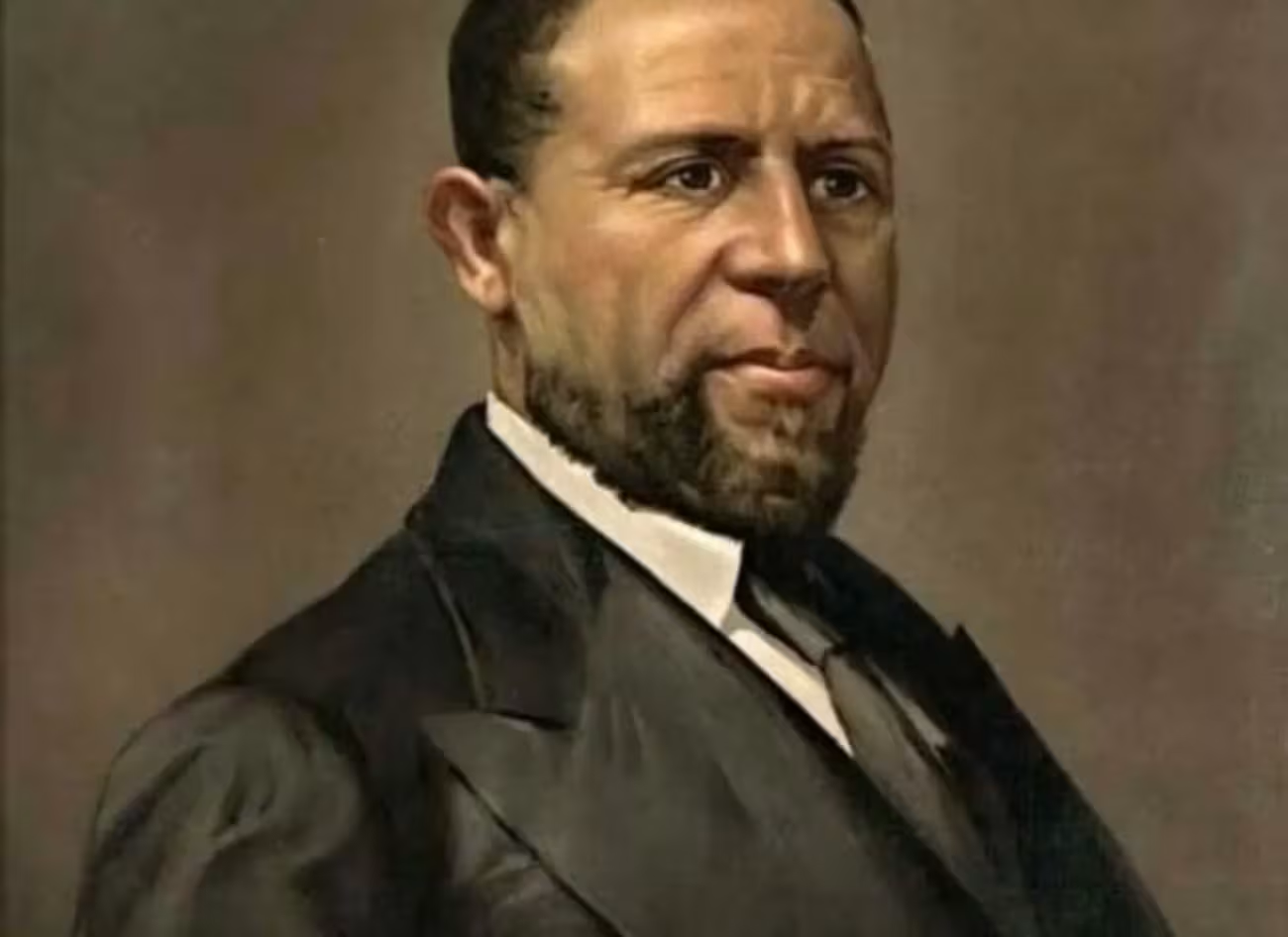
Hiram Rhodes Revels became the first African American to serve in the United States Senate when he took office on February 25, 1870, representing Mississippi during the Reconstruction era. His historic achievement came five years after the Civil War and marked a significant milestone in Black political representation. Mississippi later elected Blanche K. Bruce, who became the first African American senator to serve a full six-year term. More than 145 years after Bruce left office, Mississippi made history again in November 2026 when Democrat Scott Colom defeated Republican incumbent Cindy Hyde-Smith, becoming the state's first Black senator since Reconstruction. The three politicians represent distinct chapters in Mississippi's political history, from the expansion of Black political participation after the Civil War to its restoration in the modern era.
Who Was Hiram Revels?
Hiram Rhodes Revels was born on September 27, 1827, in Fayetteville, North Carolina. He was a minister, educator, and Republican politician who became the first Black member of the United States Senate.
Born into a free African American family, Revels pursued an education at a time when opportunities for Black Americans were severely restricted. He attended seminaries in Indiana and Ohio before studying theology at Knox College in Illinois.
He was ordained as a minister of the African Methodist Episcopal Church in 1845 and spent much of his early career preaching in different parts of the United States.
During the Civil War, Revels helped recruit African American soldiers for the Union Army, served as a military chaplain, and established educational opportunities for formerly enslaved people.
After the war, he settled in Natchez, Mississippi, where he became involved in local politics and the Reconstruction government.
How Hiram Revels Became the First Black U.S. Senator
Revels entered Mississippi politics in 1868, when he was elected alderman in Natchez. The following year, he won a seat in the Mississippi state Senate.
In January 1870, the Mississippi legislature selected him to fill a vacant seat in the United States Senate. The vacancy had originally belonged to Jefferson Davis, the former U.S. senator who later became president of the Confederacy.
The political circumstances were closely connected to Reconstruction. Mississippi had seceded from the Union in 1861, leaving its representation in Congress vacant during the Civil War. After the state was readmitted to congressional representation in February 1870, its legislature could elect senators to fill the vacant seats.
Revels was elected on January 20, 1870, by a vote of 85 to 15 in the Mississippi legislature.
His credentials initially faced opposition from several senators who questioned whether he had been a U.S. citizen for the constitutionally required nine years. Their argument relied on the Supreme Court's 1857 Dred Scott decision, which had denied federal citizenship to Black Americans.
After debate, the Senate accepted his credentials. Revels took the oath of office on February 25, 1870, becoming the first African American to serve in the chamber.
What Did Hiram Revels Do in the Senate?
Revels served from February 25, 1870, through March 3, 1871. Although his Senate career lasted only 13 months, he used his position to advocate for the rights and opportunities of African Americans.
His priorities included expanding educational opportunities, opposing racial segregation, and protecting the civil and political rights of formerly enslaved people.
He also spoke against discriminatory policies that prevented qualified African Americans from obtaining public employment and participating equally in American society.
After leaving the Senate, Revels returned to Mississippi and became the first president of Alcorn Agricultural and Mechanical College, now known as Alcorn State University.
His career demonstrated that African Americans could hold senior national political positions during Reconstruction, although that progress would face serious opposition in subsequent decades.
Blanche K. Bruce: The Second Black Senator From Mississippi
Blanche Kelso Bruce followed Revels into the Senate as another pioneering African American Republican politician from Mississippi.
Bruce was born on March 1, 1841, in Prince Edward County, Virginia. His mother was enslaved, while his father was her enslaver. Following the Civil War, Bruce moved to Mississippi and became involved in education, agriculture, and Republican politics.
In 1874, the Mississippi legislature elected Bruce to the United States Senate. He began his term on March 4, 1875, and served until March 3, 1881.
Bruce became the first African American senator to complete a full six-year term. In 1879, he also became the first Black American to preside over the Senate.
During his time in office, he supported civil rights, equal opportunities for African Americans, and federal protection against racial discrimination.
His departure in March 1881 marked the beginning of a gap in Black representation from Mississippi in the U.S. Senate that lasted more than a century.
Why Did Black Senate Representation Disappear in Mississippi?
The end of Reconstruction in 1877 marked a major turning point in Southern political history.
As federal intervention in the former Confederate states declined, white supremacist political organizations regained control across much of the South. African Americans increasingly faced intimidation, racial violence, and restrictions designed to prevent them from voting and holding public office.
Mississippi's Constitution of 1890 introduced poll taxes, literacy tests, and other voting restrictions that disproportionately disfranchised Black citizens.
These measures weakened African American political participation for generations and helped establish the segregationist political system known as Jim Crow.
Although the civil rights movement and federal legislation, particularly the Voting Rights Act of 1965, transformed voting protections, Mississippi did not elect another Black U.S. senator until Scott Colom's victory in 2026.
Scott Colom Wins the 2026 Mississippi Senate Election
On November 11, 2026, the Associated Press declared Democrat Scott Colom the winner of Mississippi's closely contested U.S. Senate election.
Colom defeated Republican incumbent Cindy Hyde-Smith and independent candidate Ty Pinkins after several days of additional vote counting, including the review of provisional ballots.
At the time AP called the race, Colom led Hyde-Smith by 4,669 votes, approximately 0.5 percentage points, with 99% of precincts reporting.
The reported results were:
- Scott Colom (Democrat): 473,336 votes, or 49.2%.
- Cindy Hyde-Smith (Republican): 468,667 votes, or 48.7%.
- Ty Pinkins (Independent): 20,234 votes, or 2.1%.
The AP declaration was based on unofficial, uncertified results. Mississippi's election authorities still had additional certification procedures to complete, and the possibility of legal challenges had been discussed.
Colom's victory made him the first Black person elected to the U.S. Senate from Mississippi since Reconstruction. He also became the first Democrat elected to a Mississippi Senate seat since John Stennis won reelection in 1982.
Who Is Scott Colom?
Scott Colom is a Mississippi attorney and prosecutor who served as district attorney for the state's 16th Circuit Court District.
In 2015, he defeated a long-serving incumbent to become the first Black district attorney in that circuit.
In 2023, President Joe Biden nominated Colom for a federal judgeship in the Northern District of Mississippi. His nomination received bipartisan support but did not advance to confirmation after opposition from Republican Senator Cindy Hyde-Smith.
Colom later challenged Hyde-Smith in the 2026 Senate election. His campaign focused on economic pressures affecting Mississippi residents, including fuel prices, consumer costs, and agricultural tariffs.
His victory ended a prolonged period of Republican control over Mississippi's Senate delegation and restored Black representation from the state in the upper chamber of Congress.
Who Was the Last Black Senator From Mississippi Before Scott Colom?
Blanche K. Bruce was the last Black U.S. senator from Mississippi before Scott Colom's 2026 election.
Bruce left office on March 3, 1881. No other African American was elected to represent Mississippi in the U.S. Senate during the following 145 years.
Hiram Revels and Bruce were both selected by the Mississippi legislature, reflecting the constitutional system that existed before the ratification of the Seventeenth Amendment in 1913.
Scott Colom's election is historically different because he was elected directly by Mississippi voters, under the modern system of popular Senate elections.
How Many Black U.S. Senators Has Mississippi Had?
As of November 2026, Mississippi has had three Black U.S. senators:
- Hiram R. Revels (1870–1871): The first African American to serve in the United States Senate.
- Blanche K. Bruce (1875–1881): The first African American to complete a full six-year Senate term and the last Black senator from Mississippi before the modern era.
- Scott Colom (elected 2026): The first Black senator elected from Mississippi since Reconstruction and the first selected directly by the state's voters.
Their political careers span more than 150 years of American history, including Reconstruction, the Jim Crow era, the civil rights movement, and contemporary electoral politics.
Conclusion
Hiram Revels made American history in 1870 when he became the first Black U.S. senator, representing Mississippi during Reconstruction. Blanche K. Bruce continued that legacy in 1875 and became the first African American to serve a full six-year Senate term.
After Bruce left office in 1881, Mississippi went 145 years without another Black senator. That historical gap ended when Democrat Scott Colom defeated Cindy Hyde-Smith in November 2026.
The connection between Revels, Bruce, and Colom illustrates both the early achievements of African American political representation and the long-lasting consequences of racial disfranchisement in the American South.
- Log in to post comments