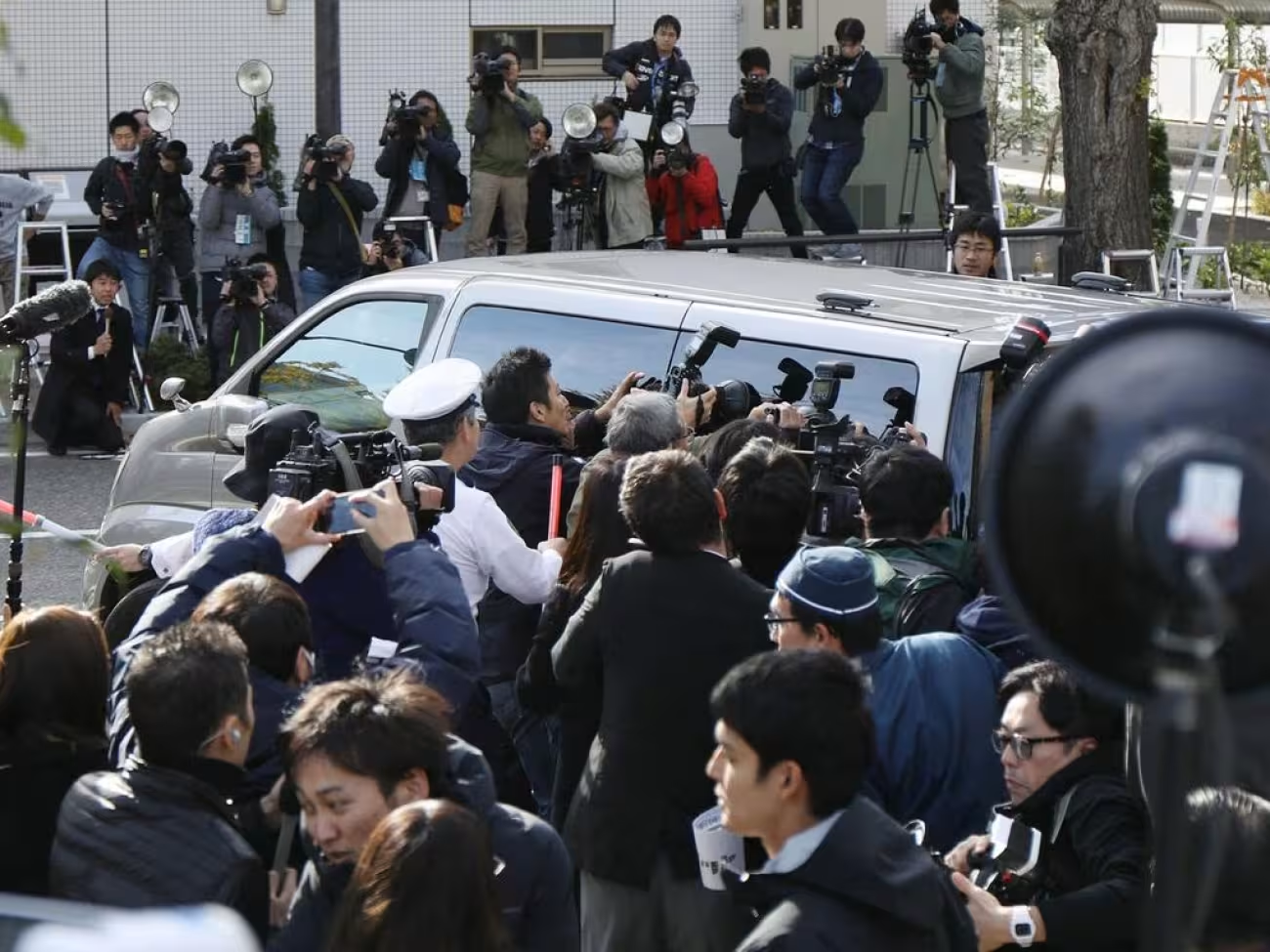
Takahiro Shiraishi, widely known as Japan's "Twitter Killer," was a serial murderer who used social media to target people experiencing emotional distress and expressing suicidal thoughts.
Between August and October 2017, he murdered nine people, including eight women and one man aged between 15 and 26. He contacted his victims through Twitter, now known as X, and persuaded them to visit his apartment in Zama, Kanagawa Prefecture.
Shiraishi presented himself as someone willing to help people who wanted to die. Instead, he strangled them, sexually assaulted his female victims, stole money and concealed their remains inside his apartment.
The crimes came to light on October 31, 2017, when police searching for a missing 23-year-old woman discovered human remains in several containers inside his residence.
Shiraishi was convicted of all nine murders and sentenced to death on December 15, 2020. He withdrew his appeal in January 2021, making the sentence final.
On June 27, 2025, Japanese authorities executed him by hanging at the Tokyo Detention House. His execution was Japan's first since July 2022 and renewed international attention on the country's death penalty system.
Who Was Takahiro Shiraishi?
Takahiro Shiraishi was born on November 9, 1990, in Zama, Kanagawa Prefecture, Japan.
He became internationally known after police discovered the remains of nine murder victims inside his apartment in October 2017.
Before the murders, Shiraishi had reportedly worked in the nightlife and entertainment industry, including activities involving the recruitment of women for businesses in Tokyo's Kabukicho district.
He later lived in a small apartment in Zama, a residential city southwest of Tokyo.
His use of Twitter became central to the investigation because he deliberately searched for people who appeared emotionally vulnerable and contacted them through private messages.
Japanese media subsequently nicknamed him the "Twitter Killer," reflecting the role social media played in finding and luring his victims.
How the Twitter Killer Targeted Vulnerable People
Shiraishi searched Twitter for users discussing suicide, emotional suffering and their desire to end their lives.
He approached them by presenting himself as someone who understood their problems and was willing to help.
Rather than immediately revealing his intentions, he built contact through private messages and encouraged potential victims to meet him.
Some of his messages suggested that he could help people carry out their suicidal wishes or even die alongside them.
One of his accounts used the username "@hangingpro," a reference associated with hanging.
His online profile and messages made him appear approachable to people who were experiencing psychological distress.
Investigators later established that these communications were part of a deliberate pattern. Shiraishi used apparent sympathy to gain his victims' trust and persuade them to visit his apartment.
Once they arrived, he attacked them instead of providing the assistance he had promised.
The Nine Victims of the Zama Murders
Shiraishi murdered nine people between August and October 2017.
The victims were eight women and one man, ranging in age from 15 to 26.
Most of the female victims had expressed suicidal thoughts or emotional distress on Twitter before making contact with him.
The sole male victim was the boyfriend of one of the women. Prosecutors said Shiraishi killed him because he feared the man would discover what had happened to his girlfriend.
The victims came from different parts of Japan, including Tokyo and surrounding prefectures.
Before the crimes were connected, their disappearances appeared to be separate missing-person cases.
The discovery of multiple bodies inside one apartment eventually revealed that the disappearances were linked to a single perpetrator.
What Happened Inside Shiraishi's Apartment?
Shiraishi brought his victims to his apartment in Zama, where he strangled them.
The prosecution established that he also sexually assaulted his female victims and stole money from some of them.
After the killings, he dismembered the bodies and concealed the remains in storage containers, coolers and other places inside the apartment.
He reportedly used cat litter to help control the smell of decomposition.
His efforts to conceal the remains were intended to prevent neighbours and other people from discovering the crimes.
Despite these measures, the investigation into a missing woman eventually led police to his residence.
How Police Discovered the Nine Bodies
The investigation began with the disappearance of a 23-year-old woman who had reportedly posted about wanting to die on Twitter.
Her family became concerned after losing contact with her.
Her brother examined her online activities and gained access to information from her Twitter account.
He discovered communications that suggested she had been in contact with someone who might know something about her disappearance.
Police subsequently investigated the online connection and identified Shiraishi as a person who could be linked to the missing woman.
On October 31, 2017, officers searched his apartment in Zama.
Inside, they discovered human remains stored in multiple containers.
The discovery immediately transformed the missing-person investigation into a major multiple-homicide case.
Investigators eventually established that the remains belonged to nine people, including the woman whose disappearance had initially led police to the apartment.
Shiraishi Was Arrested on October 31, 2017
Police arrested Shiraishi after discovering the remains inside his apartment.
He was initially questioned about the disappearance of the 23-year-old woman.
As investigators examined the other remains, the investigation expanded to include eight additional victims.
Shiraishi eventually admitted killing all nine people.
He described how he had contacted them through Twitter, invited them to his apartment and carried out the killings.
Investigators examined his online accounts, private messages, forensic evidence and missing-person reports to reconstruct the sequence of events between August and October 2017.
Why Did Shiraishi Kill the Victims?
Investigators identified sexual and financial motives behind the murders.
Shiraishi targeted people experiencing emotional distress and used their suicidal statements as an opportunity to approach them.
Prosecutors argued that he exploited their vulnerability to gain access to them, sexually assault several victims and steal their money.
His actions were therefore not simply attempts to help people who wanted to die, as his online messages had suggested.
The prosecution maintained that he had acted to satisfy his own sexual and financial desires.
His behaviour demonstrated a calculated pattern of deception in which apparently sympathetic messages were used to attract victims before he attacked them.
The Trial and the Argument Over Victims' Consent
Shiraishi's trial began at the Tachikawa branch of the Tokyo District Court in 2020.
He admitted killing all nine victims, but one of the most controversial issues concerned whether the victims had consented to their deaths.
His defense lawyers initially argued that the charges should be reduced because some victims had expressed suicidal intentions and allegedly agreed to die.
The defense sought to distinguish between murder without consent and homicide involving the victim's consent.
Such a distinction could have affected the severity of the punishment under Japanese criminal law.
However, the prosecution rejected this argument, maintaining that the victims had been deceived and manipulated.
The court examined the circumstances of the killings, including the victims' ages, their psychological vulnerability and the methods used by Shiraishi.
The Judge Rejected the Consent Defense
On December 15, 2020, Judge Naokuni Yano found Shiraishi guilty of all nine murders.
The court rejected the defense argument that the victims had consented to being killed.
The judge concluded that none of the nine victims had genuinely agreed to their deaths.
The court found that Shiraishi had exploited people who were psychologically vulnerable and used deception to bring them to his apartment.
The crimes involved murder, sexual assault, robbery and the concealment and destruction of human remains.
The court described the killings as exceptionally serious and recognized the suffering inflicted on the victims' families.
Shiraishi was sentenced to death by hanging.
Why Was Takahiro Shiraishi Sentenced to Death?
The death sentence reflected the scale and severity of the crimes.
Japanese courts consider several factors when deciding whether capital punishment is appropriate, including the number of victims, the circumstances of the murders, the level of brutality and the impact on victims' families.
Shiraishi had murdered nine people within approximately two months.
Eight victims were women, and one was a man who was killed after becoming a potential obstacle to concealing the other crimes.
The court also considered that several victims were young and had been deliberately targeted because of their psychological vulnerability.
These circumstances contributed to the decision to impose the death penalty.
Shiraishi Withdrew His Appeal
Following the December 2020 verdict, Shiraishi's legal team initially filed an appeal against the death sentence.
However, in January 2021, he personally withdrew the appeal.
The withdrawal meant that his death sentence became final, ending the ordinary appeal process.
Shiraishi had previously indicated that he did not intend to pursue a lengthy legal challenge against the sentence.
His decision attracted attention because defendants facing capital punishment in Japan commonly pursue appeals and other legal challenges that can extend for many years.
After the withdrawal, he remained on death row while awaiting execution.
Japan Executed Takahiro Shiraishi on June 27, 2025
On June 27, 2025, Japanese authorities executed Takahiro Shiraishi by hanging at the Tokyo Detention House.
He was 34 years old.
The execution was authorized by Justice Minister Keisuke Suzuki, who said he had carefully considered the case before approving the punishment.
Suzuki cited the extremely selfish motives behind the murders and their devastating impact on Japanese society.
The execution marked Japan's first use of capital punishment since July 26, 2022.
It was also the first execution under Prime Minister Shigeru Ishiba's administration, which had taken office in October 2024.
The Justice Ministry confirmed that Shiraishi had been executed after being convicted of killing nine people.
His execution brought the criminal proceedings to a definitive end.
Why Was His Execution Significant in Japan?
Shiraishi's execution attracted international attention because Japan had gone almost three years without carrying out a death sentence.
The country's previous execution had taken place on July 26, 2022, when Tomohiro Kato was hanged for the 2008 Akihabara mass stabbing.
Shiraishi therefore became the first person executed under the government led by Prime Minister Shigeru Ishiba.
The execution also renewed debate over Japan's continued use of capital punishment.
Japan and the United States remain the only members of the Group of Seven major industrialized democracies that retain the death penalty.
Public support for capital punishment remains relatively strong in Japan, particularly in cases involving multiple murders.
However, human rights organizations have repeatedly criticized the country's execution procedures and the lack of transparency surrounding death-row conditions.
How Japan Carries Out the Death Penalty
Japan carries out executions by hanging.
Unlike some other countries, Japanese authorities generally do not announce execution dates in advance.
Prisoners are typically informed only a few hours before their execution, while family members and lawyers are often notified afterward.
Human rights organizations have criticized this practice because prisoners may spend years in uncertainty about when they will be executed.
The secrecy surrounding executions has also raised concerns about transparency, psychological distress and access to legal support.
The International Commission against the Death Penalty expressed concern following Shiraishi's execution, particularly about the continued lack of advance notification.
The Broader Debate Over Japan's Death Penalty
Japan's capital punishment system remains controversial despite substantial public support for retaining the death penalty.
Supporters argue that capital punishment is justified in exceptionally serious cases involving multiple murders and extreme violence.
Opponents argue that the punishment is irreversible and that judicial systems can make mistakes.
The debate became particularly prominent following the 2024 acquittal of Iwao Hakamada, who had spent decades on death row before a Japanese court overturned his conviction.
His case raised questions about wrongful convictions, the reliability of evidence and the treatment of death-row prisoners.
Shiraishi's execution in 2025 therefore took place against a broader background of international scrutiny of Japan's justice system.
Did the Twitter Killer's Case Change Social Media Safety Policies?
The murders also raised questions about the responsibility of social media platforms when users express suicidal thoughts or seek assistance online.
Following the discovery of the crimes, Twitter Japan introduced additional warnings and links to support organizations when users searched for suicide-related terms.
The changes were intended to direct people experiencing suicidal thoughts toward professional support rather than potentially dangerous contacts.
The case demonstrated how online platforms can be exploited by individuals who deliberately target people experiencing psychological distress.
It also highlighted the importance of recognizing deceptive offers of assistance, particularly when strangers encourage vulnerable users to meet privately or discourage them from seeking help from family and professionals.
The Impact on the Nine Victims' Families
The nine murders devastated the victims' families and communities.
Some relatives described the emotional pain of losing loved ones whose disappearances had initially created uncertainty and fear.
During the trial, family members expressed anger and grief over the circumstances of the killings.
One victim's father described how seeing women around his daughter's age continued to remind him of his loss.
The case attracted widespread attention partly because the victims were young and had been targeted after expressing emotional distress online.
Shiraishi's execution in 2025 ended the criminal proceedings, but it could not undo the harm suffered by the victims and their families.
Where Is the Takahiro Shiraishi Case Now?
As of November 2026, Takahiro Shiraishi is deceased. He was executed by hanging on June 27, 2025, at the Tokyo Detention House.
He had been convicted of nine murders and sentenced to death in December 2020. His sentence became final after he withdrew his appeal in January 2021.
The case remains one of Japan's most notorious examples of online-facilitated serial murder.
It exposed how social media could be used to identify vulnerable individuals, manipulate their trust and arrange meetings that resulted in deadly violence.
It also renewed debate about capital punishment, prison transparency and the responsibilities of digital platforms in protecting users who disclose suicidal thoughts.
For the families of the nine victims, the execution marked the end of the legal process, but the consequences of the crimes remain permanent.
- Log in to post comments