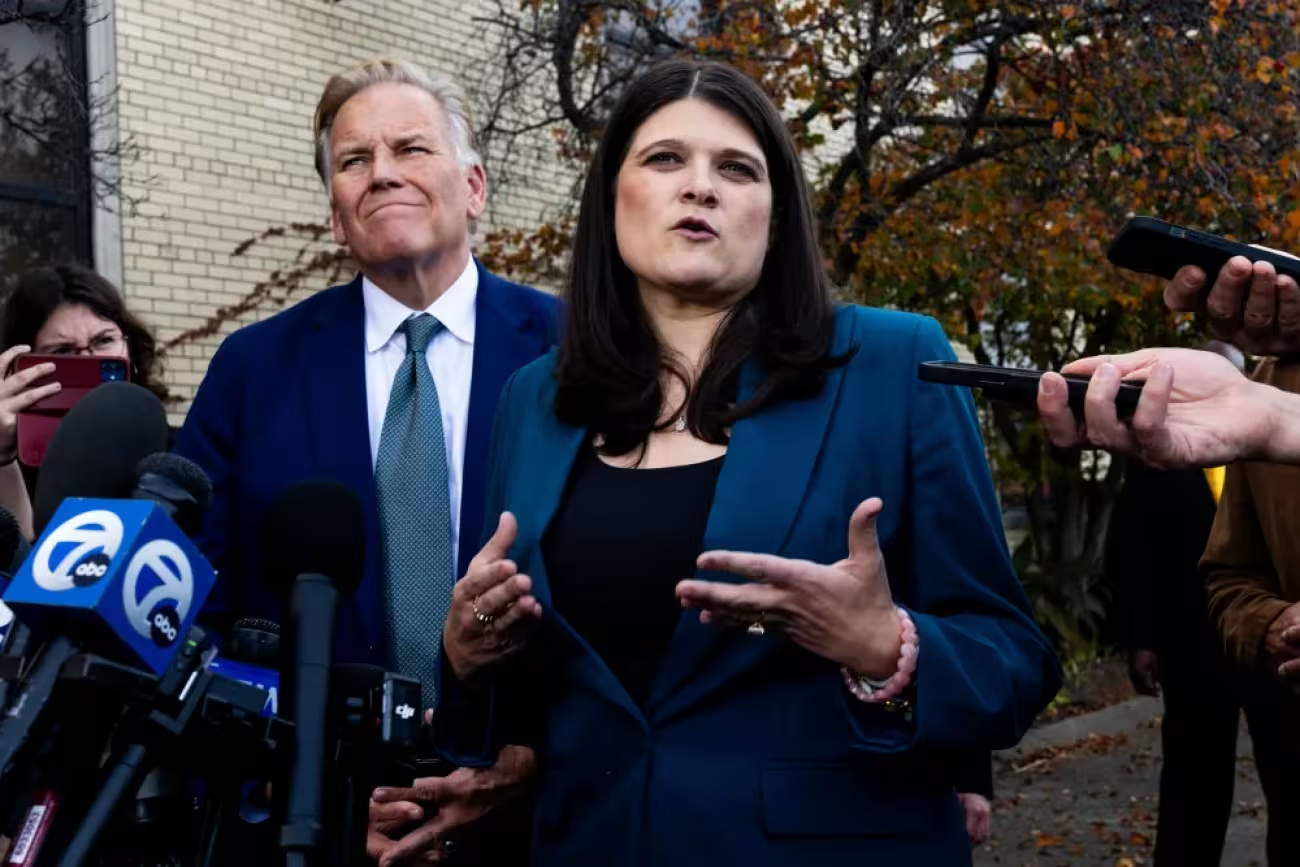
Democratic Rep. Haley Stevens faced a tense interview with CNN's Anderson Cooper on November 1, 2026, after unexpectedly endorsing Republican Mike Rogers in Michigan's U.S. Senate race. Stevens had previously supported Democratic nominee Abdul El-Sayed, who defeated her in the party's Senate primary, making her last-minute reversal a major political controversy just two days before Election Day.
During the nearly 15-minute conversation, Cooper repeatedly asked Stevens what had prompted her sudden change of position. Although she criticized El-Sayed's campaign and defended her personal decision, she did not clearly identify what had changed between the previous evening and her endorsement of Rogers the following morning.
Why Did Haley Stevens Endorse Mike Rogers?
Stevens announced her support for Rogers on November 1 after attending a church service with him in Detroit. Her decision surprised Democratic colleagues because she had previously endorsed El-Sayed following their contentious primary contest.
The endorsement followed growing tensions involving El-Sayed's campaign, Stevens' support for Israel, and a controversial advertisement produced by an outside political group. The advertisement connected economic pressures facing Michigan residents with U.S. financial assistance to Israel. El-Sayed had publicly distanced himself from the advertisement.
Stevens argued that El-Sayed had become increasingly angry and that some Democrats felt unwelcome in his campaign. She also complained about what she described as a lack of kindness toward people who disagreed with him.
However, she did not provide a specific new incident that fully explained why she had decided to support Rogers, a Republican she had strongly criticized only months earlier.
What Happened During the Anderson Cooper Interview?
Cooper opened the CNN interview by referring to a conversation Stevens reportedly had with fellow Michigan Democratic Rep. Debbie Dingell on October 31. According to Dingell, Stevens had assured her that she would not endorse Rogers.
Cooper wanted to know what had changed overnight.
Stevens responded that the decision had lifted a burden from her shoulders. She said she had spent time reflecting on her political position and felt comfortable with her choice.
When Cooper continued asking about the timing, Stevens questioned aspects of Dingell's account and said she had been alone with her thoughts. She insisted that her fundamental political beliefs had not changed.
The conversation became more confrontational when Cooper reminded Stevens of an August social media post in which she warned that Rogers would support President Donald Trump's agenda. Cooper asked why she was now willing to help elect a candidate she had previously described as a threat to Democratic priorities.
Stevens again redirected the discussion toward her disagreements with El-Sayed rather than explaining how her assessment of Rogers had changed.
The Awkward Exchange Between Stevens and Cooper
One of the interview's most discussed moments occurred when Stevens suggested that Cooper appeared upset with her.
Cooper denied being personally upset but acknowledged his frustration because he believed she was not directly answering his questions.
The tension increased as both spoke over each other and Stevens accused the CNN anchor of editorializing.
At one point, Cooper paused to allow Stevens an opportunity to elaborate. After several seconds of silence, she asked whether he had posed a question. Cooper explained that he had deliberately given her space to continue.
The exchange highlighted the central difficulty of the interview: Stevens was willing to discuss her dissatisfaction with El-Sayed but offered little explanation for the timing of her decision or her reversal regarding Rogers.
Did Haley Stevens' Staff Resign?
Stevens' endorsement also triggered significant turmoil within her congressional office. CNN reported that multiple staff members resigned following her announcement, with some learning about the decision through social media.
Asked about the departures, Stevens said her office was already approaching a transition period and that employees were entitled to make their own decisions. She expressed appreciation for their work but did not characterize the resignations as a reason to reconsider her endorsement.
The departures demonstrated that opposition to her decision extended beyond Democratic voters and elected officials to members of her own congressional team.
How Did Debbie Dingell and Other Democrats Respond?
After Stevens' CNN appearance, Debbie Dingell confirmed that Stevens had told her she would not endorse Rogers. Dingell also described the interview as painful to watch and expressed concern about her colleague.
Other prominent Democrats condemned the endorsement. Former House Speaker Nancy Pelosi criticized Stevens' decision and argued that supporting Rogers would undermine Democratic priorities.
El-Sayed urged Democrats to remain focused on defeating the Republican nominee and winning the Senate seat rather than allowing the controversy to dominate the final days of the campaign.
Stevens nevertheless maintained that she remained a Democrat and supported Democratic candidates in other races.
Why the Haley Stevens Interview Became a Political Controversy
The interview attracted widespread attention because Stevens' decision appeared inconsistent with her earlier public statements. She had warned against giving Republicans another Senate seat but was now actively supporting a Republican candidate in a closely watched election.
The controversy was intensified by the timing. Stevens made her announcement just two days before the November 3 election, leaving Democratic leaders little opportunity to respond before voters went to the polls.
Cooper's questioning focused on the difference between Stevens' objections to El-Sayed and her reasons for supporting Rogers. Disagreeing with a Democratic nominee did not, by itself, explain why she considered the Republican alternative preferable.
Although Stevens emphasized that she had made a personal decision based on her convictions, the interview left that distinction largely unresolved.
What Does the Interview Mean for Michigan's Senate Election?
Stevens' endorsement gave Rogers support from a prominent Michigan Democrat and exposed divisions within the state's Democratic Party at a critical moment.
It also placed renewed attention on disagreements over Israel, political messaging, and party unity that had affected the Democratic Senate campaign.
Whether the endorsement will influence enough voters to affect the election remains uncertain. As of November 3, 2026, the final electoral impact cannot be established without voting results and further analysis.
Final Thoughts
The Haley Stevens interview with Anderson Cooper became a widely discussed political moment because the Michigan Democrat struggled to explain her unexpected endorsement of Republican Mike Rogers after previously backing Abdul El-Sayed.
Cooper repeatedly questioned the timing of her decision, her earlier criticism of Rogers, and the apparent contradiction between her stated Democratic commitments and her new endorsement.
Stevens defended her choice and insisted that her political identity remained unchanged. However, the interview ended without a clear explanation of what specifically caused her last-minute reversal, leaving that question at the center of the controversy.
- Log in to post comments