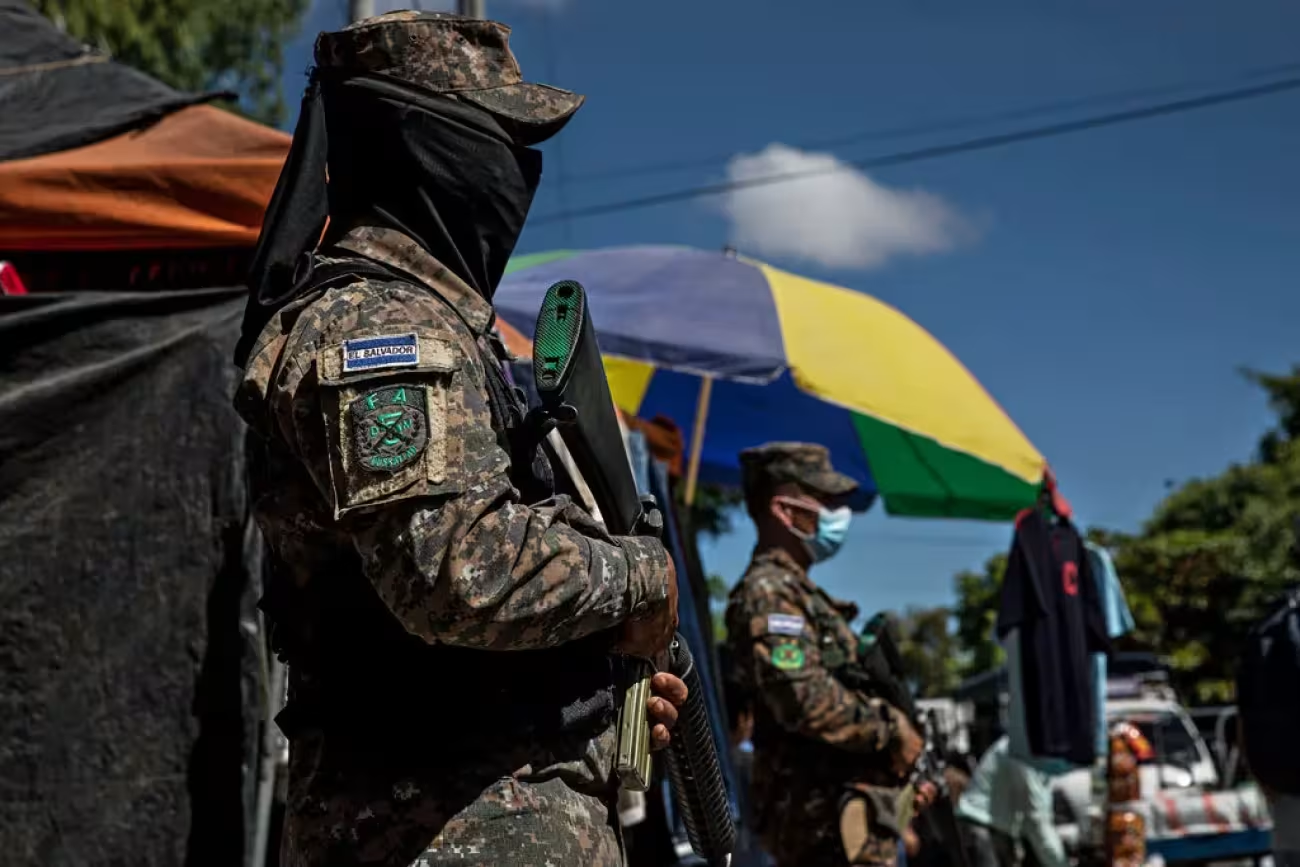
Thousands of Haitians have taken to the streets to express support for El Salvador President Nayib Bukele and his deployment of Salvadoran troops to combat powerful armed gangs controlling large parts of Haiti's capital.
The demonstrations took place on November 17, 2026, in Port-au-Prince and other locations, with protesters carrying Haitian and Salvadoran flags and displaying messages thanking Bukele for his involvement in the country's security crisis.
The demonstrations reflect growing frustration with years of gang violence, kidnappings, killings, and displacement. For many residents, the arrival of Salvadoran forces represents renewed hope after repeated international security missions struggled to restore order.
Why Are Haitians Supporting Nayib Bukele?
Haiti has experienced years of escalating violence involving heavily armed criminal organizations that control neighborhoods, roads, and important infrastructure.
Many residents have been forced to abandon their homes, while businesses, schools, and public services have been disrupted by gang activity.
During the November 17 demonstrations, protesters shouted slogans including "Long live Bukele" and "Down with the gangs."
Some participants also demanded that Salvadoran forces receive additional military equipment, including explosive drones and robotic dogs being used in security operations.
One demonstrator, Maxseau Lomba, told the Associated Press that gangs had destroyed his home and killed members of his family. He described Bukele's intervention as a source of hope for people who had lost almost everything.
Another participant, Marie Michelle Dorville, said gangs had killed her partner, leaving her responsible for raising three children.
These personal experiences help explain why some Haitians are publicly welcoming foreign military intervention despite concerns about its long-term consequences.
How Many Salvadoran Soldiers Have Been Deployed to Haiti?
El Salvador has deployed more than 2,000 troops to Haiti, with estimates placing the total at approximately 2,500 personnel.
The deployment followed an attack on October 18, 2026, when four Salvadoran aviation technicians serving with the UN-authorized Gang Suppression Force were abducted after an armored vehicle was attacked in Port-au-Prince.
President Bukele subsequently announced a rescue operation and expanded his country's military presence in Haiti.
The additional Salvadoran troops operate under a separate bilateral arrangement with the Haitian government rather than being entirely integrated into the UN-backed security mission.
The deployment includes specialized personnel, armored vehicles, helicopters, and equipment intended to support operations against heavily armed gangs.
The four missing Salvadoran personnel remain a central issue surrounding the operation.
What Are Salvadoran Forces Doing Against Haitian Gangs?
Salvadoran forces have participated in operations targeting gang-controlled neighborhoods and strategically important locations in Port-au-Prince.
One significant development involved the recovery of the Sylvio Cator football stadium, which had been controlled by armed groups for more than two years.
The stadium is particularly important because gang control had prevented Haiti from hosting World Cup qualifying matches on home soil.
Salvadoran and Haitian security personnel also participated in operations involving other strategic facilities and transportation corridors.
Bukele has publicized several operations through videos shared on social media, showing helicopters, armored vehicles, and robotic equipment operating in the capital.
These images have helped increase public attention surrounding the deployment, although military footage alone does not establish how much territory has been permanently secured.
Haiti Officially Strengthens Security Cooperation With El Salvador
On November 17, 2026, Haiti's Council of Ministers approved a security cooperation agreement with El Salvador.
The announcement came as demonstrations in Port-au-Prince expressed support for Bukele's military intervention.
Haitian Justice Minister Patrick Pélissier traveled to El Salvador to discuss security cooperation and the future of the deployment.
He indicated that Salvadoran forces might remain in Haiti until at least the next national elections, expected in 2027, although the final duration had not been established.
El Salvador's Vice President Félix Ulloa, however, said the Salvadoran soldiers would return once the four missing aviation technicians were found.
The differing public statements indicate that the long-term deployment arrangements remain unsettled.
Why Haiti's National Police Cannot Stop the Gangs Alone
Haiti's National Police, known as the Police Nationale d'Haïti, has struggled to confront criminal organizations with increasingly sophisticated weapons and territorial networks.
According to reporting based on International Crisis Group research, Haiti had no more than approximately 8,000 active police officers in 2025 for a population approaching 12 million.
Many officers work in administrative or command positions rather than frontline operations. Others lack specialized training for confronting heavily armed groups.
The police also face problems involving inadequate salaries, insufficient equipment, corruption allegations, and fragmented operational coordination.
These weaknesses have made international security assistance increasingly important, but foreign forces cannot permanently replace Haiti's own security institutions.
Human Rights Concerns Surround the Military Operations
Despite the public demonstrations supporting Bukele, the military campaign has raised concerns among human rights organizations and international observers.
The increased use of explosive drones and helicopter operations has created serious questions about civilian protection.
According to United Nations figures cited by the Associated Press, at least 87 civilians, including 21 children, were killed by drones between July 2025 and September 2026.
International Crisis Group has also warned that the use of explosive drones has produced diminishing returns, without meaningful changes in territorial control or the balance of power on the ground.
Another concern is the lack of a clearly established long-term security strategy coordinating the Haitian police, military, international forces, and foreign security contractors.
Experts warn that military offensives could generate additional instability if authorities cannot protect communities after operations conclude.
Could Public Support for Bukele Turn Into Anger?
Although many demonstrators currently welcome Salvadoran troops, analysts warn that expectations could become difficult to manage.
Diego Da Rin of International Crisis Group has warned that public enthusiasm could turn into anger against the Haitian government if foreign troops withdraw without leaving behind sustainable security improvements.
The central challenge is not simply removing gangs from individual neighborhoods. Authorities must prevent armed groups from returning and establish reliable public institutions.
That requires better-trained police officers, functioning courts, accountable government agencies, and sustained protection for displaced communities.
Without those developments, military operations may provide temporary relief without resolving the underlying causes of Haiti's insecurity.
Final Thoughts
The demonstrations across Haiti on November 17, 2026, highlighted the desperation of communities that have endured years of gang violence and institutional instability.
Nayib Bukele's deployment of approximately 2,500 Salvadoran troops has attracted public support from residents seeking stronger action against armed groups.
However, the operation also raises important questions about civilian protection, military accountability, and the future of Haiti's national security institutions.
The immediate challenge is to turn military operations into lasting improvements in public safety. Whether that happens will depend not only on Salvadoran troops but also on Haiti's ability to rebuild its police force, strengthen its government, and establish a sustainable security strategy.
- Log in to post comments