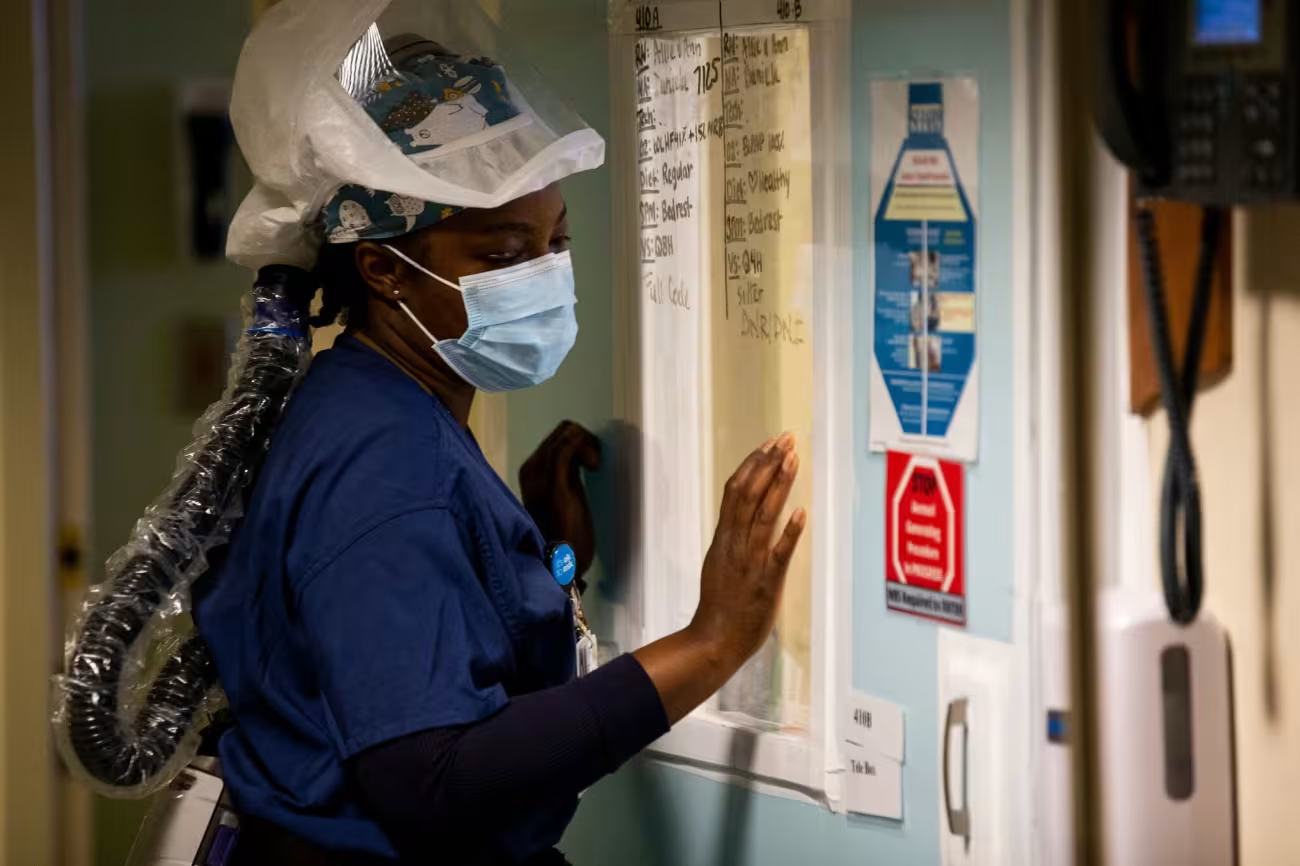
Dr. Ann Lawani, a Nigerian-born nursing professor at the University of San Francisco, has been held in U.S. Immigration and Customs Enforcement (ICE) detention for nearly two months, despite having judicial protection against deportation to Nigeria. Arrested at her home in Lodi, California, on September 16, 2026, the 39-year-old healthcare professional was transferred across several states before being taken to an immigration detention facility in Louisiana. Her case has attracted national attention because of her immigration history, lack of a reported criminal record, and the legal protection she received after an immigration judge determined that she faced a risk of persecution in Nigeria. Her family, university colleagues, attorney, and California Congressman Josh Harder are demanding her release and questioning why she remains detained thousands of miles from home.
Who Is Dr. Ann Lawani?
Dr. Ann Lawani is a Nigerian-born registered nurse, healthcare professional, and nursing educator who has lived in the United States for approximately 21 years.
She is a member of the faculty at the University of San Francisco (USF), where she serves as director of the master's nursing program. Her responsibilities include overseeing approximately 230 nursing students, coordinating 51 faculty members, and managing partnerships with 38 clinical training sites.
Beyond her academic responsibilities, Lawani works as a nurse at John Muir Health in California, where she has been involved in cardiovascular and stroke care, palliative medicine, and hospice services.
Her professional work focuses particularly on vulnerable patients, including people facing serious illnesses and end-of-life medical decisions.
Lawani also plays an important role in her family. Before her arrest, she was caring for her 83-year-old father, who has been battling cancer.
Her detention has therefore affected not only her immediate family but also the nursing students, faculty members, patients, and healthcare institutions that depend on her work.
Why Was Ann Lawani Arrested by ICE?
ICE agents arrested Lawani at her home in Lodi, California, on September 16, 2026.
According to her attorney, Natalia Vieira Santanna, Lawani originally entered the United States legally on June 7, 2007, using a temporary visitor visa. She subsequently applied for asylum, seeking protection from possible persecution if returned to Nigeria.
In August 2013, an immigration judge denied her asylum application but granted her a separate form of legal protection known as withholding of removal.
The distinction is important. Although her asylum application was unsuccessful, the immigration judge determined that she would more likely than not face persecution if returned to Nigeria.
As a result, the government was prohibited from deporting her to that country under the withholding order.
Lawani subsequently obtained employment authorization, which she regularly renewed. Her attorney said her work permit remained valid through April 2029.
However, the Department of Homeland Security defended her arrest by emphasizing that she had overstayed her original visitor visa after its expiration on July 6, 2007.
A DHS spokesperson stated that work authorization does not confer lawful immigration status and that Lawani would remain in ICE custody pending removal from the United States.
The disagreement between the government's position and the legal protection granted to Lawani is central to the controversy surrounding her detention.
What Does Withholding of Removal Mean?
Withholding of removal is a form of protection under U.S. immigration law for individuals who demonstrate that they are more likely than not to face persecution in a particular country because of a protected characteristic or status.
Unlike asylum, withholding of removal does not provide a direct path to permanent residency or citizenship. It also does not automatically prevent the government from considering removal to a different country, provided the proposed removal complies with applicable legal protections.
In Lawani's case, the immigration judge's decision specifically protected her from being returned to Nigeria.
Her attorney argues that this protection, together with her employment authorization and history of compliance, should be considered when evaluating the legality and necessity of her continued detention.
The government, however, maintains that the original removal order remains enforceable and that employment authorization does not eliminate the underlying immigration issue.
How Ann Lawani Was Transferred Thousands of Miles Away
Following her arrest on September 16, Lawani was initially taken to an immigration detention facility in Stockton, California.
She was subsequently transferred to El Paso, Texas, before being moved to the South Louisiana ICE Processing Center in Louisiana.
The transfers created serious difficulties for her family and legal representatives, who struggled to establish her location.
According to her brother, Samuel Lawani, the family was unable to locate her through ICE's public online detainee locator system. They reportedly learned where she was being held only after she managed to contact them approximately three days after her detention.
The problem was particularly concerning because ICE had introduced a policy excluding certain detainees with final removal orders from its public locator system.
An Associated Press investigation found that thousands of people with final deportation orders had been removed from the database beginning September 15, 2026.
Immigration lawyers and advocacy organizations warned that the policy made it more difficult for relatives to locate detained individuals and for attorneys to intervene before deportations occurred.
Lawani's case illustrates the practical consequences of these restrictions, particularly when detainees are transferred across several states without clear communication with their families.
Federal Judge Blocks Her Deportation to Nigeria
Lawani's attorney filed a habeas corpus petition in federal court on September 18, 2026, challenging the legality of her detention.
A habeas corpus petition allows a detained individual to ask a federal judge to examine whether the government has a lawful basis for holding them in custody.
Her legal team also raised concerns about her transfer to Louisiana and the possibility that ICE was considering deportation to an undisclosed third country.
On September 29, a federal judge rejected the government's request to transfer the habeas case to Louisiana. The judge recognized that Lawani's attorney could not reasonably have known where she had been moved when the petition was filed.
The court also prohibited the government from deporting her while the habeas proceedings remained pending and required the government to explain why she should not be released.
The judicial restriction is significant because it prevents the government from proceeding with deportation while the relevant court proceedings remain unresolved.
However, it should not be confused with an order permanently releasing Lawani from ICE custody. The question of whether she should remain detained is a separate legal issue.
Why Is ICE Considering Deportation to a Third Country?
One of the most controversial aspects of Lawani's case concerns reports that immigration authorities have considered removing her to a country other than Nigeria.
Representative Josh Harder said in a letter to Homeland Security Secretary Markwayne Mullin that ICE had reportedly pursued her removal to an undisclosed third country without providing her or her attorney with the relevant documentation.
This raises important legal questions because withholding of removal to Nigeria does not automatically prohibit removal to every other country.
Nevertheless, the government must consider whether a proposed destination is legally permissible and whether the individual would face persecution or torture there.
Lawani's attorney has questioned the lack of information about the proposed destination and the absence of supporting travel documentation.
Harder has asked DHS to disclose the intended country of removal, provide the relevant documents, and explain the legal basis for continuing to detain her.
Congressman Josh Harder Demands Her Release
The case attracted greater political attention after Representative Josh Harder, a Democrat representing California's 9th Congressional District, publicly called for Lawani's release.
On October 20, 2026, Harder sent a letter to DHS Secretary Markwayne Mullin expressing concern about her detention, transfer to Louisiana, and the difficulty her family and attorney faced in locating her.
He argued that Lawani had no reported criminal history, had maintained employment authorization, and had established strong ties to her community.
Harder also questioned why a healthcare professional who had spent years serving patients and educating future nurses was being detained thousands of miles away from her family.
On November 10, he renewed his public demand for her release and requested that ICE return her to California while her legal proceedings continued.
His requests included release under an order of supervision, disclosure of the proposed destination country, and an explanation of the government's reasons for maintaining her detention.
How Her Detention Is Affecting Her Family and University
Lawani's detention has created significant difficulties for her family, particularly because she was the primary caregiver for her 83-year-old father.
Her brother, Samuel Lawani, has publicly described her as an exceptionally dedicated healthcare professional whose life has been centered on caring for patients, students, and family members.
Her father's health has also become a major concern during her absence.
At the University of San Francisco, colleagues say her detention has disrupted the nursing program she helped lead.
Eileen K. Fry-Bowers, dean of the School of Nursing and Health Professions, said Lawani's absence has affected student mentorship, curriculum development, accreditation requirements, and clinical partnerships.
The university has expressed support for Lawani and her family and has called for her to receive due process and an opportunity to return to her responsibilities.
Her colleagues have also emphasized the irony of losing an experienced nursing educator and clinician at a time when healthcare institutions continue to need qualified professionals.
What Happens Next in Ann Lawani's Case?
The central legal issue is whether the federal government has sufficient grounds to continue holding Lawani in immigration detention while her immigration and habeas proceedings move forward.
Her attorney is challenging the detention and seeking judicial intervention, while DHS maintains that the original removal order remains enforceable.
The government must also address the court's restriction on deportation while the habeas case remains pending.
Potential developments include further federal court hearings, a decision on the legality of her detention, and clarification of whether ICE intends to pursue removal to a third country.
As of November 12, 2026, the latest available reporting indicated that Lawani remained in ICE custody at the South Louisiana ICE Processing Center. Her release had not been confirmed, and the final outcome of her legal challenge remained unresolved.
Conclusion
Dr. Ann Lawani's detention has become a significant example of the legal and humanitarian questions surrounding immigration enforcement in the United States.
A Nigerian-born nursing professor with more than two decades of professional and personal ties to the country, Lawani was arrested despite having judicial protection against deportation to Nigeria. Her subsequent transfers across several states, difficulty being located through ICE's public database, and reported consideration of removal to an undisclosed third country have raised serious concerns among her family, attorney, university colleagues, and elected representatives.
Although DHS maintains that her original immigration violation justifies continued detention, her legal team argues that the government's actions must be evaluated in light of the existing withholding-of-removal order and the federal court proceedings.
For Lawani's family and supporters, the immediate priority is her safe return to California. For the broader immigration debate, her case raises fundamental questions about government accountability, access to legal representation, and the limits of federal deportation authority.
- Log in to post comments